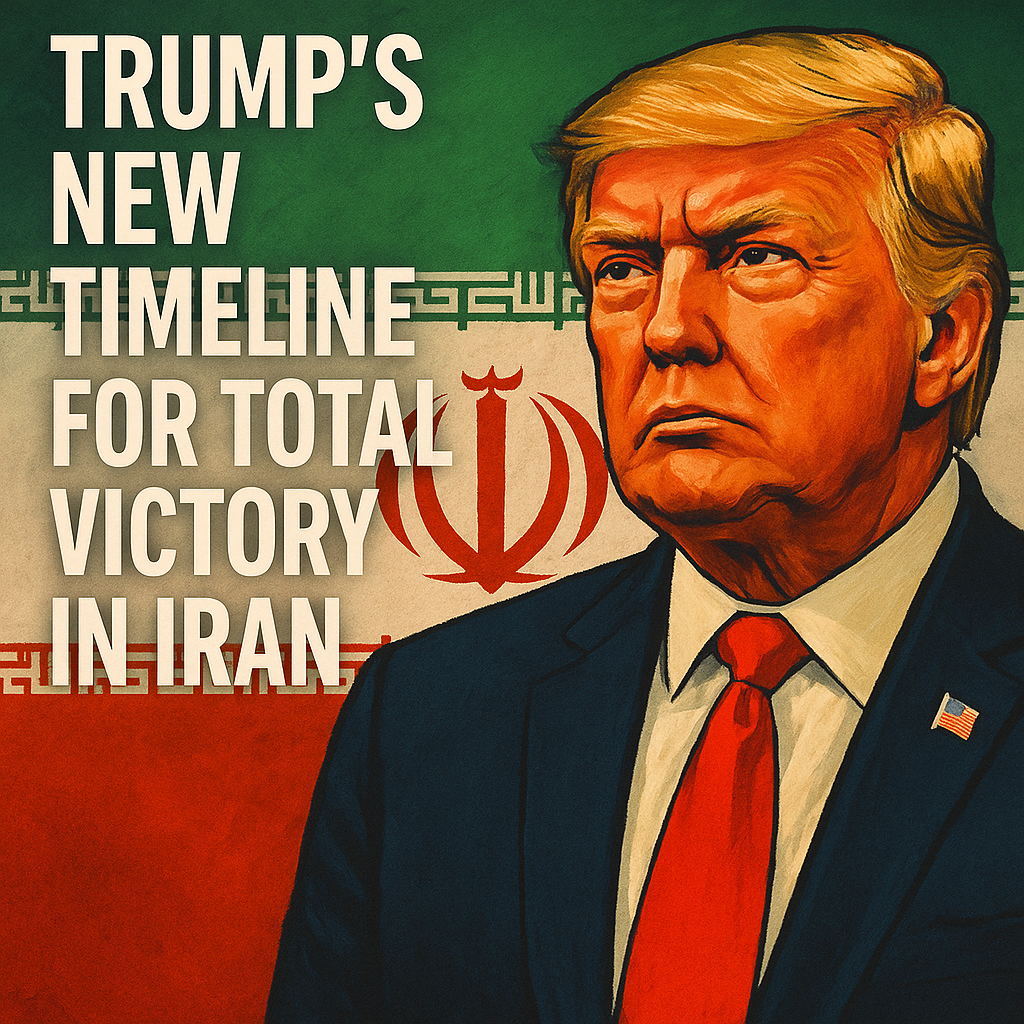
Trump’s New Timeline for Total Victory in Iran

Trump’s New Timeline for Total Victory in Iran
Former President Donald Trump has reintroduced his ambitious vision for U.S. involvement in Iran, implicitly promising a sweeping victory if he returns to the Oval Office. His “new timeline for total victory” highlights his uncompromising stance on Iran’s nuclear ambitions and regional influence, resonating with his base and drawing both support and skepticism from various quarters.

The Underlying Strategy
Trump’s declared strategy aims to dismantle what he labels “the Iranian regime’s malign activities” through a combination of diplomatic pressure and military readiness. Echoing sentiments from his presidency, he proposes renegotiating terms surrounding Iran’s nuclear capabilities while asserting that any future deal would be significantly tougher than the Joint Comprehensive Plan of Action (JCPOA) established in 2015 under the Obama administration.


Recent reports indicate that Trump is positioning himself to restore stringent sanctions on Iran if necessary, reiterating his “maximum pressure” policy which previously aimed to cripple the Iranian economy through international alliances. In a recent statement, he declared that under his leadership, “the United States will never surrender to a regime that openly chants ‘Death to America’.”


However, while Trump’s assertion of a timeline may energize his supporters, the practicalities of achieving such objectives evoke a range of responses across the political spectrum.
Diverging Perspectives
Critics of Trump’s strategy, including some foreign policy experts, argue that his aggressive rhetoric and unilateral actions could exacerbate tensions in the Middle East. An analysis from Al Jazeera suggests that such a hardline approach risks alienating crucial international allies who favor diplomacy over confrontation. The outlet emphasizes that a stable solution in Iran, and indeed in the region, may depend more on coalition-building than on the imposition of pressure alone.
Conversely, those within Trump’s circle often point to the failures of the JCPOA as validation for a more confrontational strategy. They argue that the previous administration’s attempts to engage with Iran while easing sanctions failed to curb its nuclear ambitions, and therefore a more stringent stance is both necessary and justified. Sky News has highlighted that Trump’s renewed focus is sparked partly by a desire to amplify his national security credentials, framing Iran as a central issue that could resonate with voters in the upcoming elections.
The Role of Domestic and Global Politics
Trump’s renewed assertions on Iran are not just about foreign policy; they intertwine significantly with domestic political motivations. Bringing Iran back into discussions elevates national security as a campaign issue, potentially diverting attention from other pressing domestic challenges. These include economic recovery post-COVID-19 and ongoing social issues such as immigration and infrastructure.
The broader implications of Trump’s strategy also reflect the current geopolitical climate, including evolving relationships with both traditional allies in the Middle East and emerging powers such as China. Navigating these complexities will require more than just a new timeline; it calls for a comprehensive approach that takes into account the varied interests of multiple stakeholders.
Conclusion
While Trump’s ambitious timeline for “total victory” over Iran certainly rallies a section of his supporters, it prompts deeper questions about the feasibility and consequences of such an approach. Balancing pressure with diplomacy is a delicate endeavor in international relations, particularly in a region as volatile as the Middle East. As discussions continue to unfold, both supporters and critics will be closely watching to see not only how Trump articulates his strategy but also how he intends to navigate the multifaceted landscape of foreign diplomacy in the years ahead.