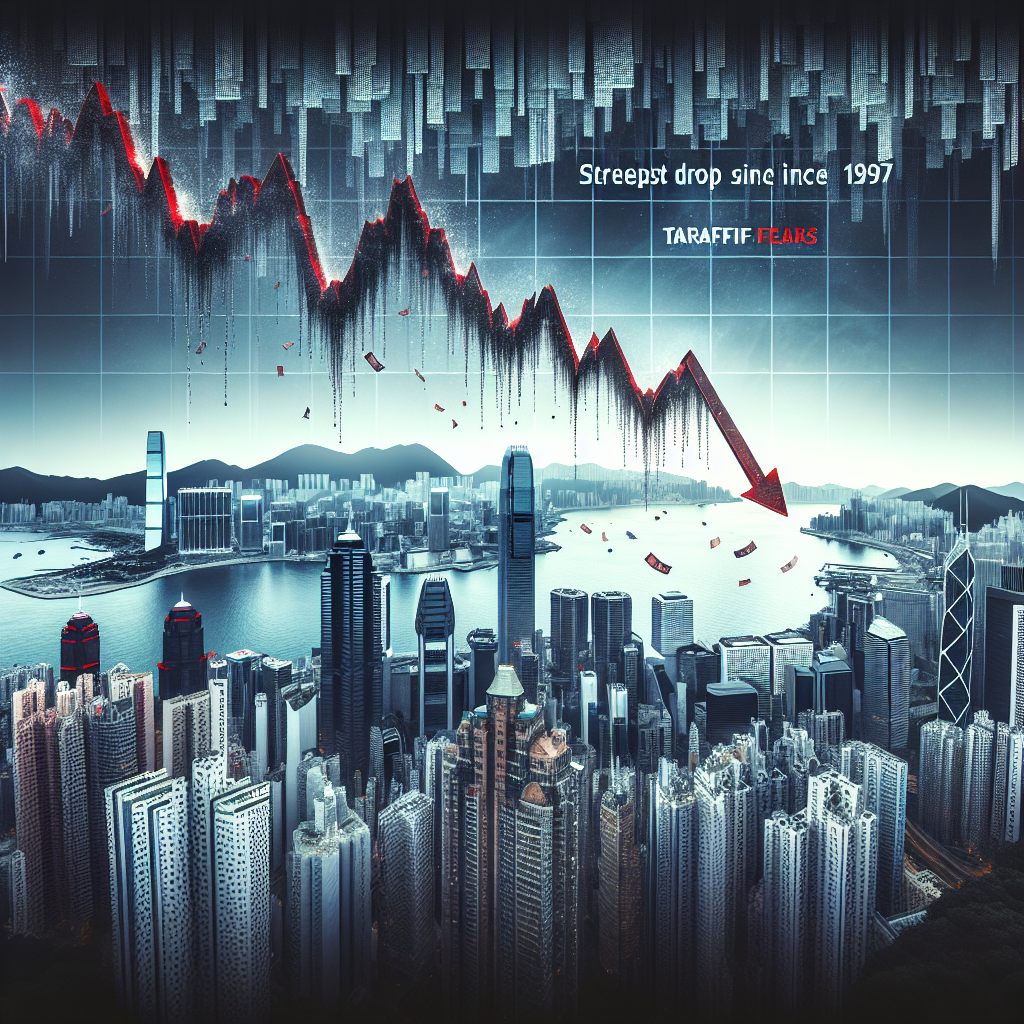
Hong Kong Stock Market Sees Steepest Drop Since 1997 Crisis Due to Tariff Fears

Hong Kong Stock Market Plummets Amid Tariff Concerns
Overview of the Market Downturn
The Hong Kong stock market has experienced its most significant decline since the 1997 financial crisis, driven by escalating fears over potential tariffs. This downturn has sent shockwaves through the financial community, raising concerns about the broader economic implications.

Key Factors Contributing to the Decline
- Tariff Tensions: Heightened fears of new tariffs have unsettled investors, leading to a sell-off in the market.
- Global Economic Uncertainty: The ongoing trade disputes have exacerbated concerns about global economic stability.
- Investor Sentiment: A lack of confidence in the market’s ability to withstand external pressures has contributed to the steep decline.
Impact on the Financial Sector
The sharp drop in the Hong Kong stock market has had a ripple effect across various sectors:


- Banking and Finance: Financial institutions have seen significant losses as investor confidence wanes.
- Real Estate: The property market is also feeling the pressure, with fears of reduced investment and growth.
- Technology: Tech stocks, often seen as a barometer for economic health, have not been immune to the downturn.
Market Reactions and Future Outlook
In response to the market turmoil, analysts are closely monitoring the situation, with some predicting further volatility if tariff tensions are not resolved. The focus is now on potential policy measures that could stabilize the market and restore investor confidence.

Conclusion
The Hong Kong stock market’s steep decline highlights the fragility of global markets in the face of geopolitical tensions. As investors navigate this uncertain landscape, the need for strategic policy interventions becomes increasingly critical to prevent further economic fallout.