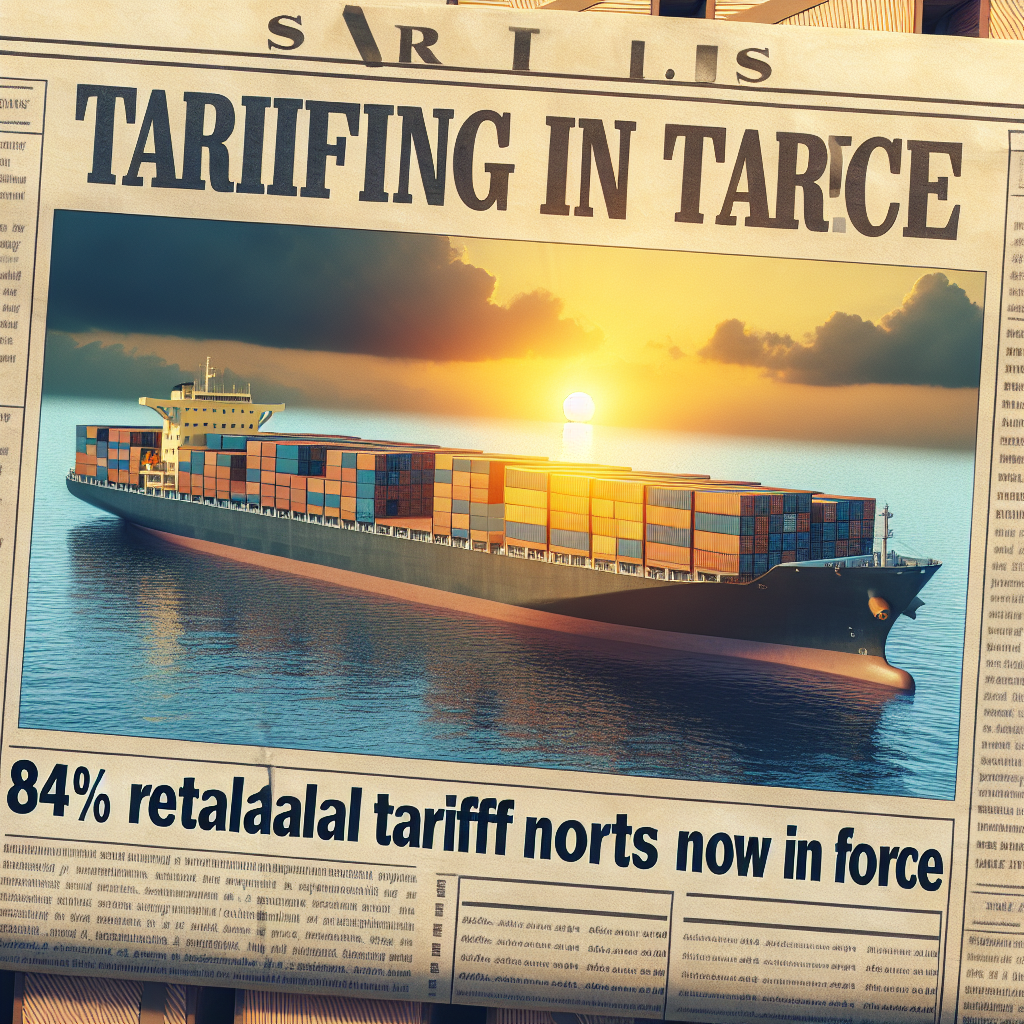
China’s 84% Retaliatory Tariff on US Imports Now in Force
China’s 84% Retaliatory Tariff on US Imports Now in Force
Overview of the Tariff Implementation
China has officially enacted an 84% retaliatory tariff on a range of US imports, marking a significant escalation in the ongoing trade tensions between the two economic giants. This move is a direct response to previous US tariffs on Chinese goods and is expected to have wide-ranging implications for global trade dynamics.

Key Details of the Tariff
- Scope: The tariff affects a broad spectrum of US products, including agricultural goods, technology, and consumer electronics.
- Objective: Aimed at pressuring the US to reconsider its trade policies and tariffs on Chinese imports.
- Duration: The tariff is set to remain in place until further negotiations yield a mutually agreeable resolution.
Implications for Global Trade
The imposition of this tariff is likely to have several significant impacts on global trade:

- Increased Costs: US exporters will face higher costs, potentially leading to increased prices for consumers.
- Supply Chain Disruptions: Companies reliant on US imports may need to seek alternative suppliers, causing potential disruptions.
- Market Volatility: The tariff could contribute to increased volatility in global markets as investors react to the heightened trade tensions.
Responses and Reactions
Reactions to the tariff have been mixed, with various stakeholders expressing concerns and support:

- US Government: Officials have criticized the move, calling for renewed negotiations to resolve the trade dispute.
- Business Leaders: Many have expressed concern over the potential impact on profits and market stability.
- International Community: Other nations are closely monitoring the situation, wary of potential ripple effects on their own economies.
Conclusion
The implementation of China’s 84% retaliatory tariff on US imports marks a critical juncture in the ongoing trade conflict. As both nations navigate this complex landscape, the global economy watches closely, anticipating potential shifts in trade policies and market dynamics. The resolution of this dispute will be pivotal in shaping future international trade relations.