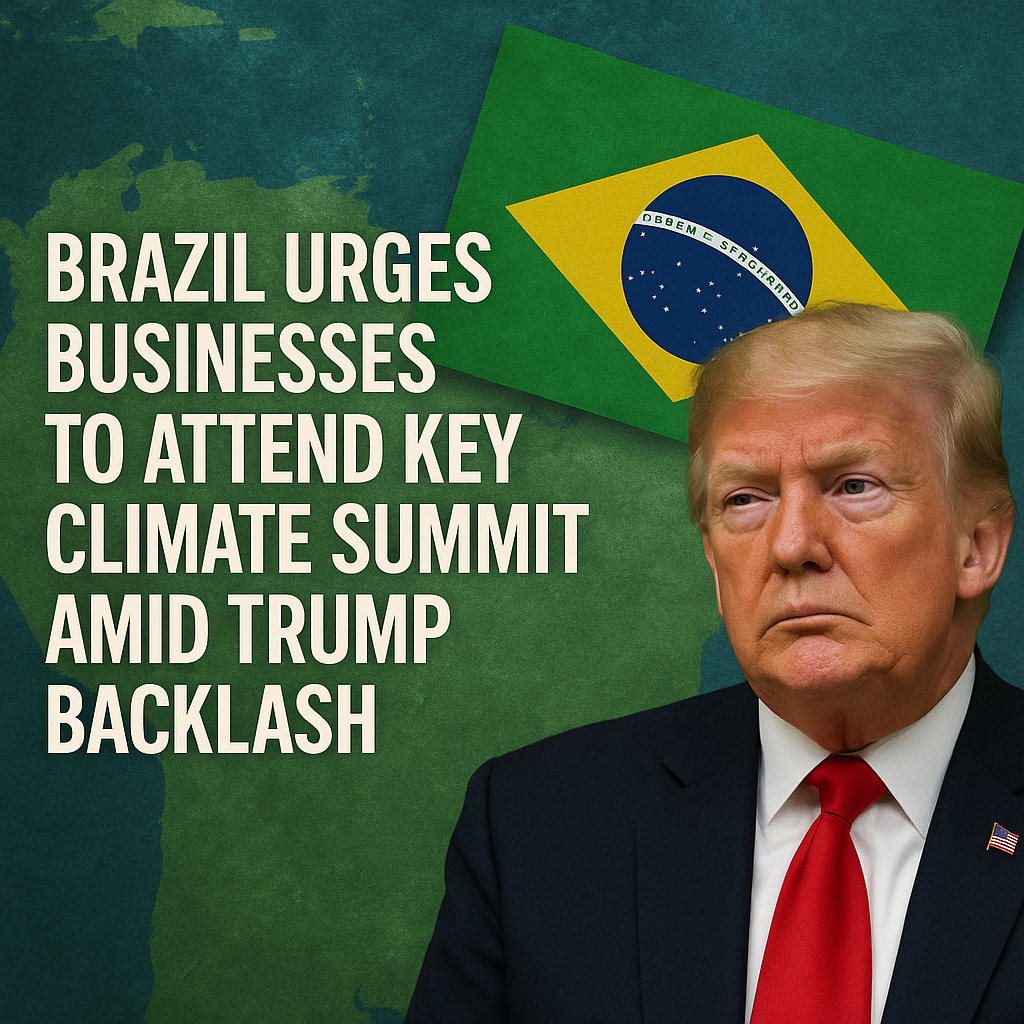
Brazil Urges Businesses to Attend Key Climate Summit Amid Trump Backlash
Brazil Urges Businesses to Attend Key Climate Summit Amid Trump Backlash
As nations and businesses navigate the complexities of climate policy and cooperation, Brazil has emerged as an ardent advocate for its upcoming climate summit. This initiative, however, faces hurdles, particularly resistance fueled by the recent political climate in the United States, especially regarding former President Donald Trump’s controversial statements about climate change and international agreements.

The Brazilian Call to Action
Brazil’s government is making a concerted effort to galvanize domestic and international businesses to attend the climate summit, emphasizing the summit’s importance in shaping global climate actions. The summit, which aims to address urgent environmental issues, is positioned as a critical platform for discussions on sustainability, carbon emissions reduction, and international cooperation.

Brazilian officials have stated that businesses play a crucial role in the implementation of climate initiatives. By participating in the summit, Brazilian businesses can engage with international counterparts, thereby fostering investment opportunities and technological exchanges that can bolster their sustainability efforts. The government argues that a strong business presence at the summit will underscore the country’s commitment to combating climate change and attract global attention to its environmental initiatives.

The Trump Factor
However, Brazil’s mission is complicated by the backlash from Trump’s administration, which has been skeptical about international climate agreements and has consistently downplayed the urgency of climate change. Trump’s rhetoric has led to a discordant atmosphere, with some businesses reconsidering their commitments to environmental policies in light of political developments.
Commentary from various news sources reflects a growing concern among business leaders about the shifting political landscapes, particularly in the United States. As highlighted by Sky News, Trump’s approach has made some corporations less inclined to commit to climate policies globally, worrying that such positions could lead to economic isolation or penalties from upcoming legislation.
While some business leaders express reluctance, others counter that collaboration on climate issues is essential, regardless of the political climate in the U.S. These leaders see the summit as a vital opportunity to reaffirm their commitment to sustainability and to demonstrate leadership in environmental stewardship.
Diverse Perspectives on Climate Cooperation
Responses to Brazil’s call for participation at the climate summit vary significantly across industry sectors.
For instance, technology and renewable energy companies are often more aligned with Brazil’s vision, recognizing the mutual benefits of climate action and innovation. These companies argue that addressing climate change opens new markets and opportunities for investment. A report from Al Jazeera indicates that many in the renewable sector support Brazil’s initiative, viewing strong regional engagement as a pathway to facilitate international cooperation that can transcend political barriers.
Conversely, industries that are heavily reliant on fossil fuels exhibit a contrasting sentiment. Executives from these sectors often cite economic uncertainty and fluctuating political support as reasons for their hesitance regarding attendance. They argue that without clear policy frameworks, business risks are too high, creating a chilling effect on their participation in global dialogues about climate ambition.
Weighing the Evidence
The contrasting views highlight the intricate nature of climate discussions in the context of political influences. On one hand, pro-environment factions assert the urgency of collective action, citing overwhelming scientific consensus on climate issues. On the other hand, business leaders concerned about immediate economic ramifications argue for a more cautious approach.
To evaluate these perspectives’ merit, it is essential to consider past outcomes from similar summits, where the actual dialogue often swayed the policy trajectory post-event. A case in point is the Paris Agreement, which, despite being shrouded in skepticism, catalyzed significant international cooperation.
As Brazil pursues its diplomatic efforts, it must navigate these waters carefully, recognizing the delicate balance between firm commitments to climate policy and the immediate interests of its multifaceted business community.
Conclusion: A Path Forward
Brazil’s call for businesses to participate in the climate summit presents both a challenge and an opportunity. The backlash stemming from the U.S. political landscape has undoubtedly created an environment of uncertainty, but it also allows Brazil to place itself as a leader in climate diplomacy.
Ultimately, the success of this initiative will depend on Brazil’s ability to unify diverse business interests while upholding its climate commitments in a globally interconnected economy. Only through sustained dialogue and collaborative action can Brazil hope to reconcile the various priorities at play, ushering in a more sustainable future amidst evolving global dynamics.