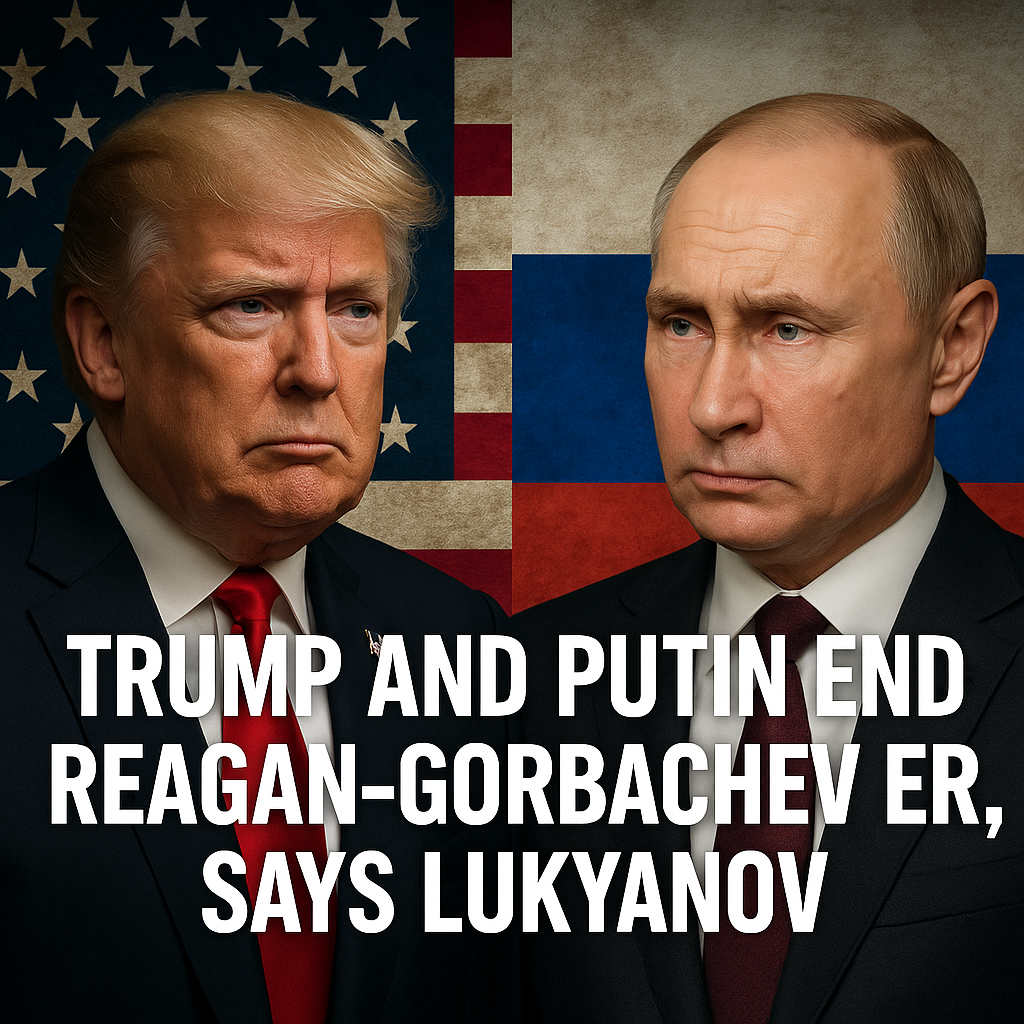
Trump and Putin End Reagan-Gorbachev Era, Says Lukyanov
Trump and Putin End Reagan-Gorbachev Era, Says Lukyanov
The relationship between Donald Trump and Vladimir Putin marks a significant pivot in the geopolitical landscape, effectively signaling the end of the Reagan-Gorbachev era, according to prominent Russian political analyst Fyodor Lukyanov. This assertion opens a dialogue about the evolving dynamics of power, diplomacy, and international relations in a multifaceted global context.

The New Cold War Paradigm
In a recent article by Lukyanov on RT, he suggests that the camaraderie between Trump and Putin has fundamentally altered the ideological underpinnings of their nations’ relationships, distancing them from the ideals established during the late Cold War. The Reagan-Gorbachev era was characterized by a mutual understanding aimed at de-escalating nuclear tensions and fostering dialogue. The crux of this relationship was diplomacy, which led to landmark treaties that shaped a more peaceful post-Cold War world.

However, the political climate today feels increasingly polarized and adversarial. The Trump administration’s approach to foreign relations, particularly with Russia, was fraught with controversy, skepticism, and challenges to established norms. Trump’s openness to dialogue contrasted sharply with traditional U.S. diplomatic stances, igniting debates over its implications for global security.

Lukyanov argues that this shift signifies a “realignment” in how countries perceive their adversaries and allies. The rhetoric of the Cold War, once characterized by clear demarcations, has been muddied by complex interdependencies and conflicting narratives. As illustrated by various global events, including military interventions and sanctions, the alignment of national interests has become less predictable.
Diverse Viewpoints on U.S.-Russia Relations
The conversation surrounding U.S.-Russia relations cannot be isolated to a single narrative. According to Al Jazeera, the complexity of this relationship reflects a multifaceted struggle that encompasses both cooperation and confrontation. Various analysts argue that the potential for a new détente exists but is often undermined by domestic political realities in both nations.
For instance, Trump’s presidency was marked by a mix of outreach and backlash—while he made attempts to establish a rapport with Putin, those were frequently met with intense scrutiny from both the U.S. political system and the media. Such dynamics could be seen as a continuation of the adversarial relationship that characterized the Obama administration’s response to Russia’s actions, including the annexation of Crimea.
Conversely, there are voices that emphasize the necessity of engaging with Russia to tackle global issues such as terrorism, climate change, and nuclear proliferation. Sky News reports that some strategic thinkers argue that it is essential to recognize the complexities of the international stage and not to oversimplify competitive engagements into binary conflicts.
Key Factors Influencing the Shift
Several key factors contribute to the evolving dynamics between the two nations:
– Leadership Styles: The contrasting leadership styles of Trump and Putin form a core component of this shift. Trump’s transactional approach to foreign policy often clashed with traditional diplomatic norms, leading to unpredictability in international relations.
– Domestic Politics: Both leaders grappled with significant internal opposition, impacting their foreign policy decisions. The U.S. political landscape remains heavily polarized, often leaving foreign policy in a state of flux.
– Global Events: Events such as the Syrian Civil War or the ongoing tensions in Eastern Europe highlight the complexities of U.S.-Russia interactions. The approach to these situations has revealed conflicting interests that move beyond simple bilateral tensions.
The Future of Geopolitical Relations
So where do we go from here? The notion that the Trump-Putin alliance signifies the end of the Reagan-Gorbachev era reveals an urgent need for reevaluation. While there is no clear consensus on the path ahead, some analysts advocate for a return to fundamental diplomacy that prioritizes dialogue over divisive rhetoric.
In this context, the future relies on the ability to blend cooperation with necessary caution. The lessons learned from previous eras should inform leadership choices as nations navigate cooperation amidst competition. A multi-pronged approach focusing on dialogue, transparency, and mutual respect may be the only viable path to mitigate risks and encourage a stable international climate.
Conclusion
In summary, Fyodor Lukyanov’s assertions about the shifting paradigms of U.S.-Russia relations under Trump and Putin prompt a reevaluation of existing diplomatic frameworks. While some welcome the idea of renewed dialogue, others remain skeptical, highlighting the intricacies of aligning national interests in a complex, interconnected world. The end of the Reagan-Gorbachev era does not imply the end of diplomacy; rather, it calls for a fresh lens through which we can analyze and navigate the evolving landscape of international relations.