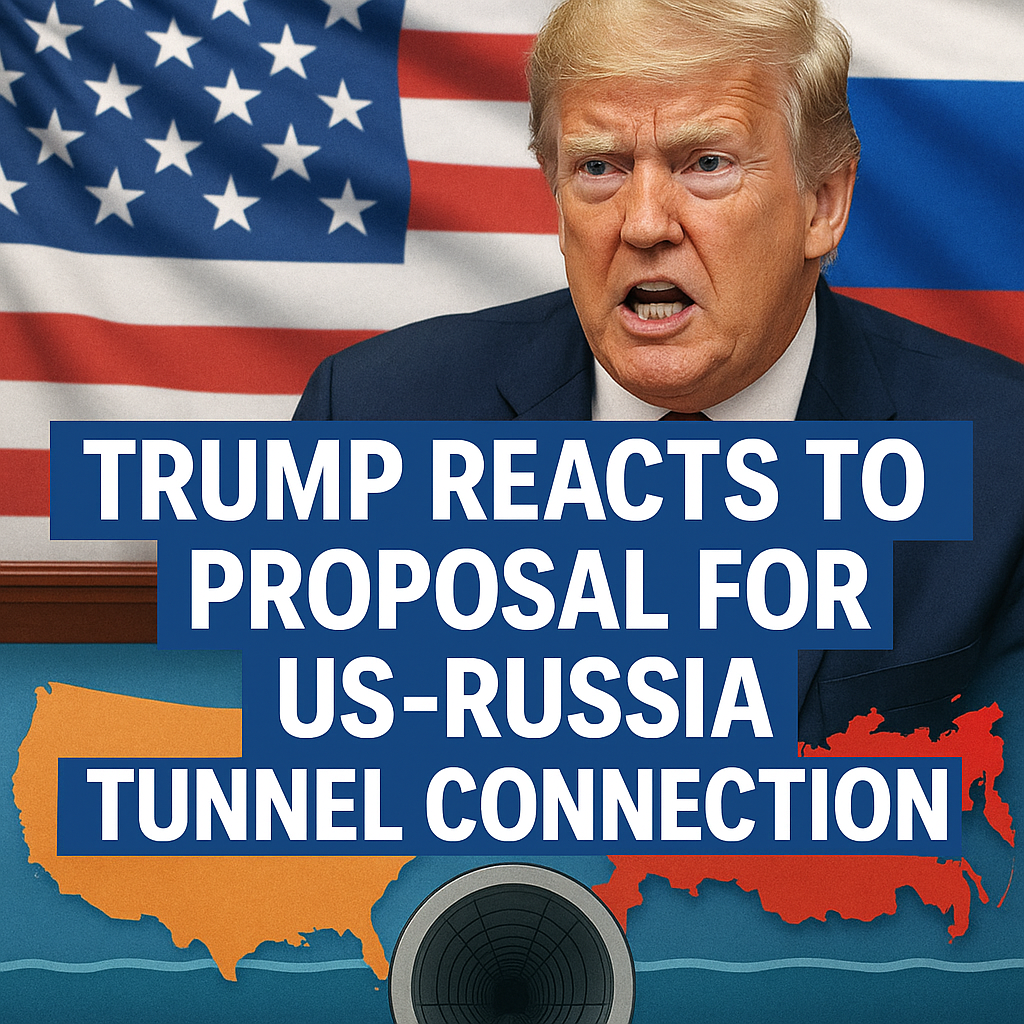
Trump Reacts to Proposal for US-Russia Tunnel Connection
Trump Reacts to Proposal for US-Russia Tunnel Connection
The idea of a tunnel linking the United States and Russia has resurfaced, igniting a mix of responses, particularly from former President Donald Trump. This ambitious idea evokes visions of enhanced connectivity but also raises questions about feasibility and geopolitical implications.

A Vision of Connection
The proposal for a tunnel connecting the two nations is not new. It was initially suggested by various thinkers and experts who see it as a way to foster cooperation and potentially circumvent ongoing tensions. The tunnel would span the Bering Strait, stretching approximately 50 miles, enabling direct transport and communication.

Trump’s response to this proposal has been both enthusiastic and dismissive. In comments made recently, he appeared to regard the tunnel idea as “fantastic,” reflecting his penchant for grandiose infrastructure projects. He suggested that such an endeavor could lead to greater economic partnerships by facilitating trade and travel between the nations. His supporters view this as a visionary step that could reshape U.S.-Russia relations.

However, many experts, including prominent figures within the political landscape, consider the suggestion more fanciful than practical. Critics argue that even the most basic discussions of a U.S.-Russia tunnel ignore the profound geopolitical realities that define the relationship. The fraying trust and mounting tensions over issues like sanctions, cybersecurity, and military engagements render such a proposal highly impractical.
Feasibility and Costs
While Trump’s remarks capture a sense of innovation, the feasibility of constructing a tunnel could easily overshadow the initial enthusiasm. Engineering experts note that the challenging terrain, harsh weather conditions, and the immense financial investment involved would pose significant hurdles.
Estimates for constructing a similar project suggest costs could soar into the billions, reminiscent of other major global infrastructure projects. For instance, the Channel Tunnel connecting the UK and France faced numerous delays and budget overruns. Opponents of the tunnel idea argue that these resources could be better allocated towards domestic infrastructure needs, rather than pursuing a controversial and ambitious international project.
A Divided Perspective
Reactions to Trump’s advocacy for the tunnel proposal have been sharply divided. Supporters of the former president view this as a bold move towards international dialogue. They argue that physical connections could lead to reconciliation, promoting a more peaceful coexistence.
Conversely, skeptics highlight the need to focus on current geopolitical realities. They cite ongoing conflicts and tensions that complicate any notion of collaboration between the U.S. and Russia. Recent reports indicate that diplomatic relationships are at a low point, with many viewing the idea of a tunnel as overly optimistic and disconnected from current diplomatic efforts.
Notably, even within the Russian sphere, there are mixed sentiments regarding the proposal. Some Russian lawmakers have expressed interest in the potential benefits of enhanced travel and commerce, while others are cautious, wary of the implications for national sovereignty and security.
The Larger Context
The proposal reflects a larger trend of seeking innovative solutions to complex political problems. History has shown that ambitious projects often catalyze dialogue and innovation. However, the success of such endeavors depends not just on the engineering aspects but also on the political will and public sentiment that accompany them.
Despite the enthusiasm that Trump’s comments might generate, the conversation must also tackle the reality of international relations. A tunnel could symbolize hope for greater collaboration, yet it rests on the foundation of trust and mutual benefit—qualities currently in short supply between the U.S. and Russia.
In conclusion, while Trump’s idea for a U.S.-Russia tunnel connection undeniably stirs the imagination, it also illustrates the complexities that envelop such initiatives. The prospect of building a bridge—or, in this case, a tunnel—across cultural and political divides is well worth considering, yet must be examined through the lens of current geopolitical realities. The question remains: can infrastructure truly foster peace amidst ongoing tensions? The debate over the tunnel proposal is likely to continue, serving as a metaphorical crossroads for U.S.-Russia relations and a reminder of the intricate dance of diplomacy in today’s world.