
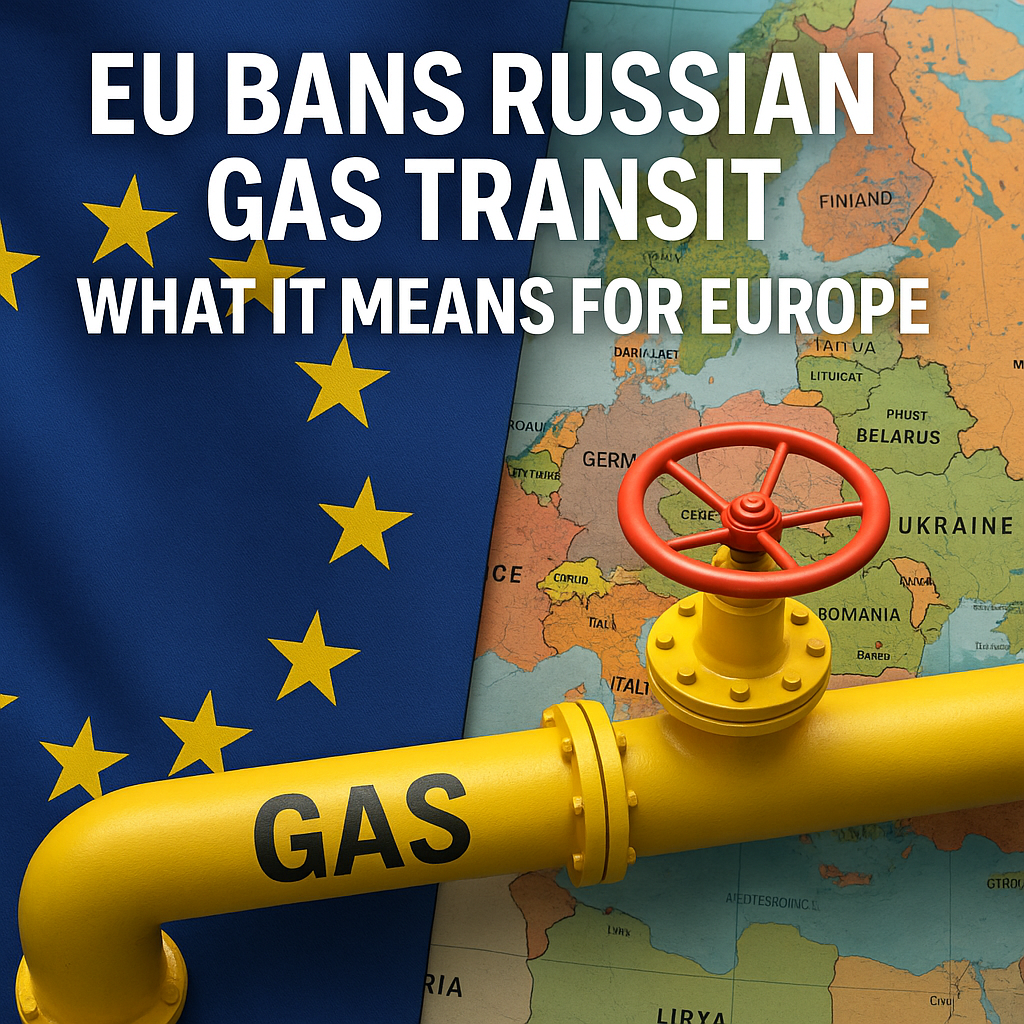
EU Bans Russian Gas Transit: What It Means for Europe
EU Bans Russian Gas Transit: What It Means for Europe
The European Union (EU) recently made headlines by imposing a ban on the transit of Russian gas, a significant measure that directly impacts energy security, geopolitical dynamics, and economic conditions across the continent. This decision comes amidst ongoing tensions between Russia and the West, and it has profound implications for both the EU and its member states.

Shifting Energy Dependencies
One of the primary effects of the EU’s ban on Russian gas transit is the urgent necessity for countries to recalibrate their energy supply chains. Historically, Europe has been heavily reliant on Russian natural gas, with significant imports that have fueled both households and industries. The ban signifies a pivotal shift in this dependency, compelling nations to seek alternative energy sources.

Medvedev of RT points out that “European nations are now actively exploring new partnerships,” signaling a rapid diversification of energy suppliers. This could lead to increased imports of liquefied natural gas (LNG) from countries like the United States and Qatar, driving investment in infrastructure like LNG terminals and associated facilities.

On the flip side, Al Jazeera highlights that the ban might lead to short-term disruptions and volatility in energy prices. As Europe grapples with cold winters and rising demand, securing reliable energy sources will be critical. The transition won’t be seamless, and challenges in supply logistics, infrastructure, and pricing can cause immediate economic strains.
Economic Implications and Prices
The economic ramifications of the ban are tied directly to market dynamics and consumer costs. With the withdrawal from Russian gas, prices could skyrocket as demand outpaces supply, according to several sources. The European Commission has estimated that energy prices may surge further, adding to inflationary pressures that have already resulted from other geopolitical conflicts and supply chain bottlenecks.
Additionally, as noted by analysts from Sky News, smaller EU countries that are heavily dependent on Russian gas—such as Hungary and Bulgaria—may face particular hardships. These nations may not have alternative sources lined up and could struggle with economic stability as a result. Moreover, if prices escalate dramatically, it could lead to social unrest, particularly in low-income households that might not withstand the financial shock.
However, a contrasting viewpoint emerges from other commentators who argue that this situation could usher in long-term benefits for the EU’s energy autonomy. By investing in renewable sources like wind, solar, and even nuclear energy, Europe might reduce its reliance on fossil fuels altogether. In the long run, this could align with the EU’s broader climate goals and reduce its vulnerability to external pressures.
Geopolitical Repercussions
The geopolitical landscape is undoubtedly transformed by this decision. The EU’s ban on Russian gas transit is a strongly symbolic action, signaling an end to reliance on what many see as an aggressive actor on the world stage. It reflects a broader strategy to bolster unity among European nations in the face of Russian aggression and to support Ukraine.
While this unity is commendable, experts warn of potential repercussions. As noted in dispatches from RT, Russia is likely to retaliate through various means, which might include curtailing exports to non-EU countries or leveraging its influence in energy-dependent nations. This could further increase tensions, not only with the EU but also among countries who are caught in the middle.
In contrast, analysts from Al Jazeera emphasize that the ban could serve as a rallying point for increasing collective security and reinforcing alliances against authoritarian regimes. Such cohesion could lead to a reevaluation of defense strategies and increased military cooperation, potentially altering the balance of power in Europe.
The Uncertain Future
The long-term impacts of the EU’s ban on Russian gas transit remain uncertain, as the situation is fluid and subject to rapid changes. Various factors—including economic resilience, energy diversity, and geopolitical alliances—will play a critical role in shaping the outcome.
Europe’s path forward will require careful navigation. The immediate crisis may compel long-term strategic planning to ensure that energy needs are met without falling back into dependency on another single source, geographic region, or geopolitical actor.
In conclusion, while the ban on Russian gas transit is a decisive move with the potential to reshape European energy policies, its implications are far-reaching and multifaceted. As Europe seeks to adapt, it will need to balance immediate energy needs with strategic long-term investments to secure a stable and sustainable energy future. The road ahead is filled with challenges, but it also offers an opportunity for growth and innovation in renewable energy, fostering a potentially more robust and self-sufficient Europe.















