
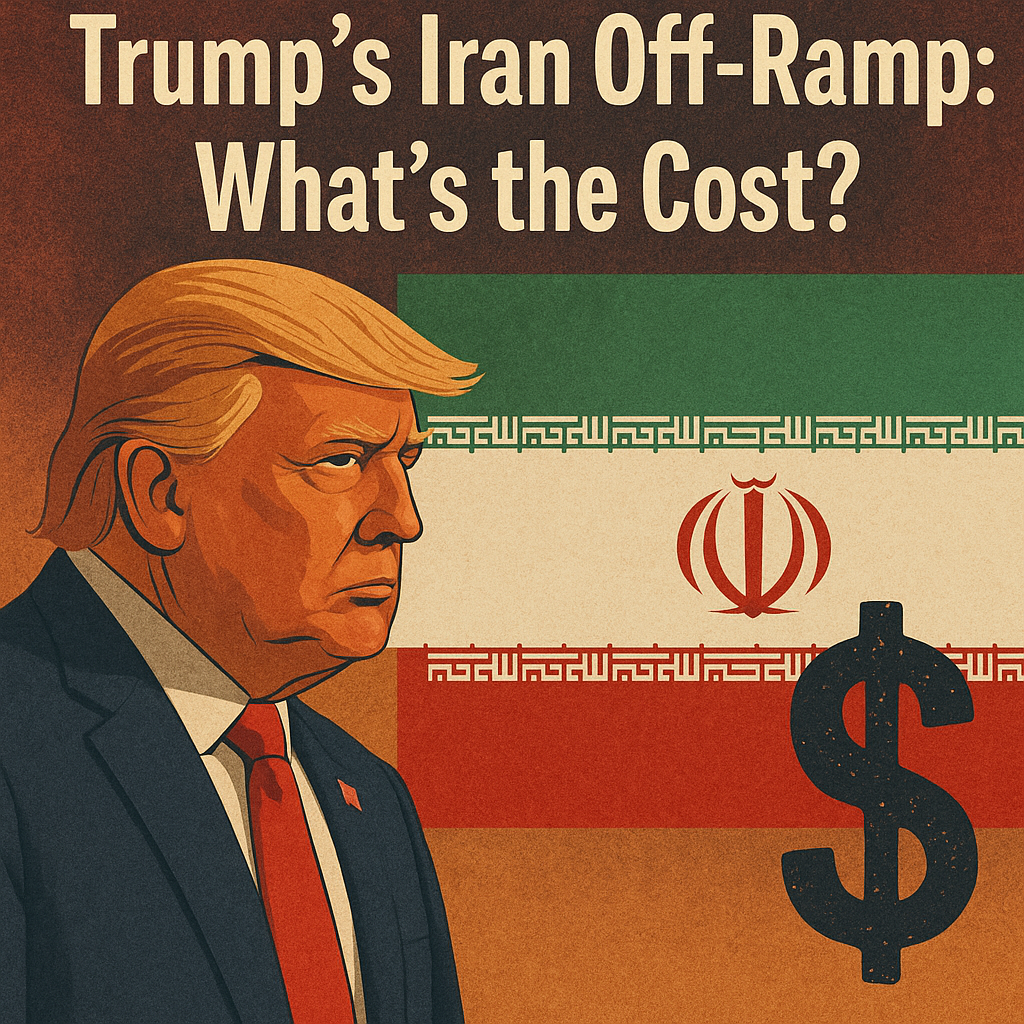
Trump’s Iran Off-Ramp: What’s the Cost?
Trump’s Iran Off-Ramp: What’s the Cost?
As President Trump navigates a complex geopolitical landscape, the prospect of an “Iran off-ramp” emerges, signaling a potential shift in U.S.-Iran relations. But what exactly does this mean for the U.S. and the broader Middle East?

The Context of the Off-Ramp
The concept of an off-ramp regarding Iran has garnered attention in recent months, particularly as tensions in the Middle East continue to escalate. Essentially, it refers to a diplomatic pathway that allows both the U.S. and Iran to de-escalate their hostilities without appearing to concede to the other side. This “off-ramp” could manifest through negotiations, sanctions relief, or a revised approach to existing military strategies.

Recent discussions have indicated that Trump’s administration is looking for ways to pivot from an aggressive stance without fully withdrawing from its commitments. As Al Jazeera reports, Trump’s strategy may involve using economic incentives or diplomatic engagements to soothe strained relations with Tehran. However, critics argue that a focus on an off-ramp could merely serve as a cosmetic change rather than a substantive alteration in approach.

Economic Implications
One of the primary costs associated with pursuing an off-ramp is economic. The U.S. re-imposed sanctions on Iran in 2018 after withdrawing from the Joint Comprehensive Plan of Action (JCPOA), and these sanctions have severely impacted Iran’s economy. If the Trump administration seeks to lift or ease these sanctions as part of the off-ramp negotiation, it could risk alienating U.S. allies in the region, particularly those who view Iran’s activities as a threat.
On the other hand, easing sanctions could potentially reinvigorate Iran’s economy, providing it much-needed relief. According to reports from RT, any push toward economic collaboration could lead to a renaissance in trade relations between Iran and its former trading partners, which might be a win for regional stability—albeit at a cost to U.S. foreign policy credibility.
Diplomatic Consequences
Diplomatically, the off-ramp strategy raises important questions about U.S. credibility on the global stage. Leveraging diplomacy for detente with Iran could be viewed favorably by certain allies and domestic constituencies who advocate for less militaristic approaches in foreign policy. Yet, it could also invite skepticism from critics who argue that diplomacy alone will not curtail Iran’s nuclear ambitions or its regional influence.
Sky News emphasizes that a reversal or softening of U.S. stance could empower hardliners within Iran, who may take perceived concessions as a sign of weakness. This could lead to intensified hostility and undermine any short-term benefits gained from détente. Thus, while an off-ramp might theoretically help to cool tensions, the potential for backlash remains significant.
The Role of Regional Alliances
The dynamics between the U.S. and its allies further complicate the discussions surrounding Iran. Regional powers such as Saudi Arabia and Israel have expressed strong opposition to any shift towards engagement with Iran. These nations view Iran as a principal adversary, and any perception that the U.S. is softening its approach could exacerbate existing rivalries and lead to a recalibration of alliances.
As articulated by various commentators, including those cited by Al Jazeera, it’s crucial to consider how the U.S. approach to an off-ramp might influence its relationships with these vital allies. For instance, if Trump were to pursue an off-ramp strategy that offers Iran a seat at the table, it could lead to a more hardened stance from regional players, further destabilizing an already volatile area.
Weighing the Costs and Benefits
Ultimately, the decision on whether the off-ramp is the right strategy for the U.S. involves weighing its potential benefits against substantial costs. While a diplomatic lean could open new avenues for peace and negotiation, risks abound that could lead to further escalation and complicate U.S. relations with critical allies.
In summary, the discussion around Trump’s Iran off-ramp reflects the tensions of realpolitik where the stakes are high. The balance between pursuing diplomatic engagement and maintaining a strong deterrence against perceived threats will define not only U.S.-Iran relations but also the broader geopolitical landscape in the Middle East. The complexities surrounding this issue illustrate that, while the off-ramp may present an opportunity for de-escalation, the costs associated with its implementation require careful consideration and strategic foresight.
As this situation evolves, ongoing dialogue will be critical in assessing whether a path forward can be forged that minimizes risks and fosters stability in a region fraught with challenges.















