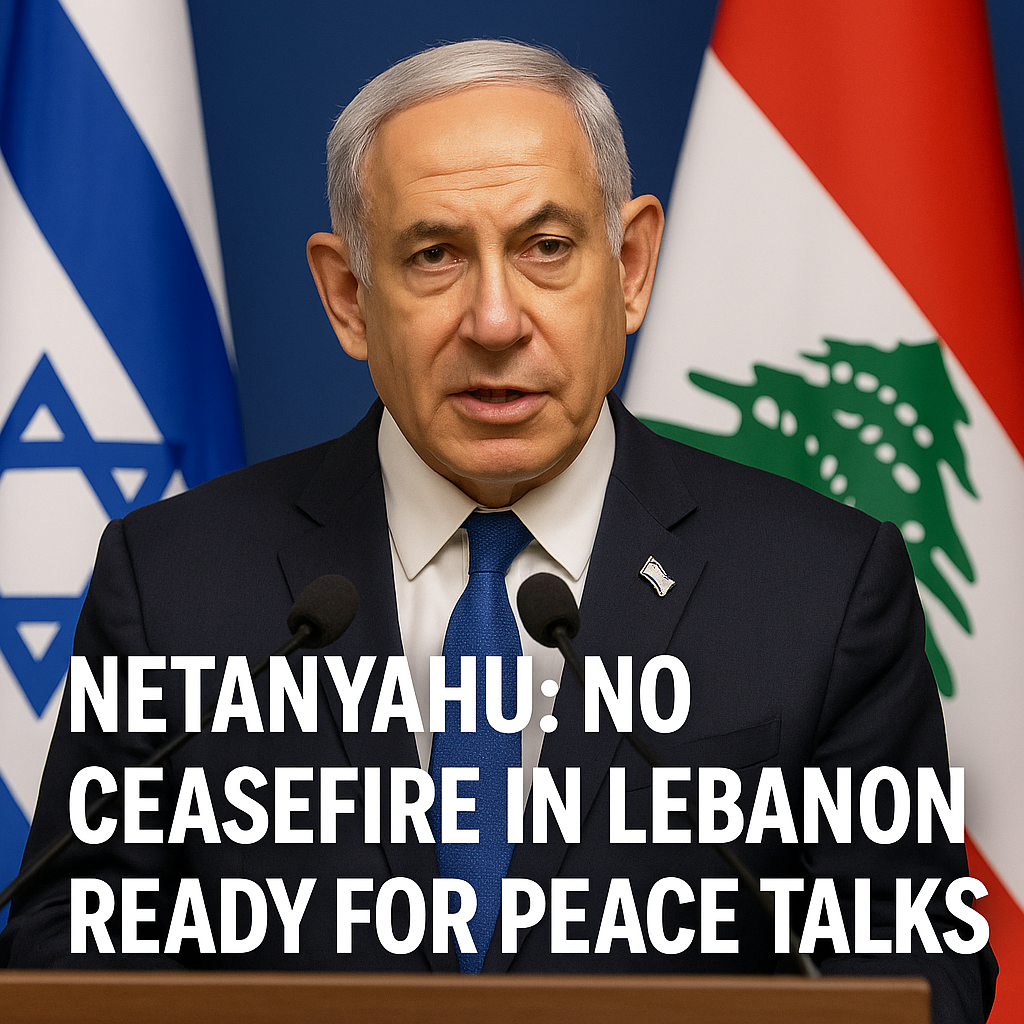
Netanyahu: No Ceasefire in Lebanon, Ready for Peace Talks
Netanyahu’s Stance on Lebanon: No Ceasefire, Yet Open to Peace Talks
Israeli Prime Minister Benjamin Netanyahu recently made a significant statement regarding the ongoing tensions in Lebanon, asserting there will be “no ceasefire” amidst military hostilities but indicating that Israel is open to peace negotiations. This complex position sheds light on the delicate balance between defense and diplomacy in a region historically fraught with conflict.

The Stark Reality of Conflict
Netanyahu’s declaration came in the wake of military exchanges that have marked recent months between Israel and militant groups operating in Lebanon, primarily Hezbollah. These skirmishes have generated substantial casualties and raised international concerns about the potential for a wider regional conflict. In stark terms, Netanyahu laid out Israel’s perspective, emphasizing that the nation’s security and sovereignty remain paramount.

The Prime Minister indicated that any ceasefire would not be feasible until his government could ensure that such arrangements would not allow Hezbollah to reorganize or strengthen its position. Meanwhile, he reaffirmed Israel’s commitment to peace talks, though the conditions for such negotiations remain tentative and closely linked to security concerns.

Divergent Perspectives on Peace
While Netanyahu’s assertion that Israel is ready for peace talks may initially seem positive, various reactions illustrate the complexity of the matter. Some analysts argue that this duality could serve as a strategic maneuver—communicating openness to dialogue while justifying military actions. Observers note that unilateral military actions can undermine trust in the negotiation process, a sentiment echoed in reports from various sources.
RT offers a contrasting viewpoint, citing regional analysts who argue that such a dichotomy in Netanyahu’s rhetoric creates skepticism among those in Lebanon. The delicate nature of Lebanese politics also complicates matters, as Hezbollah wields considerable influence in the country and has historically been unwaiving in its stance against Israel. Critics suggest that peace talks could be perceived as a façade if not accompanied by genuine steps toward de-escalation.
On the other hand, outlets like Al Jazeera highlight the potential for facilitated dialogue through third-party interventions. Historically, international mediators have played key roles in orchestrating negotiations in the region, and the current tensions present an opportunity for diplomatic breakthroughs, assuming both parties are willing to engage in earnest discussions.
The Road Ahead: Challenges of Negotiation
Despite Netanyahu’s indication of a readiness to pursue peace talks, significant hurdles loom large. Firstly, both sides must navigate deeply entrenched sentiments rooted in decades of animosity and mistrust. For Israel, the paramount concern remains the threat of Hezbollah, which is viewed as a key adversary. For Lebanon, engaging with Israel while maintaining national sovereignty and the support of various political factions will be crucial.
Moreover, the external geopolitical climate adds another layer of complexity. The involvement of global powers, namely the United States and Iran, in the regional dynamics cannot be overstated. Both countries hold substantial influence over Lebanon and the surrounding area, complicating any independent peace initiative.
Yet, there is room for cautious optimism. The emergence of back-channel communications between Israel and Lebanese officials—while not publicly acknowledged—could provide avenues for dialogue that bypass conventional negotiations. Engaging both governmental and non-governmental entities could help foster a more conducive environment for discussions.
Drawing from History: Lessons Learned
Throughout history, various ceasefire negotiations in the Middle East have yielded mixed results. The Camp David Accords, the Oslo Accords, and other pivotal moments in Israeli-Palestinian relations serve as reminders of potential pathways toward peace, albeit followed by significant setbacks and renewed violence. Therefore, the question remains: Can Netanyahu’s assertion of a conditional openness to negotiations be linked to a broader strategy for enduring peace, or will it merely serve as a temporary reprieve?
One promising aspect is the growing recognition among certain regional leaders of the need for dialogue over conflict. Analysts suggest that fostering a culture of negotiation rather than confrontation may ultimately contribute to diminishing hostilities in Lebanon and surrounding areas.
Conclusion: Navigating Uncertain Waters
Netanyahu’s declaration offers a dual narrative—one of a firm military posture and another of a willingness to negotiate peace. As tensions continue to rise, understanding the implications of this stance requires an analysis of regional dynamics, historical context, and the interplay of internal and external influences.
What remains clear is the necessity for sustained dialogue to break the cycles of violence. While Netanyahu’s position may resonate with his domestic supporters, the path toward a legitimate and lasting resolution will hinge on tangible actions and mutual trust. As the world watches, the pivotal question lies not only in their rhetoric but also in their readiness to translate words into meaningful steps toward peace.