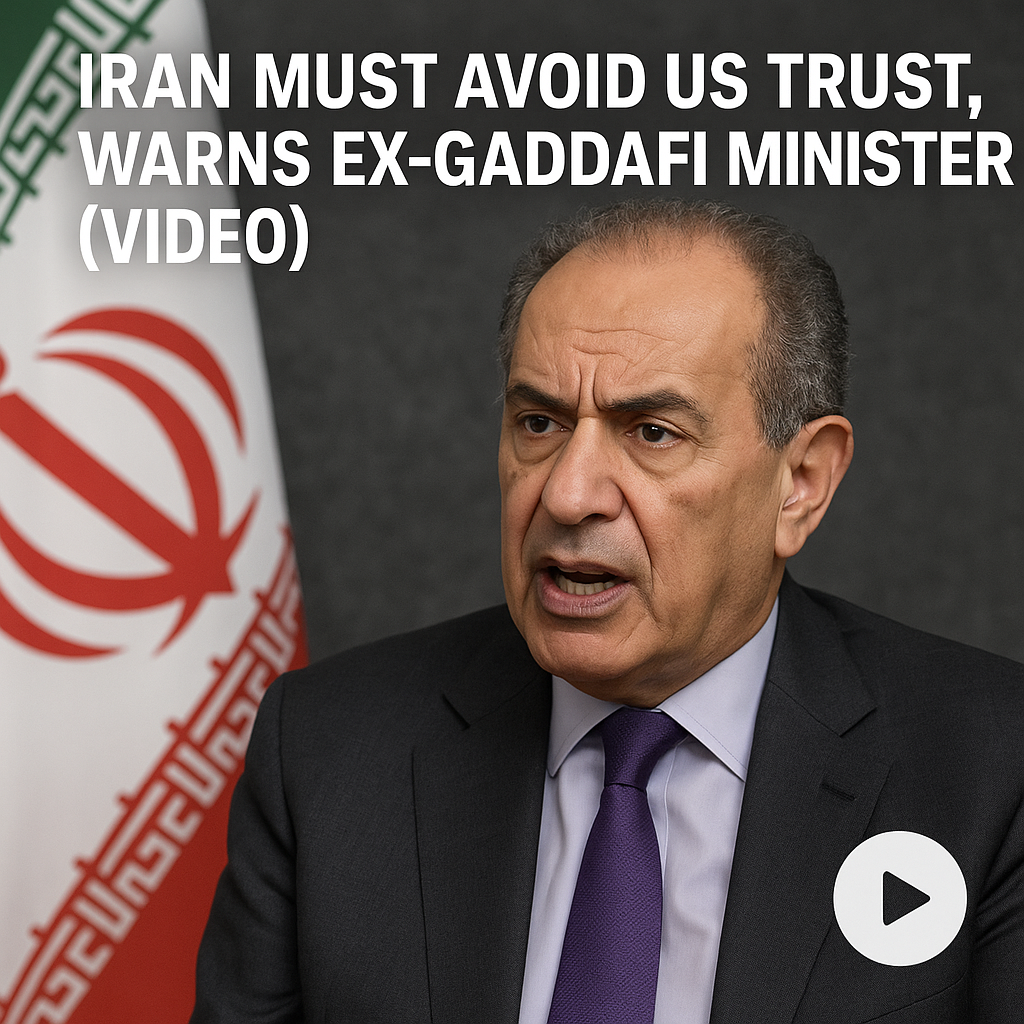
Iran Must Avoid US Trust, Warns Ex-Gaddafi Minister (VIDEO)
Iran Must Avoid US Trust, Warns Ex-Gaddafi Minister
In the complex arena of international relations, trust is a delicate commodity, especially between nations with contrasting ideologies and historical grievances. This sentiment was prominently echoed by former Libyan official Ibrahim Al-Gaddafi, who emphatically warned that Iran should avoid placing its trust in the United States. His remarks come amid ongoing discussions about potential negotiations between Iran and the U.S., raising questions about the possibility of a new chapter in their fraught relationship.

The Historical Context of US-Iran Relations
To understand the significance of Al-Gaddafi’s warning, it’s essential to briefly review the historical context between Iran and the U.S. The relationship began to deteriorate after the 1979 Iranian Revolution, which saw the overthrow of the Shah and the establishment of the Islamic Republic. Since then, the U.S. has imposed sanctions on Iran, citing concerns over its nuclear program and support for groups considered terrorist organizations by Washington.

Changing Dynamics in Diplomacy
More recently, various dialogues—including the Joint Comprehensive Plan of Action (JCPOA) established in 2015—offered a glimmer of hope for improved relations. However, the Trump administration’s withdrawal from the agreement in 2018 and the subsequent reinstatement of sanctions exacerbated tensions.

In light of these events, Al-Gaddafi posits that trusting U.S. negotiations could lead Iran into another web of unfulfilled promises. He stated, “Iran has seen how the U.S. operates; any misunderstanding or miscalculation could have dire consequences.” His viewpoint resonates with widespread skepticism regarding American intentions among political analysts and historians alike.
Diverse Perspectives on Trust and Diplomacy
Despite the ongoing dialogues, perspectives on US-Iran relations diverge widely.
Iranian Officials’ Stance: Officials in Tehran have often expressed cautious optimism. For instance, Iranian Foreign Minister Hossein Amir-Abdollahian recently indicated that Iran remains open to negotiations but insists that its dignity and security must be assured. This stance reflects a broader national sentiment that any agreements should be meaningful and verifiable.
U.S. Position: On the other hand, U.S. leaders argue that diplomacy is the most viable pathway to mitigate risks associated with Iran’s nuclear aspirations and regional activities. As articulated by national security spokespersons, the U.S. is committed to ensuring that any talks lead to substantive results. Nonetheless, a segment of the American media has criticized this approach as naive, asserting that Iran cannot be trusted to honor commitments based on past behavior.
The Role of Global Perception
As the international community watches closely, the stakes become higher. According to analysts from various sources, the perception of trustworthiness plays a crucial role. Surveys indicate that not just Iran, but many countries perceive the U.S. as an inconsistent partner. This widely held view complicates diplomatic efforts, as nations weigh the risks of entering into negotiations with the fear of potential fallout.
Counterarguments and Concerns
While skepticism is prevalent, some experts argue that avoiding dialogue altogether may lead to further conflict and instability in the region. As highlighted by various reports, a lack of communication postures nations toward military options, potentially creating scenarios where miscalculations could spiral out of control.
Moreover, the question arises: What alternatives exist aside from negotiations? Some analysts argue for more robust multilateral approaches, involving regional stability talks that include not only the U.S. and Iran but other stakeholders, such as Russia and European nations, to find common ground.
Conclusion: Navigating a Complex Relationship
The echo of Al-Gaddafi’s warning resonates deeply in the context of U.S.-Iran relations, underscoring a critical inquiry into trust and diplomacy. As the global landscape continues to evolve, both countries face immense pressure to navigate a complex relationship that has implications far beyond their borders.
With Iran asserting its position on maintaining dignity and security in negotiations, it’s clear that trust will not come easily. Simultaneously, the U.S. must grapple with the reality that its past actions have created an enduring cloud of skepticism.
Ultimately, whether through cautious diplomacy or regional cooperation, the path ahead requires not only a careful balance of interests but also a re-evaluation of the trust deficit that characterizes U.S.-Iran interactions. The world is watching closely, aware that peace in this pivotal region may hinge on the wisdom of its leaders in navigating these troubled waters.