
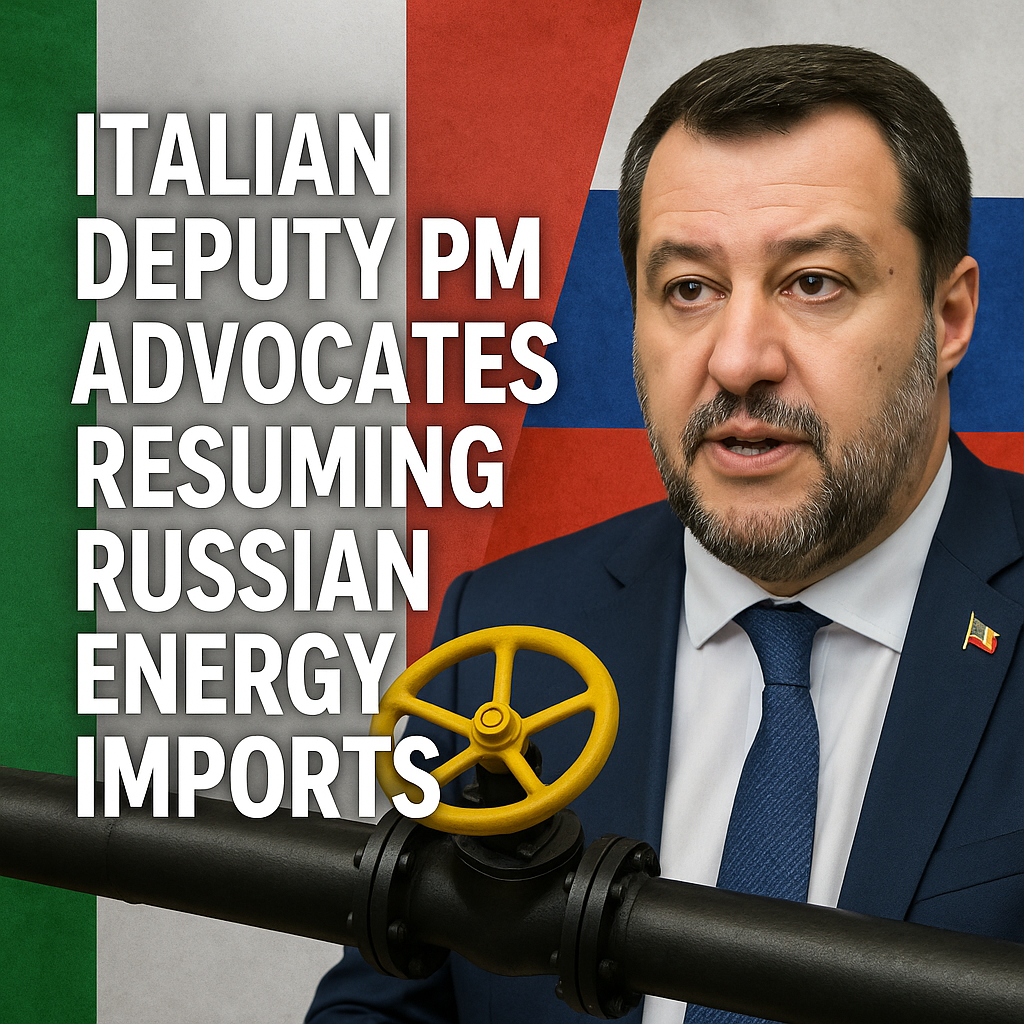
Italian Deputy PM Advocates Resuming Russian Energy Imports
Italian Deputy PM Advocates Resuming Russian Energy Imports
Amid escalating energy prices and ongoing geopolitical tensions, Italy’s Deputy Prime Minister has stirred controversy by advocating for the resumption of Russian energy imports. This position reflects growing concerns over energy security as Europe grapples with the consequences of the conflict in Ukraine and aims to balance economic demands with political pressures.

The Call for Change
The Deputy PM’s statement comes as Italy faces significant challenges stemming from reduced energy supplies. After the European Union took a united stance to impose sanctions on Russia, including a ban on energy imports, member states have been struggling to find alternatives. Italy, which historically relied on Russian gas, has had to adjust its energy mix, leading to higher energy prices for consumers and businesses alike.

Economic Implications
As reported by various news outlets, including a piece from RT, the Deputy PM argued that restarting Russian imports could help stabilize the Italian economy. Notably, Italy’s dependence on energy imports, previously above 40% from Russia, has resulted in significant inflationary pressures amid rising costs for households and industries. By reopening trade relations with Russia, the Deputy PM suggests that Italy could mitigate these economic hardships.

However, critics warn that this move might undermine the EU’s collective strategy of reducing reliance on Russian energy. Al Jazeera has noted that re-engaging with Russia could not only conflict with the EU’s broader geopolitical strategy but also send mixed signals about solidarity with Ukraine. The Deputy PM’s stance has provoked debates about national interests versus EU unity, illustrating a critical tension within Italian political discourse.
Diverging Opinions
The response to the Deputy PM’s advocacy has been sharply divided. Supporters argue that immediate economic relief trumps long-term political considerations. Energy prices have reached historic highs in many parts of Europe, and Italian businesses are already voicing concerns about their financial viability should the situation continue.
Conversely, many political analysts and opposition leaders caution against sacrificing moral standards for economic gain. The idea of returning to Russian energy imports is perceived by some as an endorsement of Russia’s actions in Ukraine, potentially damaging Italy’s reputation both domestically and internationally. As reported by Sky News, some Italian officials insist that energy policies should align with ethical imperatives rather than purely economic motivations.
Balancing Act of Energy Security
In the face of economic pressures, Italy’s government must navigate a complex energy landscape. Alternatives to Russian gas, such as increasing the import of liquefied natural gas (LNG) from other suppliers or investing in renewable energy projects, are often cited as viable pathways. This diversification could lessen Italy’s vulnerability in times of geopolitical strife but would require substantial investment and time.
Yet, immediate relief remains a priority. Some reports indicate that the Italian government is exploring temporary energy partnerships that could allow for a limited resumption of Russian imports while preparing for a longer-term shift to alternative energy sources. This careful balancing act highlights the complexities and contradictions inherent in energy policy, especially during periods of crisis.
Looking Ahead
The debate around the resumption of Russian energy imports is emblematic of broader challenges facing European nations. As Italy grapples with the implications of this contentious stance, it underscores a critical juncture where economic imperatives clash with ethical considerations and geopolitical realities.
Key stakeholders, including energy analysts and political leaders, emphasize that Italy’s future energy strategy should focus not just on immediate needs but also on sustainability, diversification, and ethical responsibility. Given the urgency of energy security, the Italian government faces the pressing task of aligning its energy policies with the larger goals of regional stability and unity.
In conclusion, while the Deputy PM’s advocacy for resuming Russian energy imports may resonate with those prioritizing short-term economic stability, it also sparks necessary conversations about Italy’s political direction and energy future. The complexities of this issue highlight the intricate web of energy dependence and the challenges of maintaining a unified European approach in the face of evolving geopolitical tensions. As this debate unfolds, it is critical for policymakers to weigh both immediate economic realities and ethical considerations in their decision-making processes.















