
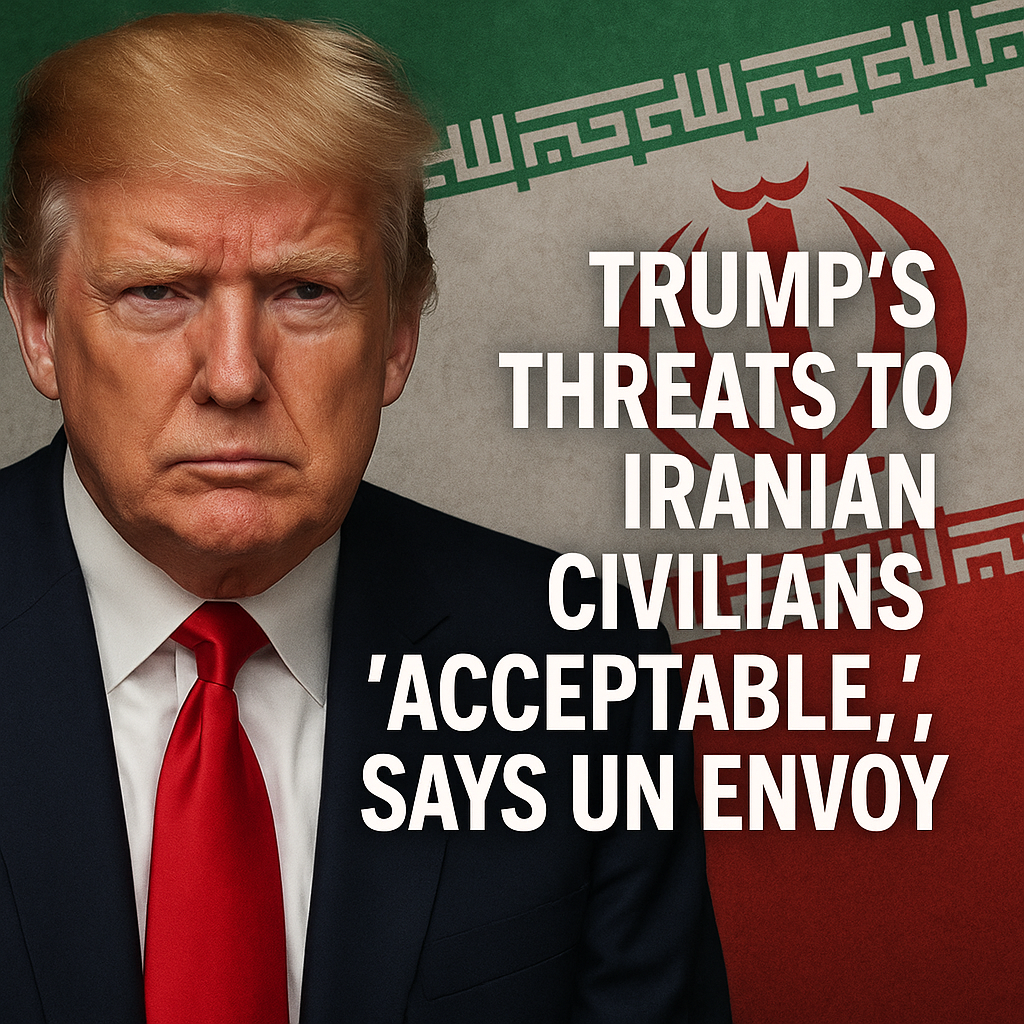
Trump’s Threats to Iranian Civilians ‘Acceptable,’ Says UN Envoy
Trump’s Threats to Iranian Civilians ‘Acceptable,’ Says UN Envoy
In today’s complex geopolitical landscape, the moral ramifications of political rhetoric can be contentious. Recently, the United Nations envoy has sparked a heated debate by stating that former President Donald Trump’s threats toward Iranian civilians are considered “acceptable.” This statement raises various questions about international norms and the balance between security and human rights.

Context of the Comment
The UN envoy’s assertion comes in the wake of ongoing tensions between the United States and Iran, particularly highlighted by Trump’s previous comments suggesting aggressive action against Tehran. The remarks have drawn a line in the sand for humanitarian considerations and have prompted a mixed response from global leaders and commentators alike.

The United Nations Perspective
The UN’s perspective typically leans toward the protection of civilian lives, as embedded in numerous international treaties and conventions. The envoy’s assertion that Trump’s threats are “acceptable” potentially undermines established norms around civilian protection. Some experts argue that such statements can normalize aggressive rhetoric and set a troubling precedent for future diplomacy.

Critics of the envoy’s statement, including human rights advocates, have voiced strong concerns. They argue that any endorsement of targeting civilians—regardless of the justification—can contribute to an environment where human rights are compromised. According to a representative from Amnesty International, “This perspective is alarming. It might embolden state actors to dismiss civilian safety in favor of political maneuvering.”
Diverging Opinions
In contrast to the UN envoy’s stance, a significant portion of the international community believes that threats against civilians are categorically unacceptable. Drawing from various diplomatic perspectives, it is evident there is a strong warning against the collateral damage such threats can incite.
Risks of Normalizing Aggression
Supporters of a more aggressive stance argue that in matters relating to national security, stark warnings to adversarial governments are sometimes necessary. They cite cases where strong rhetoric has preempted potential crises. According to a commentary in Sky News, “Sometimes tough talk can deter adverse actions before they occur.” However, this reasoning does not take into consideration the potential ramifications for civilian populations caught in the crossfire, particularly in countries like Iran.
Conversely, proponents of a diplomatic approach suggest that maintaining open lines of communication and resorting to dialogue rather than threats is the best course of action. A report from Al Jazeera presents a view that diplomacy can eventually lead to more stable outcomes than what could arise from threats. “Dialogue fosters understanding, while aggression often breeds resentment,” the report asserts, emphasizing the importance of long-term peace over immediate advantage.
The Broader Implications
The UN envoy’s comments and the reactions they’ve incited expose a critical dilemma: to what extent should threats be acceptable within the confines of international relations? The balance between assuring national security and preventing humanitarian crises is precarious at best.
Potential Consequences for Diplomacy
If aggressive rhetoric continues to be normalized, it may not only sow discord between nations but also erode public trust in international organizations like the UN. Furthermore, it risks pushing the boundaries of acceptable diplomatic discourse and might lead to increased military actions that endanger civilian lives.
There’s also the concern that such statements can exacerbate tensions domestically within affected nations, leading to heightened hostility among civilians towards foreign powers.
Conclusion: Navigating Complexity
The discourse around Trump’s threats to Iranian civilians as framed by a UN envoy serves as a microcosm of the larger challenges facing global diplomacy. With diverse opinions emphasizing different facets of the issue, it is clear that no simple consensus exists.
While some may find merit in strong rhetoric as a strategy, others caution against the dangers of undermining humanitarian principles. As the convo evolves, it’s crucial for leaders and institutions to tread carefully, weighing the need for security against the imperative to uphold human rights. The complexities of international relations demand a nuanced approach that prioritizes dialogue and collaboration, ensuring that the safety of civilians remains at the forefront of global policy discussions.















