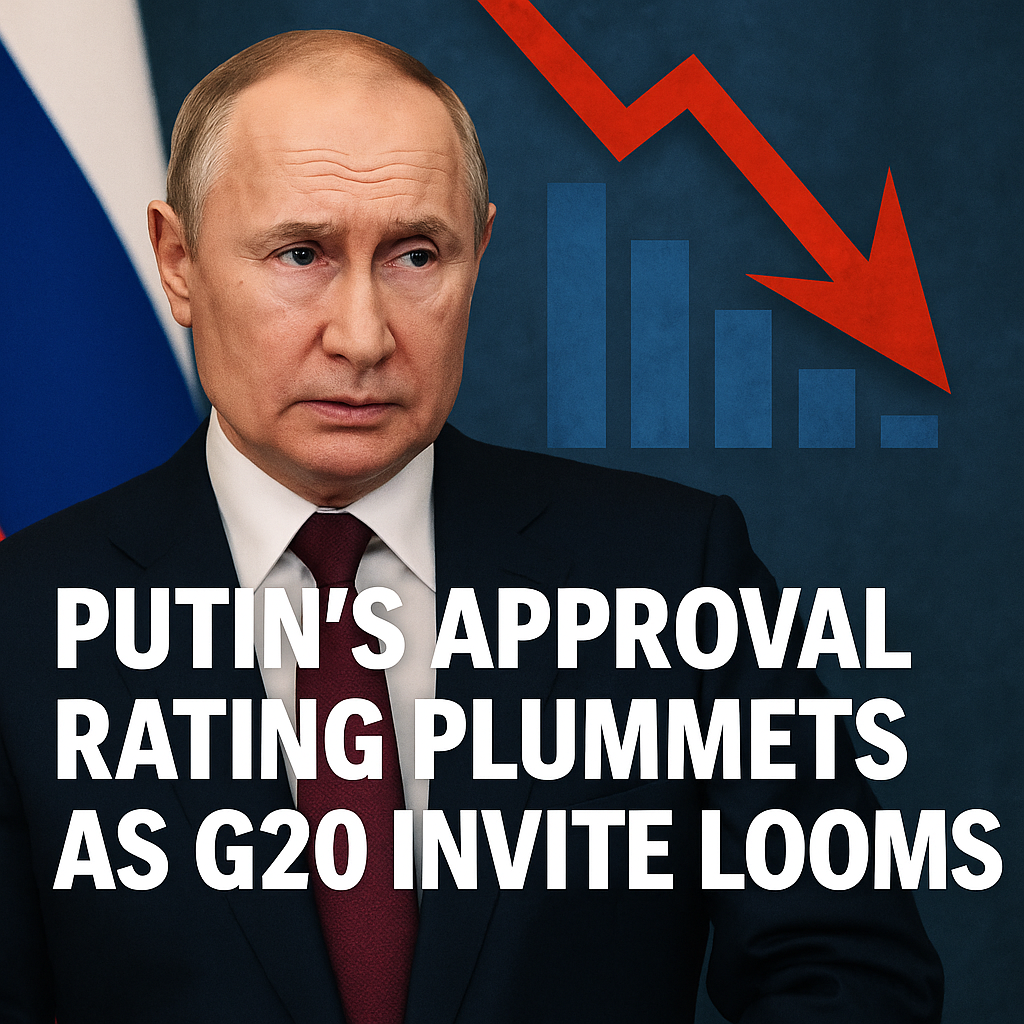
Putin’s Approval Rating Plummets as G20 Invite Looms
Putin’s Approval Rating Plummets as G20 Invite Looms
Vladimir Putin’s approval rating has taken a significant downturn, falling to its lowest since the onset of the Ukraine invasion. As the prospect of attending the G20 summit emerges, the Kremlin faces mounting internal pressures that could impact the Russian leader’s international standing and domestic credibility.

Dissecting the Approval Ratings
Recent reports indicate that Putin’s approval rating has dipped below 70%, a stark decline compared to pre-war levels, where it was around 83% before the Ukraine conflict began. According to a Sky News report, this drop reflects growing dissatisfaction among the Russian populace amid mounting economic hardships and international isolation. Factors contributing to this decline include rising prices, widespread dissatisfaction about the military’s performance in Ukraine, and the social ramifications of sanctions imposed by Western nations.

Mixed Reactions from the Public and Analysts
Public sentiment reveals a complex landscape. While state-controlled media often portrays a narrative of resilience and national pride, grassroots feedback suggests a nuanced perception. Many Russians are frustrated with the economic fallout of the ongoing conflict. Al Jazeera cites the increasing cost of living and deteriorating conditions as significant contributors to the discontent among ordinary citizens. This dissatisfaction extends beyond the urban elite and permeates various demographic sectors.

In contrast, some analysts emphasize that historically, crises can lead to temporary surges in approval ratings for leaders who project strength. RT’s analysis points out that despite his plummeting ratings, Putin could still leverage the G20 platform to showcase Russia’s geopolitical significance and gain support from non-Western countries. This juxtaposition creates a tension between internal opposition and the potential for external diplomatic gains.
The G20 Summit: An Opportunity or a Risk?
The looming G20 summit presents both an opportunity and a risk for Russia and its leader. On one hand, Putin’s potential attendance may serve as a stage to reaffirm Russia’s position in the global arena, especially as nations grapple with post-pandemic recovery and increased geopolitical tensions. The invite from certain leaders, amid exclusions from Western powers, could be framed as a diplomatic victory for Russia.
Conversely, the summit poses risks, particularly if international leaders publicly confront Putin about his actions in Ukraine. Such encounters may amplify existing domestic discontent and challenge the narrative the Kremlin seeks to portray. Experts argue that if Putin is met with significant opposition, it could further damage his credibility at home. Al Jazeera noted that the dynamic would leave Putin vulnerable, particularly when public sentiment is shifting against him.
Diverse Global Perspectives on Putin’s Position
Global opinions about Putin’s leadership and Russia’s situation vary widely. Many countries in the Global South express a desire for a balanced view on the Ukraine conflict, often advocating for peace negotiations rather than outright condemnation of Moscow. This sentiment highlights a fragmented international perspective on Russia, where some nations may still view collaboration with Putin as beneficial for various reasons, including economic partnerships and geopolitical strategy.
However, Western nations remain largely united in their criticism, viewing Putin as an aggressor whose actions violate international norms. The G20 could serve as a critical diplomatic battleground, where these contrasting perspectives come to the fore, fundamentally shaping Russia’s future relationships within the global community.
The Road Ahead for Putin
The intersection of plummeting approval ratings and an upcoming international summit raises pressing questions about Putin’s political future. Analysts suggest that Putin’s ability to manage internal discontent—particularly regarding economic issues—will be crucial in determining his stability. The Kremlin may need to craft strategies that not only bolster economic conditions but also address public grievances more transparently.
Potential policies could include increased government support for vulnerable populations, efforts to win back lost international partnerships, or enhancing propaganda to strengthen the narrative of national unity. However, missteps could lead to further declines in public support and opposition movements gaining traction.
Conclusion: Uncertain Outcomes
As Putin approaches the G20 summit, he stands at a crossroads. The internal pressures he faces could either propel Russia into a new diplomatic chapter or deepen its isolation both economically and politically. While opportunities exist, the implications of his approval ratings and domestic challenges cannot be ignored.
Ultimately, the reactions to his attendance at the G20, alongside his management of public sentiments at home, will be critical in shaping the trajectory of Putin’s leadership and Russia’s role on the world stage. The complexity of these dynamics highlights the delicate balance between asserting international influence and addressing the pressing needs of the domestic populace, leaving many questions unanswered as the summit approaches.