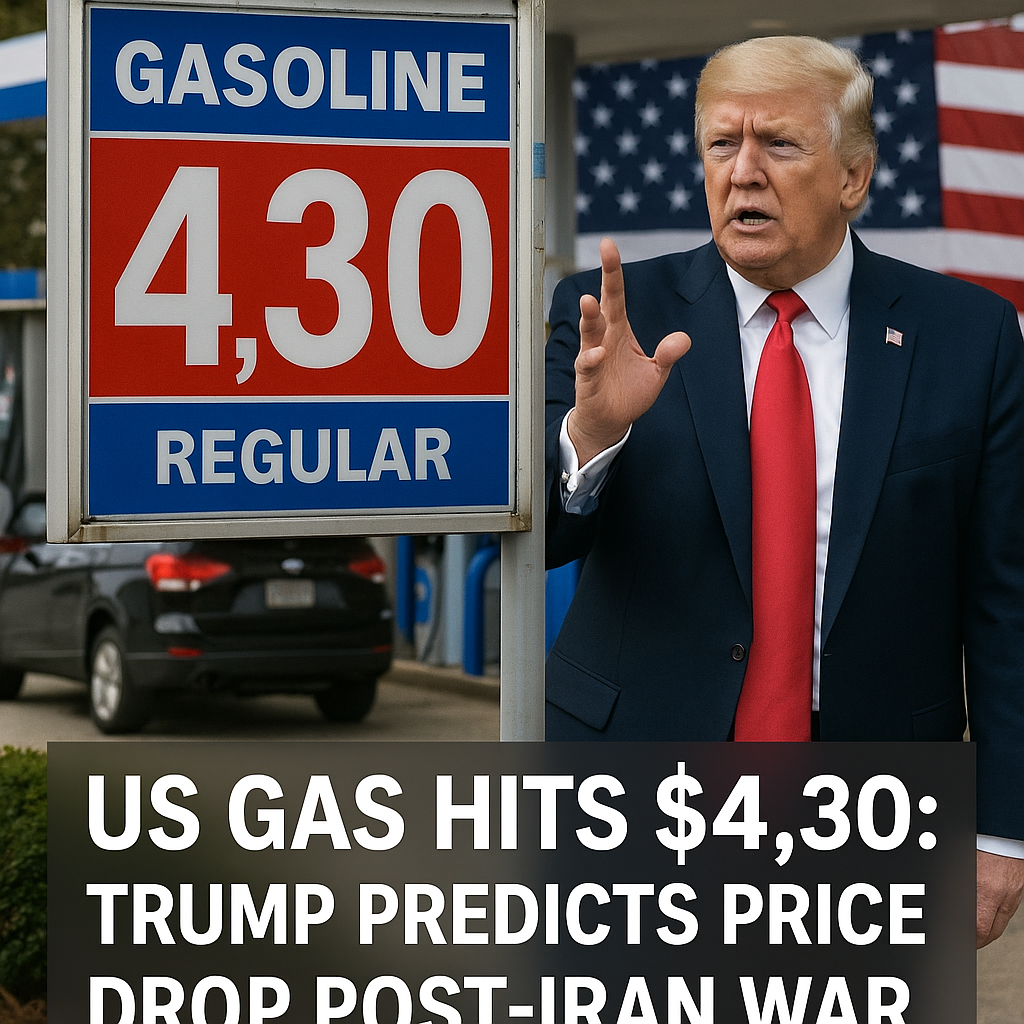
US Gas Hits $4.30: Trump Predicts Price Drop Post-Iran War
US Gas Hits $4.30: Trump Predicts Price Drop Post-Iran War
As US gas prices surge to $4.30 per gallon, the discourse surrounding energy costs and geopolitical tensions highlights the complexities of the global oil market. Former President Donald Trump has recently stated that he anticipates a drop in fuel prices once the ongoing conflict in Iran reaches a resolution. This assertion brings into focus the intricate relationship between international relations and domestic fuel prices.

The Current State of Gas Prices
Recent reports indicate that Americans are grappling with rising gas prices—an issue that has significant implications for the economy and daily life. The spike to $4.30 is not just a number; it reflects broader trends, including inflation, supply chain disruptions, and geopolitical conflicts.

Economic Implications
The increase in fuel costs can cascade through the economy, affecting transportation, goods pricing, and ultimately consumer spending. Analysts are divided on the immediate future, with some citing the ongoing conflict as a primary driver behind these escalating costs. A decrease in Iranian oil on the world market—due to sanctions and military tensions—creates a ripple effect, constraining supply and pushing prices higher. Conversely, some experts highlight the role of increasingly aggressive domestic production and the potential for strategic reserves to alleviate prices in the short term.

Trump’s Prediction and Its Context
Trump’s assertion that gas prices could decline following a resolution in Iran could be viewed as both optimistic and simplistic. The former president contends that once tensions ease, it will restore balance to oil supply and demand. However, the situation is far from clear-cut.
Assessing the Relationship Between Conflict and Prices
The historical context offers some insights into Trump’s prediction. In past instances, geopolitical tensions—particularly in the Middle East—have led to spikes in oil prices. However, the oil market is influenced by a multitude of factors: OPEC production levels, US shale oil advances, and a transition toward renewable energy sources also play critical roles.
Reports from diverse sources indicate that the complexities of this scenario make outcomes uncertain. For instance, while Trump believes prices could stabilize, industry experts caution against assuming that a single event—such as a conflict resolution—would automatically lead to lower prices.
– International factors: Prices could remain high if other oil-producing countries face their challenges or if demand increases elsewhere.
– Domestic production: The US’s capacity to tap into its significant shale resources could mitigate the pressure. However, regulatory issues and investments in infrastructure remain crucial.
Contrasting Viewpoints
The discourse includes a spectrum of opinions. Some analysts support Trump’s view that an end to the Iran conflict could lead to cheaper gas. They argue that geopolitical stability tends to encourage investment in oil production, eventually stabilizing prices.
On the other hand, skeptics point to the enduring trend of increasing demand and limited supply, exacerbated by ongoing global challenges, including climate change policies aimed at reducing fossil fuel dependency. This perspective underscores that even with geopolitical shifts, market fundamentals could maintain upward pressure on prices.
The Broader Impacts and Future Outlook
As Americans are feeling the pinch at the pump, it’s essential to consider the broader implications of these price hikes. Rising energy costs can influence inflation rates and ultimately affect economic growth. Policymakers are urged to explore sustainable energy initiatives, focusing on reducing dependency on volatile international oil markets while fostering energy independence.
Recommendations for Consumers and Policymakers
For consumers facing higher gas prices, considering alternative transport methods or carpooling could alleviate some financial stress. Moreover, discussions about renewable energy investments could provide long-term solutions to energy challenges. Policymakers need to ensure a balanced approach, addressing immediate consumer concerns while planning for sustainable energy futures.
Conclusion: A Complex Landscape
While Trump’s prediction may resonate with some, the reality of gas prices is deeply woven into complex global dynamics that cannot be overlooked. As the situation in Iran unfolds, it remains to be seen how energy markets will react—and whether the anticipated drop in gas prices will materialize. The overarching theme is clear: navigating the world of energy economics requires a nuanced understanding of multiple factors at play, with no single narrative likely to capture the full picture.
As we move forward, staying informed and adaptable will be essential for both consumers and policymakers alike. Gas prices may rise and fall with the tides of international relations, but comprehensive strategies are needed to build a sustainable energy future.