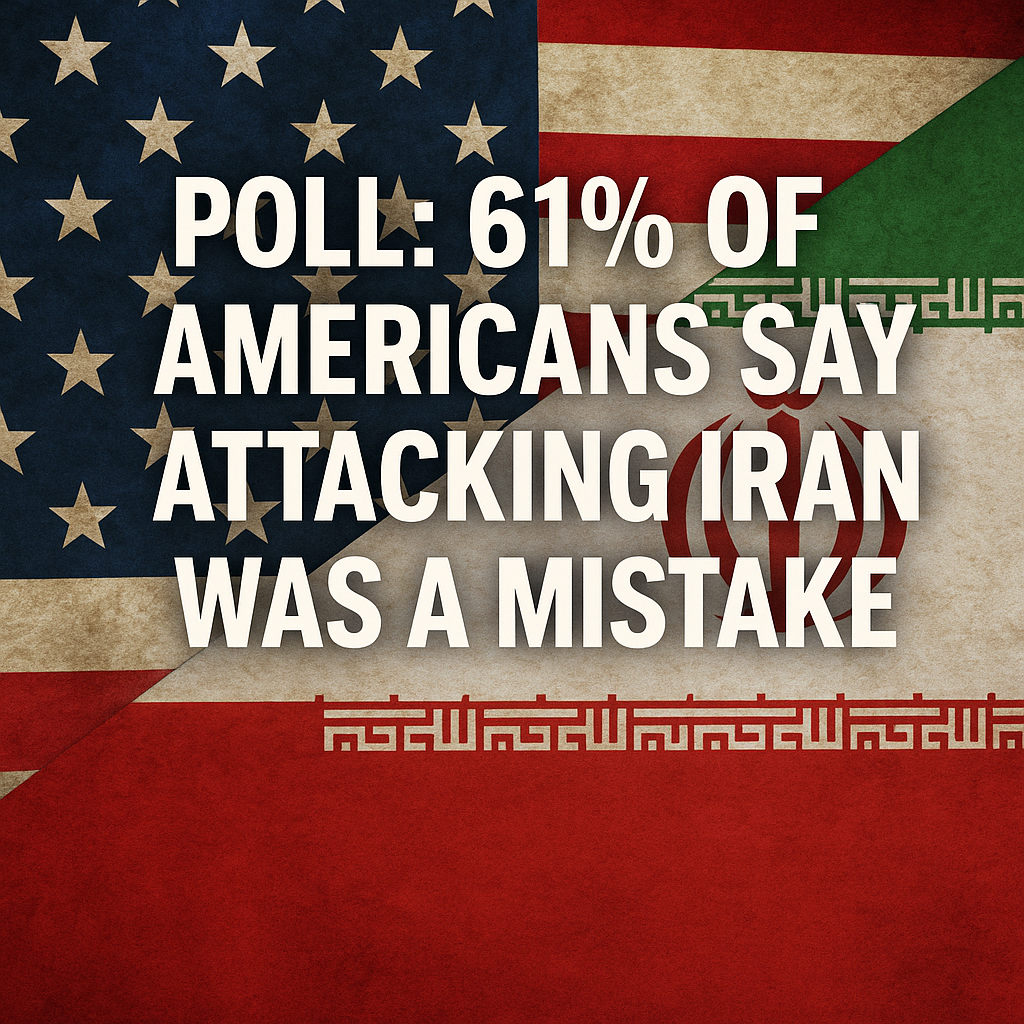
Poll: 61% of Americans Say Attacking Iran Was a Mistake
Poll: 61% of Americans Say Attacking Iran Was a Mistake
A recent poll reveals that a significant 61% of Americans believe the military action against Iran was a mistake. This statistic underscores growing discontent over the United States’ interventionist policies and highlights the evolving public sentiment regarding foreign military engagements.

Contextualizing the Poll Results
The poll, conducted by various organizations, reflects a shift in public opinion towards a more cautious approach to military interventions. Among respondents, there seems to be a common sentiment that military actions often lead to unintended consequences, raising questions about their necessity and effectiveness. Many seem to draw parallels to past conflicts such as the wars in Iraq and Afghanistan, where the costs—both human and economic—have been monumental.

While the reasons underlying this viewpoint are multi-faceted, several themes consistently emerge from the discussions. One major concern is the toll on human lives. Reports from various sources emphasize that American military action often disproportionately affects civilians, leading to loss of life and destabilization in the targeted regions. As Americans become increasingly aware of these realities, their support for military action appears to dwindle.

Additionally, the implications for national security have come under scrutiny. Critics argue that interventions tend to exacerbate anti-American sentiments abroad, potentially endangering U.S. troops and resources. Moreover, the financial burden of ongoing conflicts weighs heavily on taxpayers, prompting many to question whether such expenditures yield any tangible benefits.
Mixed Opinions on Foreign Policy
Despite the overwhelming majority expressing that the attack on Iran was a mistake, there are dissenting voices advocating for a more aggressive foreign policy approach. Some believe that a robust military posture is necessary to deter potential threats, arguing that a strong stance demonstrates U.S. resolve. These proponents of intervention often cite Iran’s nuclear ambitions and regional influence as justifications for preemptive action, highlighting national security concerns as paramount in their reasoning.
However, this perspective faces increasing scrutiny. Analysts from various political spectrums note that military intervention often fails to achieve its stated goals, leading to protracted conflicts without clear resolutions. Veteran foreign policy experts urge that diplomacy should take precedence over military solutions, emphasizing that engagement often paves the way for lasting peace.
What stands out in the discourse surrounding military intervention is this delicate balance between addressing security threats and the moral implications of warfare. This tension is particularly salient given the growing disapproval among the American populace regarding the historical implications of military engagement.
The Role of Media and Public Discourse
In shaping public opinion, media narratives play an essential role. Coverage of military actions often influences perceptions, with reports emphasizing either the necessity or the folly of such endeavors. As seen in various articles, the media’s framing can shift the narrative from one focused on strategic imperatives to highlighting the human cost and geopolitical implications.
The role of social media in facilitating grassroots movements cannot be understated either. Increasingly, activists and ordinary citizens use platforms to voice opposition to military interventions, bringing personal stories and statistics to the forefront. This approach not only raises awareness but also fosters a sense of community around anti-war sentiments.
Public forums and dialogues provide spaces for citizens to engage with one another on these critical issues, further highlighting the diverse viewpoints that exist. Such discussions often reveal a complex array of opinions, tempered by personal experiences and broader societal impacts. The consensus around the recent poll results emphasizes a collective yearning to prioritize dialogue and diplomacy over conflict.
Moving Forward: Navigating Complexity in Foreign Policy
As the discussion around military action against Iran continues, it becomes increasingly clear that the American public is seeking a more nuanced approach to foreign policy. The growing inclination to view military intervention as a last resort reflects a more profound understanding of the complexities involved in global affairs.
To adequately navigate these challenges, policymakers must consider the implications of public sentiment alongside strategic necessities. Openness to diplomatic resolutions and multilateral cooperation could foster stronger international relationships, potentially leading to long-lasting solutions.
In conclusion, the poll indicating that 61% of Americans consider attacking Iran a mistake is more than a statistic; it reflects a broader yearning for thoughtful, humane, and strategic engagement in global politics. As the landscape evolves, the discourse surrounding military interventions will likely continue to be shaped by the interplay of public opinion, media narratives, and empirical realities.