
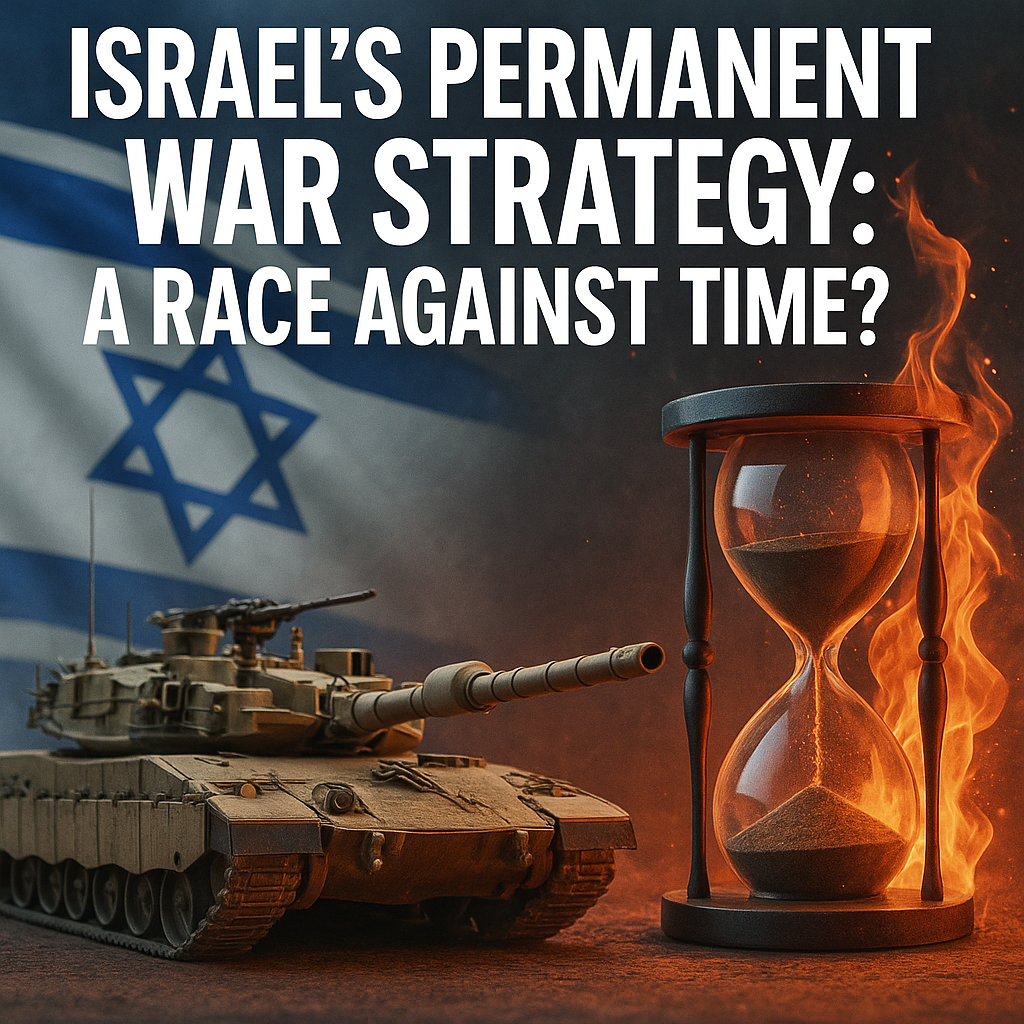
Israel’s Permanent War Strategy: A Race Against Time?
Israel’s Permanent War Strategy: A Race Against Time?
Israel’s approach to security has often been characterized as a “permanent war strategy,” reflecting its ongoing conflicts and military preparedness. This strategy raises pivotal questions: Is this an effective long-term approach for the nation, or is it a precarious race against time that may ultimately undermine its stability?

The Foundations of a Permanent War Strategy
The concept of a permanent war strategy in Israel can be traced back to its geopolitical reality. Surrounded by hostile neighbors and facing a complex relationship with the Palestinian territories, Israel often perceives immediate threats to its sovereignty and security. Al Jazeera notes that this perception has led to an entrenched belief among Israeli policymakers that military readiness is not only necessary but also urgent. The ongoing conflicts in regions like Gaza and the West Bank serve as continual reminders of this precarious situation.

Diverse Perspectives on Strategy
Various viewpoints emerge regarding this strategy’s implications. On one hand, proponents argue that Israel’s military readiness deters potential aggressors. Military analysts suggest that such a stance could stave off larger conflicts, thereby providing a necessary buffer. For instance, a report from Sky News emphasizes the importance of existing military capabilities in maintaining regional stability. Furthermore, veterans and military leaders assert that the complexity of the Middle East necessitates a proactive approach to defense.

Conversely, critics question the long-term sustainability of this strategy. As reported by RT, some analysts warn that perpetual military engagement could foster a cycle of violence, breeding resentment among Palestinians and other neighboring populations. This sentiment raises concerns about the humanitarian impacts of ongoing conflicts, not only affecting the immediate region but also influencing international relations. Critics argue that this approach can result in diplomatic isolation for Israel, complicating future peace efforts.
The Race Against Time: Consequences for Israel and the Region
The crux of Israel’s permanent war strategy may indeed resemble a race against time, as it grapples with both internal and external pressures. One significant concern is the demographic shift within Israeli society. A growing number of voices—both within Israel and globally—highlight the need for broader discussions around peace, justice, and coexistence. Al Jazeera points out that as the Palestinian population increases, the diminishing prospects for a viable two-state solution can create a volatile situation. Some critics argue that the perpetual state of war exacerbates this demographic challenge, isolating Israel politically and socially.
Moreover, the economic ramifications cannot be overlooked. Continuous military expenditure can divert essential resources away from domestic issues such as education, infrastructure, and healthcare. This ongoing investment in military solutions may yield diminishing returns, as the cycle of violence continues unabated. Economists caution that without addressing the underlying issues that fuel conflict—such as poverty and political disenfranchisement—Israel may face significant long-term challenges.
Balancing Security and Diplomacy
Although Israel’s military strategy may be rooted in existential threats, it is essential to consider the potential for a more balanced approach that incorporates diplomacy. Some analysts argue that Israel could benefit from engaging in proactive peace initiatives. As highlighted in various articles, fostering diplomatic relationships with both regional and international actors may not only ease tensions but may also reintegrate Israel into the global community.
Exploring Paths Forward
In conclusion, Israel’s permanent war strategy presents a complex interplay of immediate security concerns and long-term consequences. While military preparedness may serve to deter threats in the short term, the overarching implications of this approach raise critical questions about sustainability and international relations. Israel stands at a crossroads, where embracing both military readiness and diplomatic efforts could potentially alter its trajectory—and perhaps shift from a race against time to a time for reflection and resolution.
As tensions continue to persist, finding a path that balances defense with humane solutions may be the key to lasting peace in the region. Ultimately, the debate surrounding this issue accentuates the complexities inherent in conflicts where history, culture, and politics intertwine, underscoring the need for nuanced and thoughtful engagement moving forward.















