
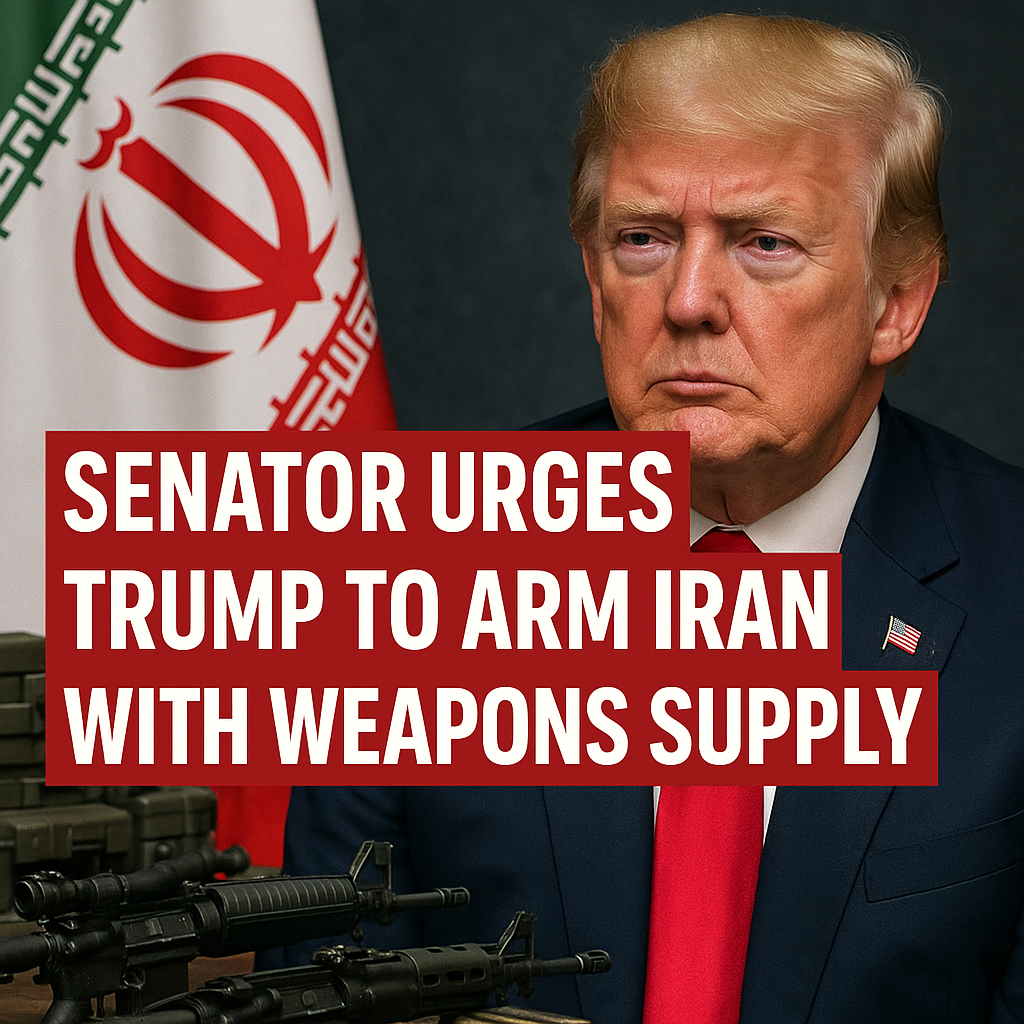
Senator Urges Trump to Arm Iran with Weapons Supply
The Complex Defense of Arming Iran and Its Implications
In recent political discussions, a particularly contentious idea echoed in the U.S. Senate has garnered attention: the proposal to arm Iran with a supply of weapons. This proposition raises questions not just about military ethics but also about broader geopolitical implications and national security considerations.

Understanding the Proposal
Senator Lindsey Graham has recently been at the forefront of this provocative discussion, suggesting that arming Iran could serve to destabilize groups that pose a threat to U.S. interests. Graham’s rationale rests on the belief that empowering Iran—specifically against extremist factions—could lead to a strategic balance in the region. While some view this as a path to foster stability, many others see this as a dangerous gamble that could exacerbate tensions in an already volatile region.

This proposal has sparked a significant divide among lawmakers and experts alike. On one side, supporters argue that giving weapons to Iran might strategically weaken militant groups like ISIS or al-Qaeda. Proponents of this view highlight the potential for Iran to act as a stabilizing force if equipped with advanced weaponry. They point toward historical precedents in which arming adversaries led to a favorable outcome, though such cases often come with caveats and unintended consequences.

On the opposing side, critics warn that providing arms to Iran could lead to a scenario where these weapons are misused or fall into the hands of extremist factions, thus escalating violence rather than containing it. Alarmingly, such a move could also undermine U.S. relations with traditional allies in the region, particularly Israel and Saudi Arabia, who view Iran as a primary adversary.
Geopolitical Ramifications
The geopolitical landscape is fraught with complexities, and introducing a variable like arming Iran could have far-reaching consequences. The Senate’s discussions have unfolded against a backdrop of deteriorating relations between the U.S. and Iran, particularly following the controversial withdrawal from the Iran nuclear deal in 2018.
Many analysts caution that empowering Iran could lead to greater regional hostility rather than cooperation. Arming a nation already at odds with many in the international community raises profound questions regarding the stability of the Middle East. According to political experts, the unintended fallout from such a decision could include:
– Escalation of Existing Conflicts: Increased arms could fuel ongoing skirmishes in Syria and Iraq, where Iran’s influence is already contentious.
– Impact on U.S. Allies: Countries like Israel and Saudi Arabia might feel compelled to ramp up their own military capabilities in response, leading to an arms race in the region.
– Reputation Risks: The U.S. risks being seen as hypocritical or inconsistent in its international policies, particularly given its historical stance on non-proliferation.
A Divided Senate and a Public Dilemma
The Senate itself is not a monolith on this issue. While Graham remains a vocal proponent, many senators express skepticism about the merit and ethics of such a move. They argue that this strategy lacks a clear endpoint and could entangle the U.S. in prolonged conflicts. Furthermore, doubts linger regarding Iran’s commitment to peace, given its previous actions in the region.
Public sentiment mirrors this division. Polls show that while a portion of the population is swayed by the idea of using Iran as a counterbalance against extremist groups, a substantial majority is concerned about the potential ramifications of such an arms deal. The complexity of public opinion further complicates the diplomatic calculus for lawmakers.
The Path Ahead
As the debate continues, it becomes increasingly clear that any decision regarding the arming of Iran will require careful consideration of multiple factors. The unpredictable nature of geopolitics means that any move made could set off a chain reaction of events, leading to consequences that are difficult to foresee.
Alternatives to arming Iran are being discussed as well, including diplomatic engagement and multilateral strategies that involve other nations in the region. Such approaches aim to reduce tensions without the risks associated with providing weaponry to an unstable entity.
In conclusion, while the idea of arming Iran as a means to combat extremism holds some theoretical merit, it is fraught with risks that could outweigh potential benefits. Lawmakers and analysts must navigate these waters with caution, weighing the complexities of public opinion, historical context, and geopolitical realities. As discussions evolve, it is crucial that decision-makers prioritize long-term stability over short-term gains in a region that has long been marred by violence and conflict.















