
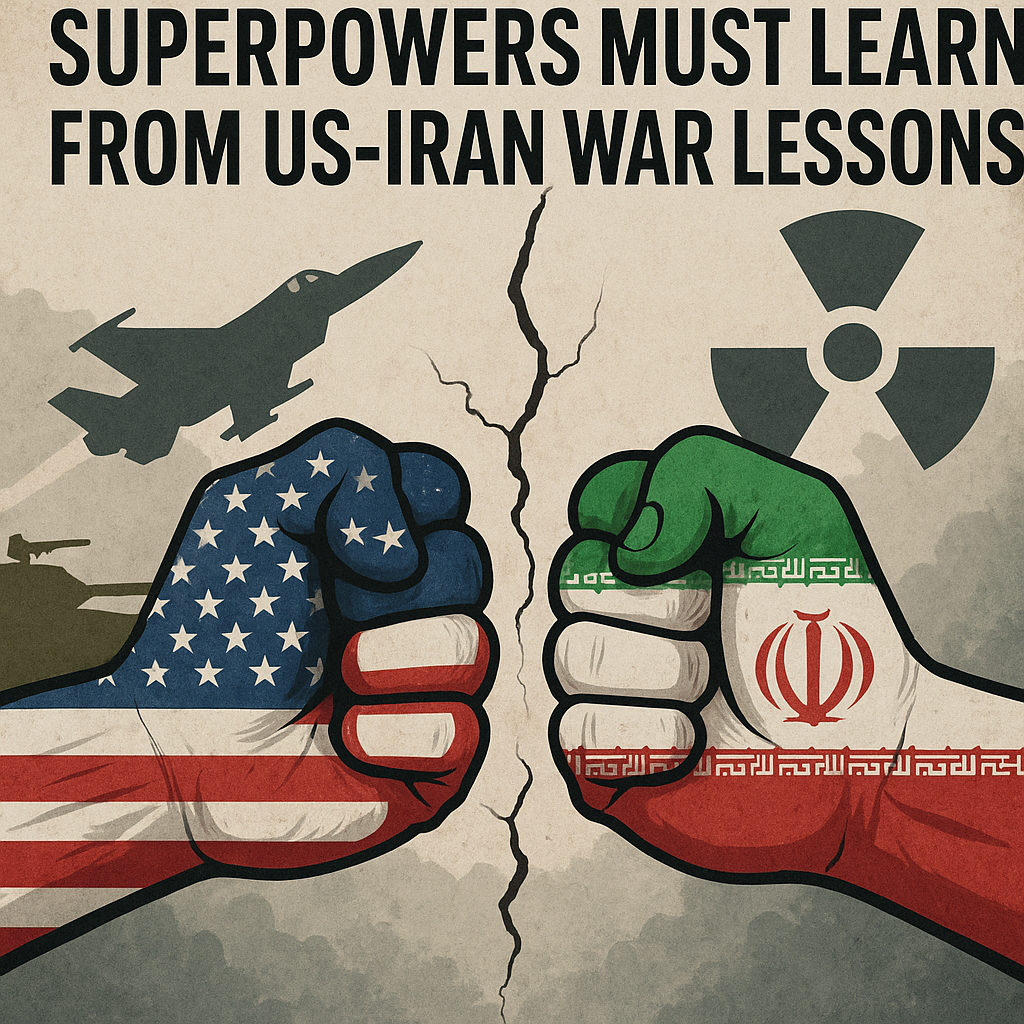
Superpowers Must Learn from US-Iran War Lessons
Lessons for Superpowers from the US-Iran Conflict
In recent years, the conflict between the United States and Iran has highlighted numerous strategic lessons for superpowers navigating global tensions. Understanding these lessons is crucial as they hold valuable insights into diplomacy, military engagement, and conflict resolution.

Diplomatic Engagement: A Critical Necessity
One of the primary lessons from the US-Iran dynamic is the importance of diplomacy in resolving conflict. Historically, the Iranian nuclear issue exemplifies how negotiations can sometimes yield better results than hostility. Although the push for military action has always been prevalent, notable attempts at diplomacy, such as the Joint Comprehensive Plan of Action (JCPOA) in 2015, demonstrated potential pathways to mitigate tensions.

Despite the Trump administration’s withdrawal from the JCPOA in 2018, opinions differ on the efficacy of such agreements. Some analysts argue that initial accords reduced the nuclear threat, while others believe they only postponed inevitable escalation. The contrast in perspectives illuminates a consensus among scholars and policymakers: the necessity for robust diplomatic channels cannot be overstated.

– Takeaway: Successful diplomacy requires building trust and understanding, which can act as a foundation for peace negotiations.
Military Posturing vs. Diplomacy: Weighing Consequences
Another significant takeaway is the balance between military posturing and diplomatic channels. Recent events, such as drone strikes and naval confrontations in the Persian Gulf, serve as reminders of the volatility inherent in aggressive stances. While military action might promise quick results, the long-term repercussions often prove detrimental.
A nuanced review of the USS Cole bombing in 2000 and subsequent military responses reveals how aggressive posturing can perpetuate cycles of retaliation. In this context, superpowers must consider whether military force serves to escalate conflict rather than resolve it.
– Consequences of Military Action:
– Short-term gains often provoke long-term animosity.
– Diplomatic fallout can arise from resorting to armed response.
– Trust becomes increasingly difficult to rebuild after acts of aggression.
Understanding Domestic Narratives: The Role of Public Sentiment
Another layer to the complexity of the US-Iran relationship is the impact of domestic narratives. Both nations have populations whose sentiments are influenced by historical grievances and current events. In the case of Iraq, sentiments surrounding the US-led invasion have shaped Iranian perceptions of American intentions, complicating any potential reconciliation.
For superpowers, acknowledging domestic narratives is critical for effective diplomacy. Public sentiment can act as a double-edged sword; while it can bolster leaders in their actions, it can also constrain their decisions if populations react negatively to perceived concessions.
– Lesson on Domestics:
– Policymakers should consider how actions resonate with global audiences.
– Domestic opinion can significantly influence international relations.
The Need for Multilateral Cooperation
Finally, the conflicts involving Iran underscore the necessity for multilateral cooperation in dealing with global security issues. Stakeholders must engage more than just bi-lateral diplomacy, recognizing that complex crises often involve a multitude of countries with vested interests.
The diversity of voices—from European allies to regional powers like Saudi Arabia—highlights the multifaceted nature of contemporary geopolitics. Indeed, building consensus around shared concerns can often lead to more sustainable outcomes.
– Benefits of Multilateralism:
– Broader consensus strengthens legitimacy in conflict resolution efforts.
– Engaging multiple stakeholders can reduce unilateral escalations.
Conclusion: A Call for Reflection
As superpowers navigate the complex landscape shaped by the US-Iran conflict, several lessons emerge. The importance of diplomacy, the pitfalls of military action, the necessity of understanding domestic narratives, and the significance of multilateral cooperation are essential elements in any strategic playbook.
In a world increasingly defined by interconnectivity, superpowers are urged to reflect on these lessons, striving for informed and nuanced approaches in international relations. The stakes are high, and as history has shown, the consequences of inaction or miscalculation can reverberate far beyond national borders.















