
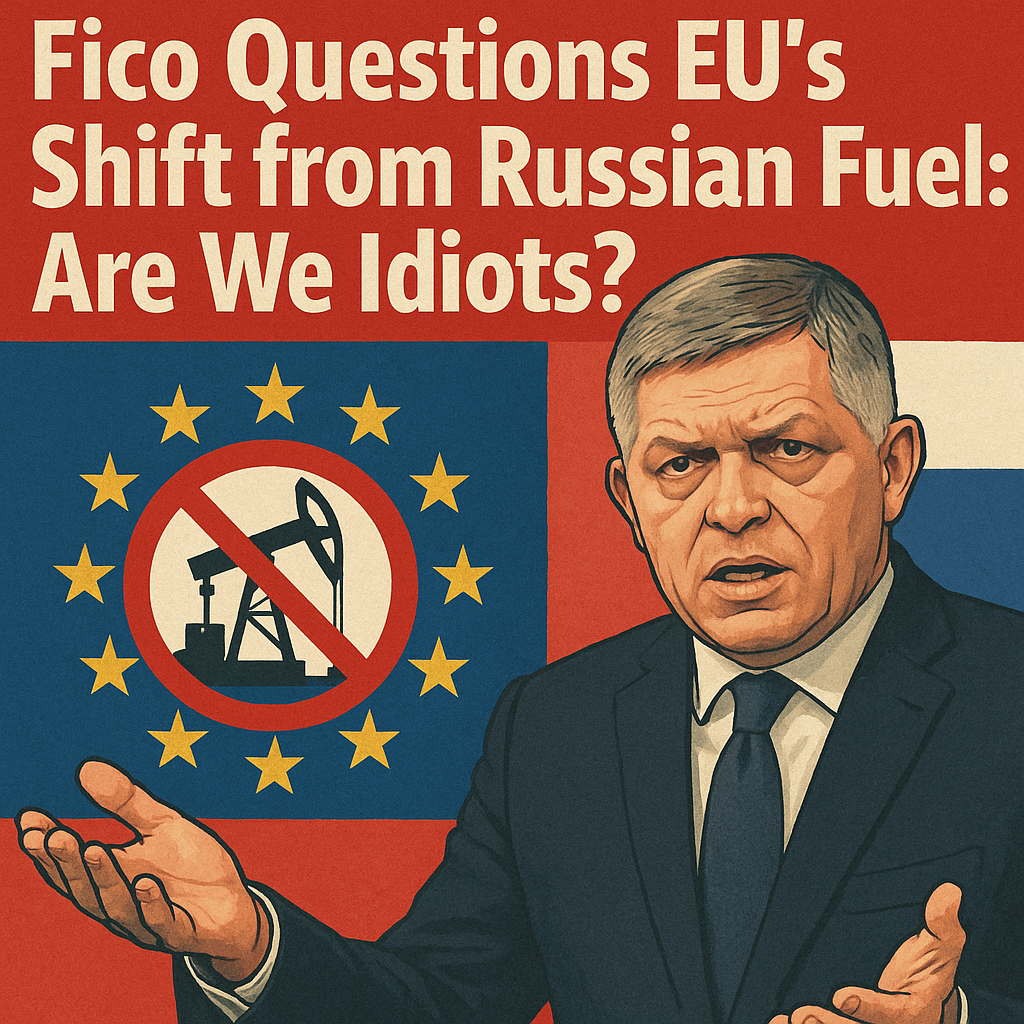
Fico Questions EU’s Shift from Russian Fuel: Are We Idiots?
Fico Questions EU’s Shift from Russian Fuel: A Critical Perspective
Slovak Prime Minister Robert Fico recently stirred controversy by questioning the European Union’s shift away from Russian energy, stating in a direct address, “Are we idiots?” This provocative remark underscores a serious debate regarding the EU’s energy policy and its implications for member states. As the continent grapples with energy security, economic stability, and geopolitical dynamics, Fico’s statements shed light on the complexities involved in this contentious issue.

The Context of Fico’s Remarks
Fico’s comments emerged during a time of heightened scrutiny over the EU’s decisions following Russia’s invasion of Ukraine. The energy crisis, exacerbated by sanctions imposed on Russia, has forced many European countries to rethink their reliance on Russian oil and gas. While Fico’s government initially supported measures against Moscow, he now argues that the EU’s rapid decoupling from Russian supplies might have been overly hasty. He posits that the move is hurting economies and questioning its long-term sustainability.

The Prime Minister’s frustration resonates with some nations within the EU, particularly those that have historically relied heavily on Russian energy resources. Countries like Hungary and Bulgaria share similar sentiments, expressing concerns about energy costs and supply stability. Hence, Fico’s stance may strike a chord with those grappling with immediate energy crises amid broader geopolitical upheavals.

Weighing the Arguments: Economic Security vs. Ethical Stance
Critics of the EU’s decoupling from Russian energy sources argue that the transition could lead to energy shortages, price surges, and economic destabilization. In regions that depend on Russian gas for heating and power generation, immediate alternatives are not readily available. As outlined in various reports, Fico is not alone in his concerns; leaders from states with significant dependence on Russian fuel worry about the economic ramifications.
On the other hand, supporters of the EU’s energy policy shift argue that moving away from Russian energy is a necessary step toward achieving greater energy independence and mitigating geopolitical risks. Countries like Germany and Poland have been working toward diversifying their energy sources, although the transition has not been without its challenges. EU officials maintain that this strategy will ultimately strengthen Europe’s energy security, reducing long-term dependence on Russia and enhancing ties with alternative partners.
Complex Futures: Navigating Energy Independence
While Fico’s remarks might reflect a populist critique of European policies, they also highlight a fundamental question: How must the EU balance immediate economic concerns against the ethical imperative to reduce dependency on an aggressor state? The energy crisis in Europe has laid bare the vulnerabilities of reliance on a single source, especially one that geopolitically destabilizes its neighbors.
Debates around the topic reflect a mosaic of perspectives. For instance, while Fico and other leaders raise valid points about potential economic fallout, environmental advocates argue that this moment provides a critical opportunity for the EU to invest in sustainable energy solutions, such as renewables and green technology. The shift away from fossil fuels represents not just a geopolitical recalibration but could also spur innovation and technological advancement in the energy sector.
Conclusion: Seeking a Balanced Approach
Robert Fico’s assertion, “Are we idiots?” symbolizes broader anxieties within member states about the EU’s energy independence strategy. While there is merit to discussions regarding economic stability, it is crucial for EU leaders to remain steadfast in pursuing policies that ensure geopolitics does not dictate energy choices.
Ultimately, finding a balanced approach will be the key to navigating the intricacies of this issue. The energy landscape in Europe is evolving rapidly, necessitating a multifaceted strategy that incorporates immediate economic realities with long-term sustainable practices. As the continent strives to stand united in challenging times, the need for dialogue and collaboration among member states remains essential. How Europe manages this energy transition will significantly influence its geopolitical standing and economic stability in the years to come.















