
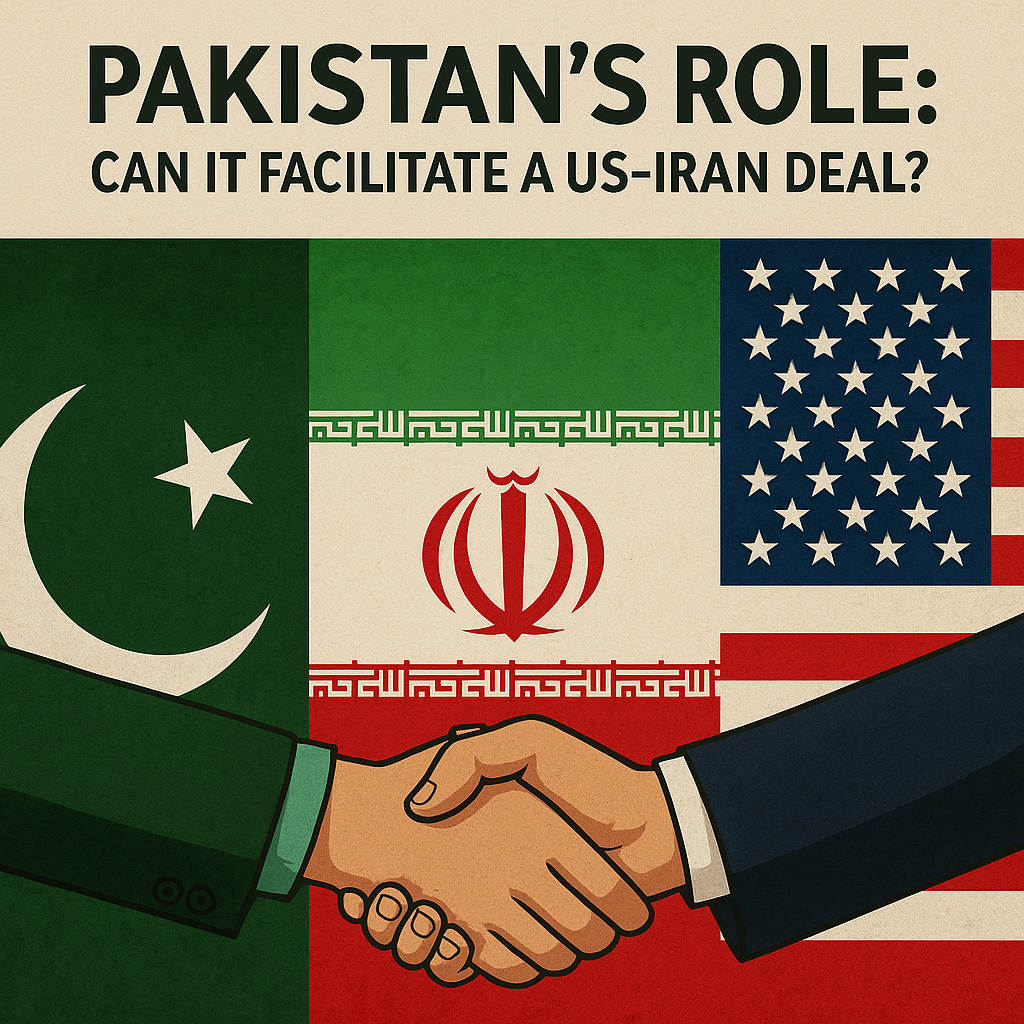
Pakistan’s Role: Can It Facilitate a US-Iran Deal?
Pakistan’s Role: Can It Facilitate a US-Iran Deal?
In the fluctuating landscape of geopolitics, Pakistan stands at a critical junction, raising the question: Can it facilitate a US-Iran deal? As the tensions between the United States and Iran persist, the potential for Pakistan to act as a mediator prompts a deeper analysis of its geographical, political, and historical contexts.

The Geopolitical Landscape
The region surrounding Pakistan is complex and historically charged. Both the US and Iran have intricate relationships with it, influenced by historical conflicts, economic partnerships, and military alliances. With Afghanistan and India as neighbors, Pakistan’s positioning is strategic; it has been associated with both Western and Islamic ideologies through its foreign policies.

Recent dialogues have suggested that Pakistan may play a pivotal role in bridging the gap between the US and Iran. According to analysts, Islamabad harbors unique insights into the regional dynamics that could be beneficial. For example, Al Jazeera reported that Pakistan’s leadership has developed stronger ties with Iran, which could provide it the leverage needed to mediate effectively.

In response to ongoing sanctions and diplomatic isolation from the West, Iran could be seeking an ally like Pakistan to foster more favorable conditions for negotiations. However, critics point out that Pakistan’s own challenges, including its economic struggles and internal political instability, may inhibit its ability to act decisively.
Diverging Perspectives on Mediation Possibilities
Not all views are optimistic regarding Pakistan’s potential as a mediator. Some experts argue that Islamabad is largely viewed through the lens of its alliances with China and Saudi Arabia, which may complicate its potential to be an unbiased facilitator in US-Iran negotiations. RT News highlighted concerns that Pakistan’s previous interventions have led to mixed results, leaving some skeptical about its ability to achieve substantive outcomes in this context.
Conversely, there are viewpoints that emphasize the importance of cultural and historical connections between Iran and Pakistan, which could foster a stronger dialogue. These connections transcend political interests, creating a foundation for trust that might make negotiations more palatable for both parties. Given the kinship bond through shared religious beliefs and cultural ties, it is argued that Pakistan could smoothen the preliminary steps toward dialogue.
In weighing these contrasting perspectives, it becomes clear that while Pakistan may face hurdles in its mediation efforts due to external perceptions, its unique position on the ground offers a compelling narrative that merits further exploration.
The Challenges of Diplomacy
Facilitating a US-Iran deal is fraught with challenges. The foundational issues surrounding sanctions, military actions, and ideological divisions make the prospect of meaningful dialogue difficult. Without addressing core issues such as Iran’s nuclear program and US military presence in the region, any attempts at mediation risk being surface-level and ineffective.
Moreover, Pakistan’s economy is currently strained, which could limit its diplomatic endeavors. Critics emphasize that Pakistan may be unable to offer substantial incentives or organize high-level meetings due to internal pressures and economic constraints. As highlighted in various reports from Sky News, economic instability could hinder Pakistan’s foreign engagement capabilities, raising doubts about how seriously its mediation efforts could be taken.
However, the stakes are high for Pakistan as well. A successful mediation could not only enhance its standing in international diplomacy but could also provide economic opportunities that arise from a more stable region. By potentially playing the role of a peacemaker, Islamabad could strengthen its alliances and leverage for future economic aid or trade partnerships.
Conclusion: A Path Forward?
In conclusion, Pakistan’s potential as a facilitator of a US-Iran deal remains an open question filled with promise and peril. Its strategic position offers unique advantages, yet it is coupled with significant challenges. The diverse viewpoints regarding its role in mediation underscore the nuanced realities of international diplomacy.
For any real progress to be made, all parties involved must be willing to engage in sincere dialogue, with Pakistan perhaps serving as a bridge rather than a battleground of conflicting interests. If Pakistan can navigate its internal and external pressures, it may indeed contribute to a more peaceful and stable regional landscape. However, the complexities involved pave the way for uncertainty, indicating that the journey towards a US-Iran deal is still fraught with obstacles that must be addressed earnestly.















