
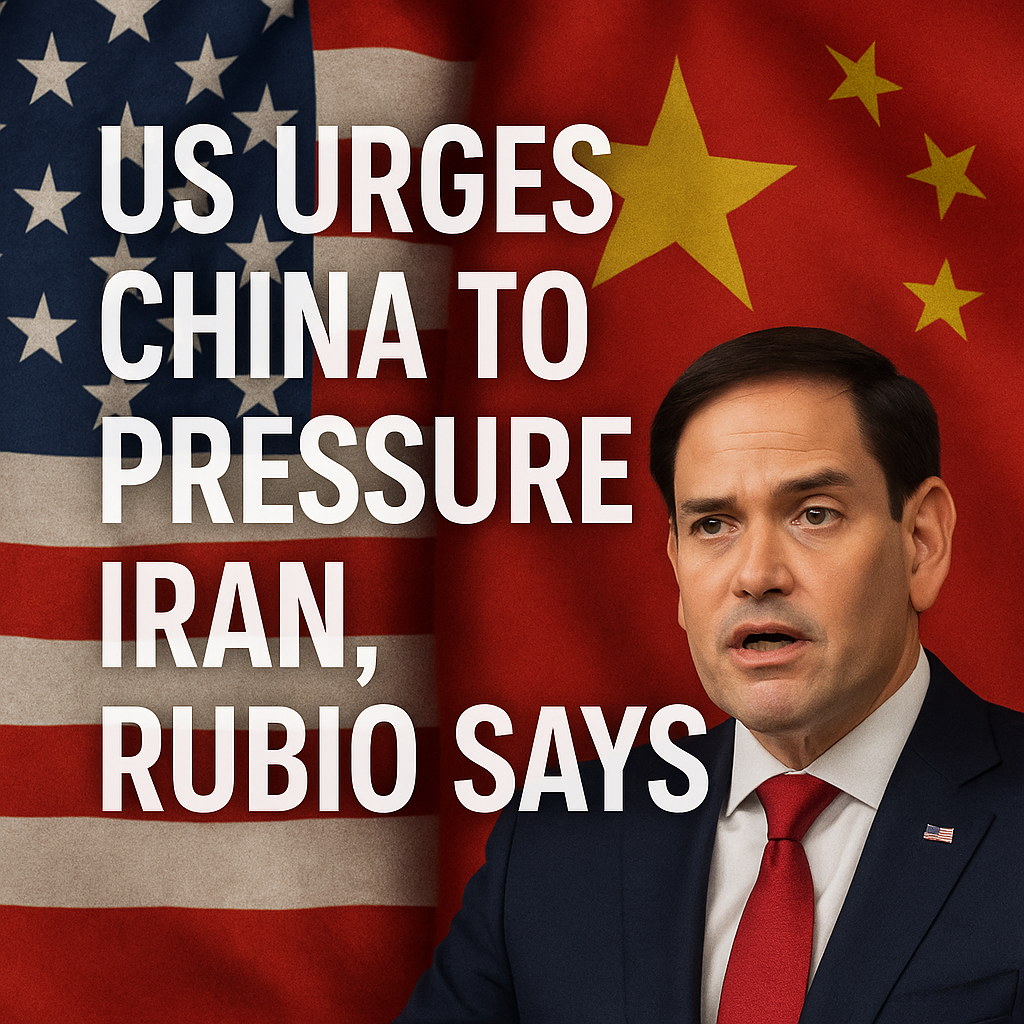
US Urges China to Pressure Iran, Rubio Says
The United States Urges China to Pressure Iran: A Diplomatic Tightrope
The current geopolitical climate has placed the United States in a precarious position regarding its foreign policy in the Middle East, particularly concerning Iran. Recent discussions have highlighted a significant request from U.S. officials seeking Chinese intervention to apply pressure on Iran in order to curtail its nuclear ambitions and regional influences.

The U.S.-China Dynamic: A New Approach to Iran
During recent talks, U.S. Senator Marco Rubio emphasized the critical role that China could play in influencing Iran. He articulated a view rooted in pragmatic diplomacy, suggesting that China’s economic ties with Iran provide a unique leverage point. The sentiment echoes broader concerns in Washington regarding the nuclear deal and Iran’s advancing nuclear program.

The request for China to press Iran stems from an increasing urgency among U.S. lawmakers to see concrete actions taken against further nuclear developments. Rubio stated, “If China can leverage its relationship to bring Iran to the table, it would serve both U.S. interests and global security.” This perspective underscores a shift in American strategy that involves enlisting major powers to address regional threats collaboratively, rather than relying solely on unilateral sanctions or military presence.

However, this proposition carries inherent complexities. China and Iran have cultivated strong bilateral relations marked by a 25-year cooperation agreement that encompasses economic, military, and political ties. China’s refusal to abandon its partnership with Tehran complicates the U.S. proposal. Various analysts have pointed out that any substantial pressure from China on Iran could jeopardize their economic commitments, creating a diplomatic rift.
Contrasting Views: Balancing Diplomacy and Fallout
Responses to Rubio’s suggestion illustrate contrasting attitudes among international policy experts. Some argue that engaging China could represent a pragmatic step toward easing tensions globally, as both nations face the geopolitical fallout of Iran’s nuclear ambitions. The hope is that China’s influence could lead Iran to re-enter negotiations regarding its nuclear program, thus averting potential military conflict.
Conversely, critical voices warn that excessive reliance on China might yield limited outcomes. Observers like those from Al Jazeera note that China’s motivations are often driven by economic gain rather than geopolitical stability. As one analyst pointed out, “China’s dealings with Iran are primarily about securing energy resources. It has little incentive to disrupt this relationship, even for the sake of American diplomacy.”
This contrasting outlook emphasizes the need for a balanced approach. The idea of leveraging China’s relationship with Iran might hold promise, yet the execution of such diplomacy carries risks of its own.
The Road Ahead: Challenges and Opportunities
As discussions about U.S.-China cooperation on Iran evolve, several challenges remain. The ongoing tension between the U.S. and China, marked by disputes over trade policies and military strategies in the Pacific, adds another layer of complication. The potential for a cooperative effort on Iran may be overshadowed by the broader confrontational aspects of their bilateral relationship.
Moreover, the Iranian government has shown reluctance to compromise on its nuclear programs, often framing its pursuit of nuclear technology as essential for national security. Strong resistance from Iranian leaders indicates that even if China applies pressure, the outcomes may still fall short of U.S. expectations.
On the other hand, there exists an opportunity for a multilateral approach that includes other regional stakeholders. Engaging nations like Russia and European allies might fortify any attempts to persuade Iran while enhancing global dialogue on non-proliferation.
In conclusion, the U.S. urging China to apply pressure on Iran embodies a strategic attempt to address escalating concerns surrounding nuclear proliferation. While the prospect of enlisting China’s help presents both challenges and possibilities, it also highlights the intricate web of international relations that define modern diplomacy. As the diplomatic landscape continues to shift, navigating these complexities will be crucial in seeking a peaceful resolution to the ongoing tensions in the region.















