
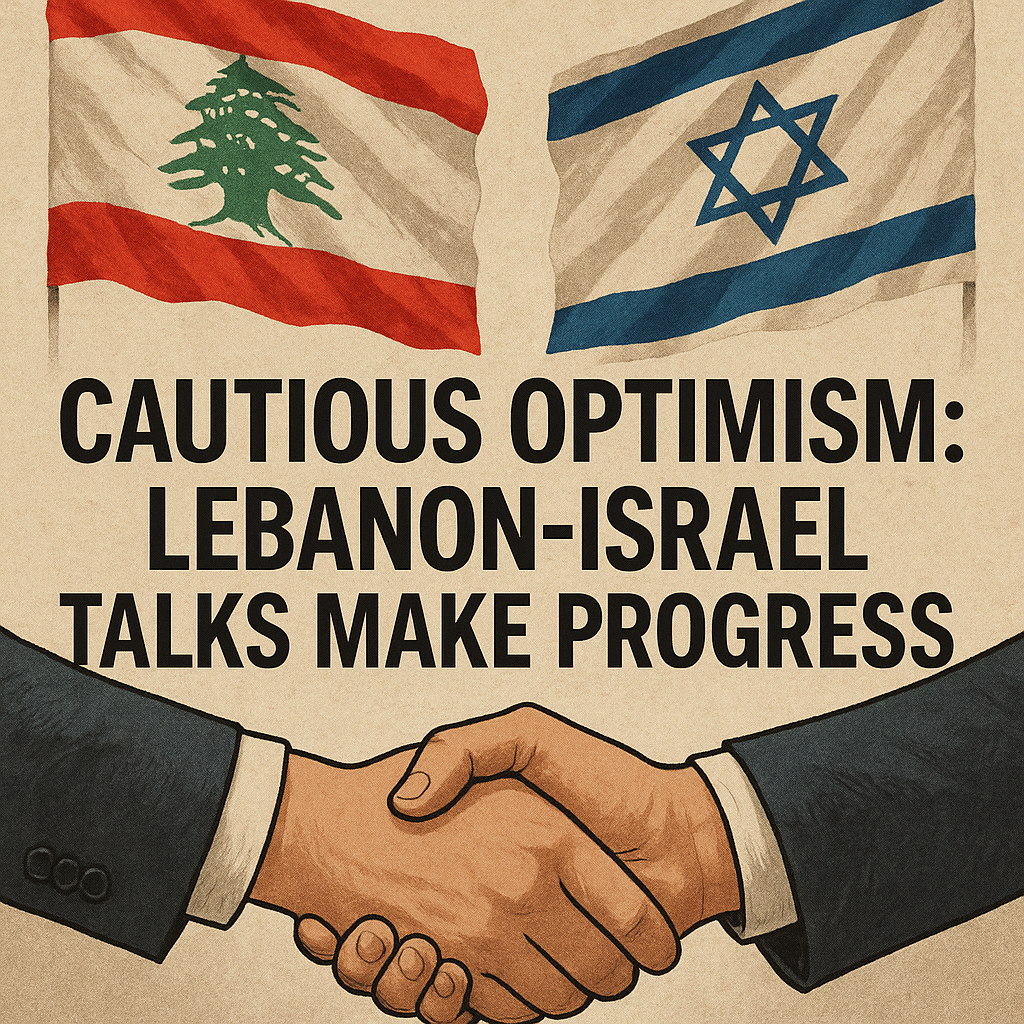
Cautious Optimism: Lebanon-Israel Talks Make Progress
Cautious Optimism: Lebanon-Israel Talks Make Progress
Recent discussions between Lebanon and Israel have sparked a wave of cautious optimism. As both nations engage in direct talks, the prospect of improved relations, or at least a reduction in tension, seems increasingly plausible. These conversations, though fraught with historical grievances and distrust, mark a significant step forward in a complex geopolitical landscape.

Historical Context of Lebanon-Israel Relations
To fully appreciate the significance of these talks, it’s essential to understand the historical backdrop. Tensions between Lebanon and Israel have their roots in decades of conflict, notably the 1982 invasion of Lebanon by Israeli forces and the subsequent Lebanese Civil War. The Israel-Hezbollah conflict, particularly the 2006 war, further deepened hostilities, leaving legacies of distrust that still pervade both societies.

Despite numerous attempts at peace negotiations, lasting resolution has eluded both parties. Fragmented by internal strife and regional dynamics, Lebanon has historically been caught in a web of external influences, particularly from Iran and other nations. On the other hand, Israel’s strategic interests and security concerns complicate its approach to Lebanon, especially in regards to Hezbollah, which it considers a terrorist organization.

The backdrop of these conversations is not just about peace but also about mutual economic interests, particularly in energy exploration and extraction in the Eastern Mediterranean. Natural gas reserves off the coast have become a pivotal point of negotiation, with both nations eyeing the lucrative possibilities that come with their development.
The Current Talks: A Potential Shift
Recent reports from Al Jazeera highlight a noticeable shift in dialogue, with Lebanon and Israel engaging in direct negotiations facilitated by international mediators. Sources from the talks suggest that both sides are focusing on practical issues, such as maritime boundaries and resource sharing, rather than traditional rhetorical points of contention.
Experts argue that this focus on pragmatic concerns could pave the way for more substantial agreements. “By discussing economic and resource-sharing efforts, both sides are working towards a mutually beneficial outcome,” noted political analyst Dr. Amir Rami, emphasizing that this could build trust organically over time.
However, there remain significant hurdles. The internal political landscape in both nations may affect the sustainability of these discussions. In Lebanon, the complex relationship between various political factions and Hezbollah’s influence can complicate consensus-building. For Israel, domestic pressures and concerns over security from Hezbollah and other militant groups continue to loom large.
What Lies Ahead?
As Lebanon and Israel engage in cautious dialogues, there is a pressing need to manage expectations. While the current environment fosters a degree of optimism, it’s critical to acknowledge the fragility of this process. Observers are keenly aware that optimism often runs aground on the rocks of historical grievances.
International commentators, such as those from Sky News, caution that while the potential for advancement exists, real progress will be contingent upon both sides demonstrating resilience in the face of domestic and regional pressure. Trust needs to be built gradually, and both leaders must navigate the respective sentiments in their countries carefully.
In their exploration of continued normalization, both Lebanon and Israel must consider the voices of their citizens who have lived through the consequences of conflict. Surveys conducted in Lebanon show a wariness among the populace concerning engagement with Israel, shaped by decades of enmity. In Israel, concerns about security and the possibility of renewed aggression also feature prominently in public discourse.
A Balanced Perspective
This dialogue represents a multifaceted challenge. While there are opportunities for economic cooperation that could benefit both nations, the historical baggage cannot be ignored. Analysts suggest that these talks symbolize a rare moment where pragmatic interests might transcend traditional enmity.
Despite the cautious optimism stemming from recent negotiations, it’s essential to remain realistic. The path to peace is rarely straightforward, and as Lebanon and Israel navigate this delicate terrain, both sides must work diligently to ensure that dialogue does not collapse under the weight of unresolved issues.
In conclusion, the progress made in Lebanon-Israel talks reflects a complex interplay of hopeful engagement against a backdrop of historical distrust. While developments are promising, they require careful management and a commitment to lasting peace that goes beyond mere dialogue. The world watches as these two nations tread softly toward a potentially brighter future, one cautious step at a time.















