
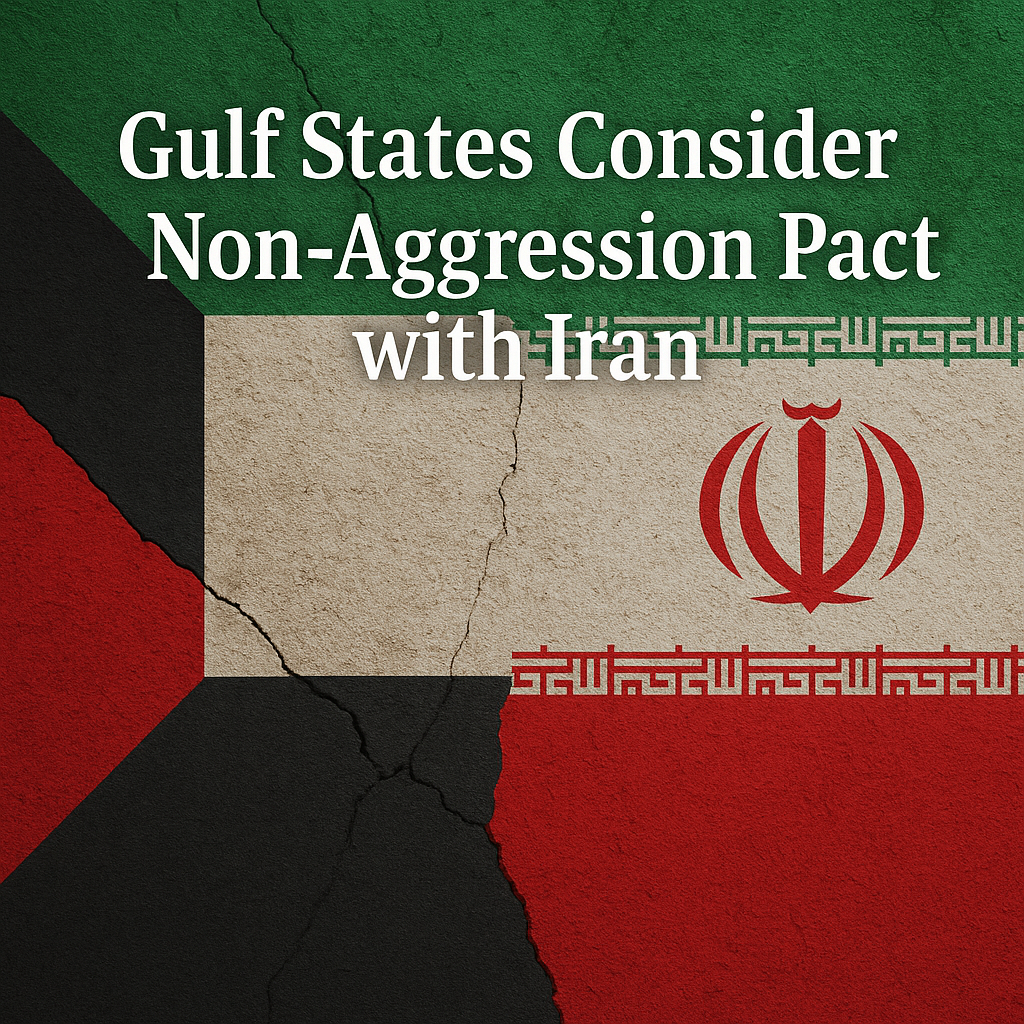
Gulf States Consider Non-Aggression Pact with Iran
Gulf States Consider Non-Aggression Pact with Iran
The Gulf States are currently exploring the idea of establishing a non-aggression pact with Iran, a move that reflects evolving diplomatic dynamics in the region. This potential agreement indicates a shift towards dialogue amid longstanding tensions, driven by a series of geopolitical developments that have left many nations reconsidering their strategies and alliances.

Historical Context and Recent Developments
The history of relations between Gulf Arab states and Iran has been fraught with suspicion and conflict, deeply rooted in ideological differences, regional power struggles, and historical grievances. Traditionally, nations like Saudi Arabia and the United Arab Emirates have been wary of Tehran’s influence, often responding to Iranian regional actions with military readiness.

However, recent developments suggest that the climate of enmity may be thawing. Following a series of diplomatic overtures, including Iran’s reinstatement of diplomatic ties with Saudi Arabia under China’s mediation, the idea of cooperation, including discussions about a non-aggression pact, is gaining traction. Analysts argue that this pact could serve as a crucial framework to stabilize relations, thus fostering a more peaceful regional environment.

Experts point out that the proposed agreement could help both sides address mutual concerns related to sovereign integrity and territorial disputes. As tensions have escalated in the past, especially during incidents involving Saudi oil infrastructure and Iranian proxy actions in Syria and Yemen, a formal commitment to non-aggression could provide a significant step towards mitigating these risks.
Diverse Viewpoints on the Pact’s Viability
While the discussions are promising, perspectives on the feasibility and intentions behind the non-aggression pact vary widely. Proponents argue that it could open the door for broader discussions addressing key issues such as economic cooperation, security alliances, and regional development. Adopting a non-aggression stance may foster trust and encourage collaborative initiatives, potentially benefiting all parties involved.
On the other hand, skeptics point to the deep-seated mistrust that has characterized Iran-Gulf relations. Some fear that a non-aggression pact might serve primarily as a strategic maneuver by Iran to consolidate its power and influence in the region while continuing its controversial activities. Achieving mutual assurances will require substantial concessions and a commitment to transparency, which historical precedent suggests may be difficult to realize.
Furthermore, the dynamics are complicated by external influences, particularly the role of the United States. Under the Biden administration, U.S. policy has sought to engage Iran diplomatically, but regional partners like Saudi Arabia appear uncertain about how to navigate these shifting allegiances. Their concerns about a perceived fading U.S. security commitment loom large, making them cautious about fully embracing negotiations with Iran.
The Road Ahead: Challenges and Opportunities
As the Gulf States mull over a potential non-aggression pact, several challenges remain in translating dialogue into actionable agreements. Key among them is the need for thorough monitoring and verification mechanisms to ensure compliance. Both sides must engage in genuine dialogue about regional issues, including conflicts in Syria, Yemen, and Iraq, to create a more comprehensive peace framework.
Moreover, Iran’s domestic affairs, including its nuclear ambitions and economic sanctions imposed by the West, could also impact negotiations. Political stability in Iran is crucial for any pact to take root; an insecure government might prioritize aggressive regional strategies over diplomatic overtures.
Despite these challenges, the talks signal a broader recognition of the necessity for peace in a highly volatile region. An agreement, if pursued earnestly, could lead not only to lowered military tensions but also to collaborative economic opportunities that could benefit the Gulf States and Iran alike.
In conclusion, while the prospect of a non-aggression pact between the Gulf States and Iran is tentative at best, it reflects a significant shift towards engagement in a historically adversarial relationship. The balance between skepticism and hope will ultimately determine the future trajectory of Gulf-Iranian relations in a landscape marked by change and uncertainty.















