
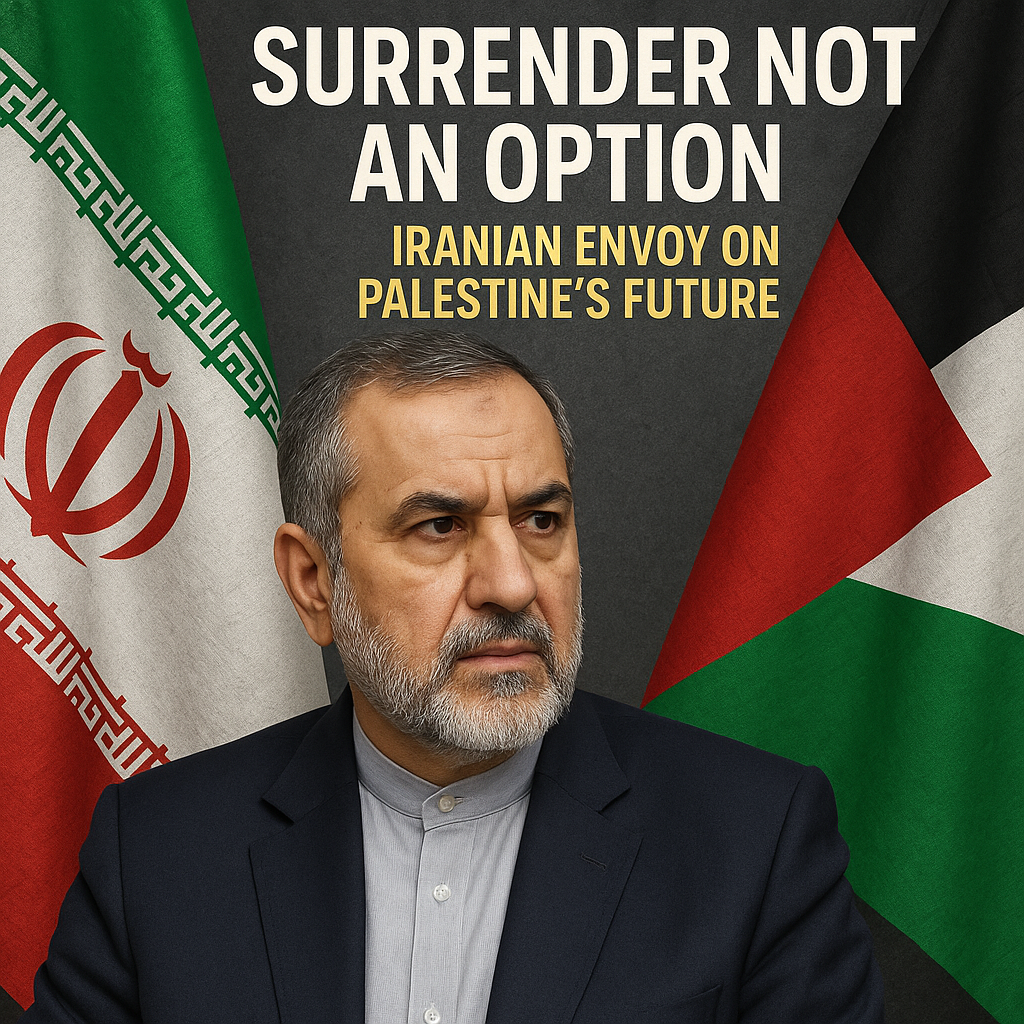
Surrender Not an Option: Iranian Envoy on Palestine’s Future
Surrender Not an Option: Iranian Envoy on Palestine’s Future
The statement from Iran’s envoy emphasizing that “surrender is not an option” in regard to Palestine’s future resonates deeply in a complex geopolitical landscape marked by longstanding tensions. As the situation surrounding Palestine continues to evolve, various perspectives shed light on the multifaceted nature of this enduring conflict, revealing both the aspirations of the Palestinian people and the political dynamics involved.

The Current State of Affairs
Recent reports illustrate the ongoing struggles faced by Palestinians, especially since the Nakba, which refers to the mass displacement that occurred during the 1948 Arab-Israeli war. According to Al Jazeera, many Palestinians continue to commemorate this event as they seek recognition and rights that have been historically denied. Reports indicate that the situation remains dire, characterized by economic hardships and political fragmentation. In West Bank towns, protests signify a collective resistance to both internal divisions among Palestinian factions and external pressures from various state actors.

The Iranian envoy’s insistence on the unyielding stance against surrender encapsulates a broader narrative among Middle Eastern nations supporting Palestinian sovereignty. These nations often highlight their solidarity in the Palestinian struggle against perceived aggressions. Yet, the complexities of such alliances cannot be overlooked; while Iranian support is vocal, the diverse motivations of regional actors present a stark contrast.

Diverging Perspectives on Support for Palestine
In stark contrast, Western viewpoints, including those presented by some Western media outlets, often emphasize the importance of diplomatic solutions through negotiations between Israel and Palestine. A piece from Sky News discussed how international actors are urging both sides to come to the negotiating table, emphasizing peace and stability as the ultimate goals. This perspective underscores a significant divide in approach: while some advocates call for continued resistance and an insistence on rights, others stress compromise amidst a turbulent backdrop.
Furthermore, the role of non-state actors and grassroots movements was highlighted in various reports, reflecting a rising demand for self-determination among Palestinians. Many activists argue that the current political strategies employed by both Hamas and the Palestinian Authority do not represent the wider populace’s frustrations and aspirations. On the other hand, the hardline position expressed by the Iranian envoy suggests a belief that negotiation without fundamental changes is akin to surrender, leaving many to wonder what the practical implications of such a philosophy would be.
The Path Forward: Resistance or Reconciliation?
As the narrative unfolds, one must also consider the sentiment among ordinary Palestinians. Many express a yearning for a resolution that honors their rights and sovereignty while rightly grappling with historical grievances. This complex emotional landscape serves as a combustible backdrop to the differing philosophies of resistance and reconciliation.
Key considerations include:
– Historical Context: The Nakba remains a pivotal reference point that influences current sentiments about sovereignty and identity among Palestinians.
– Political Fragmentation: The lack of a unified Palestinian front complicates international strategies for peace, as differing leadership visions create barriers to consistent action.
– Global Support: While international support for Palestine increases, it often arrives with strings attached, including calls for negotiation, which some view as undermining their aspirations.
At the heart of these discussions lies a critical tension: the balance between resisting injustice and seeking a pragmatic resolution in the face of overwhelming odds. Although the Iranian envoy’s words resonate with many who feel marginalized, they also bring forth questions about the feasibility of enduring resistance without a coherent strategy for peace.
Conclusion
The phrase “surrender is not an option” encapsulates a fervent call for dignity and rights amidst a backdrop of struggle. Yet, as the complexities of this conflict unfold, the path forward for Palestine remains layered with divergent opinions, constellations of influence, and fervent aspirations for justice. An honest examination of these competing narratives reveals that while the spirit of resistance continues to thrive, pathways to resolution must also be explored—not with the abandonment of rights but rather through dialogue that respects the historical context and contemporary realities of all involved. The future of Palestine, complex it may be, hinges on the delicate interplay between steadfastness and the pursuit of peace, urging a careful consideration of how best to navigate this challenging terrain.















