
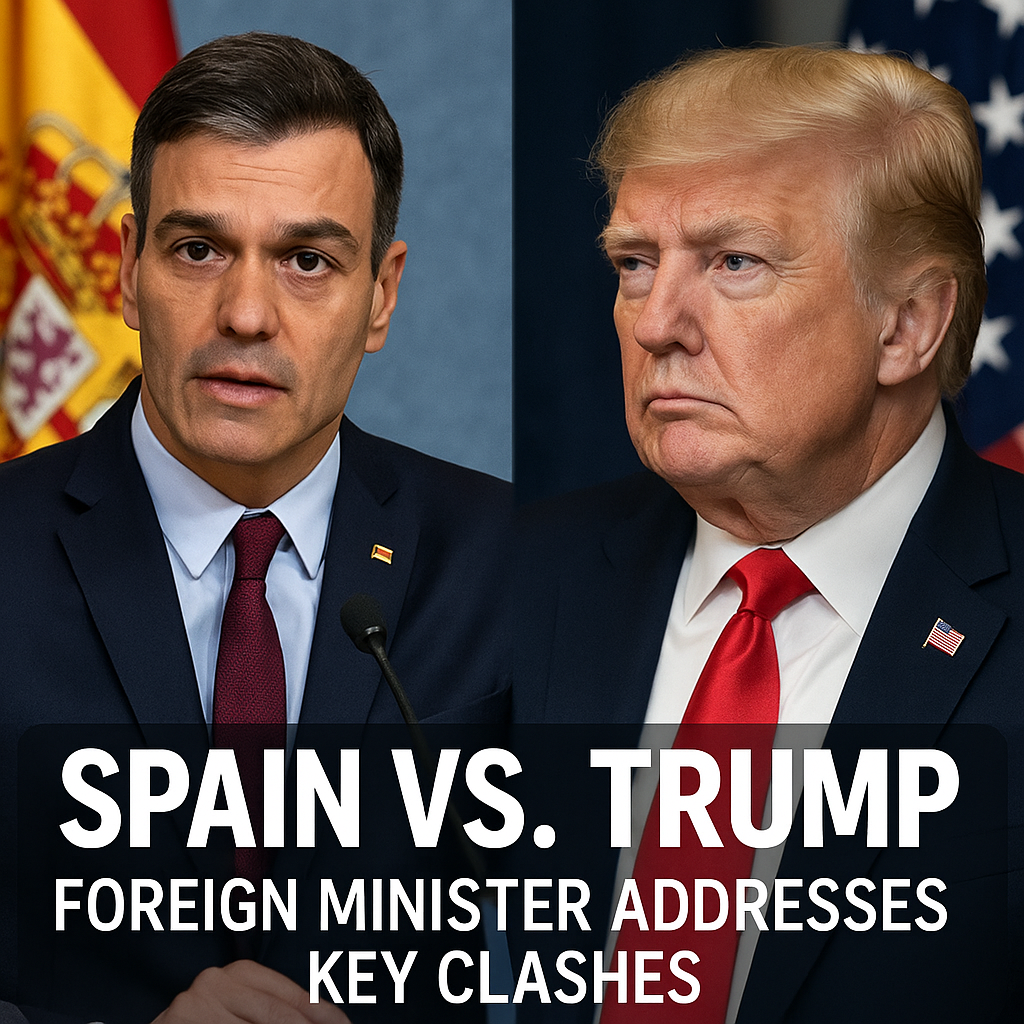
Spain vs. Trump: Foreign Minister Addresses Key Clashes
Spain vs. Trump: Foreign Minister Addresses Key Clashes
In recent months, the relationship between Spain and the Trump administration has become increasingly complex, marked by a series of diplomatic clashes on various fronts. Spanish Foreign Minister José Manuel Albares has taken center stage in addressing these tensions, showcasing Spain’s stance on international issues while navigating the unpredictable waters of U.S. foreign policy under the former president.

A Fundamental Disagreement on NATO and Defense
One of the most significant points of contention between Spain and the Trump administration has revolved around NATO commitments. The U.S. has consistently urged its allies to increase their military spending to meet the alliance’s target of 2% of GDP. In response, Albares has defended Spain’s contributions to NATO, emphasizing that Spain remains fully committed to collective defense and security initiatives.

Despite this commitment, there exists a palpable tension regarding what each country views as “fair share.” As Albares pointed out, Spain is “fully aware of its responsibilities” and has increased its defense budget, yet Trump’s hardline assertions have sometimes painted other nations, including Spain, in a less flattering light. The Spanish perspective is that NATO should be about solidarity and diplomatic engagement rather than merely financial transactions.

This disagreement underscores a broader question of how allied nations interpret burden-sharing within NATO. While Al Jazeera reported Albares’ commitment to increasing defense spending over the coming years, contrasting viewpoints from Trump’s administration suggested that such efforts were insufficient. The narrative that emerged frequently portrayed Spain and other European allies as laggards, a characterization that did not sit well with Spanish officials.
Climate Change: Diverging Approaches
Another critical clash between Spain and the Trump administration has emerged over climate change policy. While Trump famously withdrew the United States from the Paris Agreement, Spain has taken a proactive stance in promoting renewable energy and sustainable practices. Albares remarked on Spain’s ongoing investment in renewable technology, positioning the country as a leader in the fight against climate change.
Spain’s commitment to climate action not only reflects its internal policy but also its desire to be seen as an influential voice within the European Union. The nation aims to set an example for other countries in its efforts to transition toward a greener economy. Albares stated, “Climate progress cannot stop,” highlighting Spain’s determination to work with other nations to achieve collective goals.
Contrastingly, the Trump administration’s approach has often been characterized by skepticism toward international climate agreements. As Spanish officials like Albares have pointed out, this has led to tensions not just in diplomatic discussions, but also in international forums where cooperation on climate issues is essential.
Pushing for Dialogue Amidst Clashes
Despite these disagreements, Albares maintains that engagement is vital for both countries, emphasizing the opportunities for collaboration in areas like trade and cultural exchange. In interviews, he has expressed hope that relationships can be mended, suggesting that dialogue remains the best approach to address lingering issues. This suggests that both nations have something to gain through cooperation, despite their differences on specific policies.
Consequently, an assessment of the Spain-Trump dynamic reveals a layered tapestry of interests, obligations, and opportunities. Albares is clearly aware of the challenges posed by Trump’s assertive “America First” policy, but he articulates a vision that encourages mutual benefit through dialogue. His recent comments suggest an openness to finding common ground, even amidst fundamentally different worldviews.
Conclusion: Navigating a Complex Relationship
The clashes between Spain and the Trump administration spotlight broader challenges in international relations—the need for countries to reconcile their national interests with global responsibilities. As Albares emphasizes Spain’s commitment to NATO and climate action, the contrasts in leadership philosophy underscore the complexities of diplomacy in an era marked by division.
Ultimately, while the specific disagreements on defense spending and climate change remain potent issues, they also serve as catalysts for deeper dialogues about the future of transatlantic relationships. For Spain, asserting its position in a sometimes adversarial atmosphere reflects not only a commitment to national interests but also an understanding of its role on the global stage. As such, the interplay between Spanish diplomacy and the U.S. presents a microcosm of the broader geopolitical landscape—one that requires skillful navigation and a willingness to engage across divides.















