
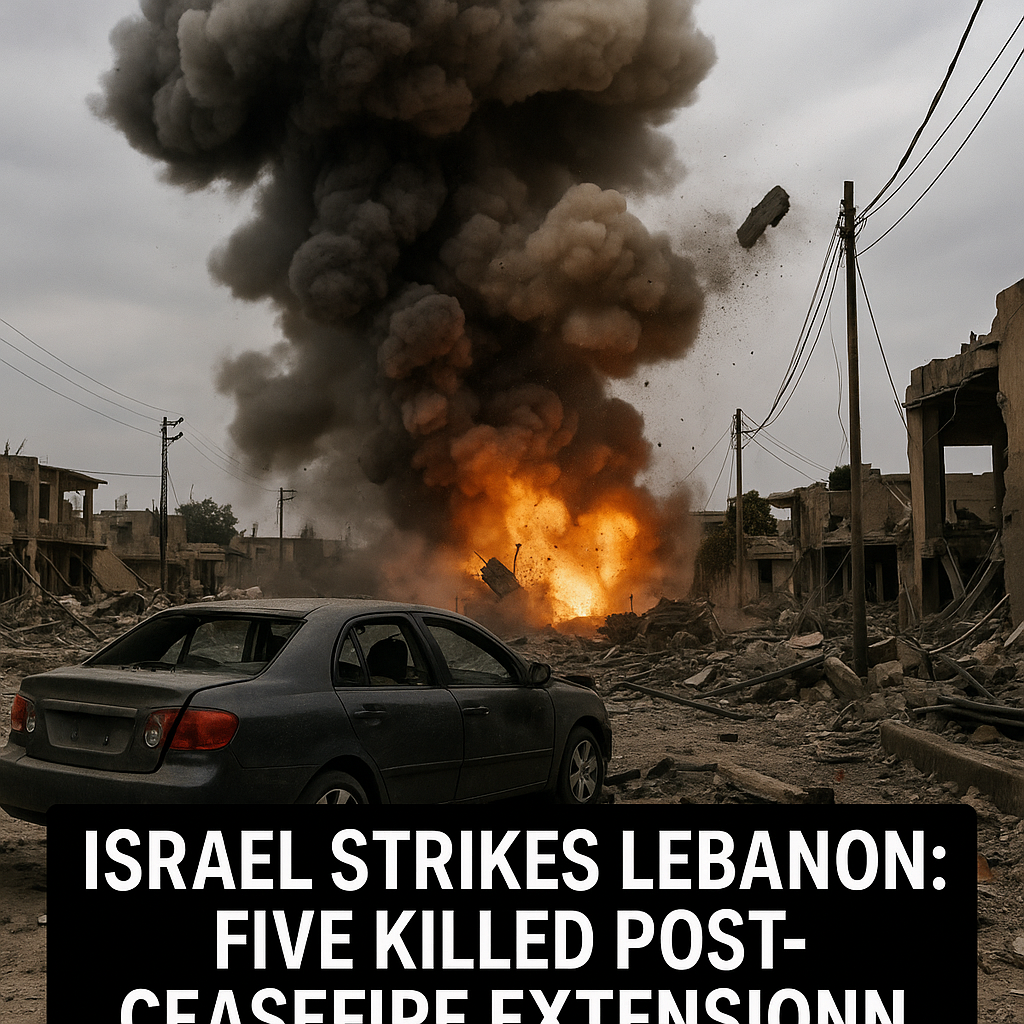
Israel Strikes Lebanon: Five Killed Post-Ceasefire Extension
On the heels of a ceasefire extension, tensions in the region escalated dramatically as Israel launched airstrikes in Lebanon, resulting in the deaths of five individuals associated with Hezbollah. This recent conflict not only rekindles memories of prior skirmishes but also raises pressing questions about the effectiveness of diplomatic measures in the region.

Understanding the Context: Ceasefires and Escalation
Ceasefires in the Israel-Lebanon border zone have a complex history marked by brief pauses in hostilities that often unravel amidst a cycle of violence. The recent extension of the ceasefire, intended to stabilize the area following earlier clashes, appeared to hold promise. However, it quickly fell apart after Israel conducted targeted strikes against what it termed as Hezbollah positions, leading to severe casualties.

Reports indicate that the airstrikes targeted locations in southern Lebanon, reportedly utilized by members of the militant group. Al Jazeera emphasized that these operations occurred after a ceasefire agreement was reached, which highlights the fragility of peace initiatives in the region. Conversely, Hezbollah has issued stark warnings, accusing Israel of breaching the ceasefire and threatening retaliation.

The Human Cost of Conflict
The human toll of this latest conflict is undeniable. Among the five individuals killed were members of Hezbollah, a group that remains prominent in Lebanese politics and military engagement against Israel. This incident underscores the tragic overlap between military actions and civilian safety.
Sky News reported on the broader implications of these strikes, stressing concerns regarding regional stability. The Middle East has witnessed cycles of violence that often escalate rapidly, with civilian populations caught in the crossfire. Moreover, the deaths have sparked public outcry within Lebanon, where many see the strikes as part of a larger aggression by Israel.
Diverging Perspectives: National Security vs. Regional Stability
As the situation unfolds, perspectives on Israel’s actions diverge significantly. Proponents of the airstrikes argue that such defensive measures are necessary to safeguard Israeli citizens from perceived threats posed by Hezbollah. Israeli officials have frequently cited prior attacks orchestrated by the group as justifications for military responses, framing their actions as essential to national security.
On the other hand, voices from Lebanon express outrage, viewing the airstrikes as provocations rather than justified responses. Many critics of Israel’s military strategy argue that indiscriminate strikes only serve to deepen animosities and perpetuate a cycle of violence that could have been avoided through diplomacy.
The media landscape reflects this division, with sources like RT highlighting the narrative of necessary force in defense of Israel, while Al Jazeera focuses on the humanitarian implications and risk of further destabilizing Lebanon and its neighbors.
The Road Ahead: Diplomatic Dilemmas
As both nations grapple with the aftermath of the recent escalation, the question of how to achieve lasting peace remains unresolved. International observers are keenly watching for signs of negotiation or further conflict. Efforts to broker peace often hinge on external influences, including international mediation, but the effectiveness of such initiatives can be inconsistent.
Experts suggest that for diplomacy to yield fruitful outcomes, both sides must prioritize dialogue over military action. Tensions stemming from recent strikes demonstrate that without concerted efforts towards understanding and reconciliation, the region may face an increasingly precarious future.
In summary, the recent Israeli airstrikes in Lebanon following a ceasefire extension serve as a stark reminder of the complexities involved in achieving peace in the region. With the loss of lives and rising tensions, the need for effective dialogue becomes more urgent. As stakeholders weigh the consequences of military actions versus diplomatic negotiations, the hope for stability hinges on a collective commitment to addressing the underlying causes of conflict rather than merely responding to its symptoms.















