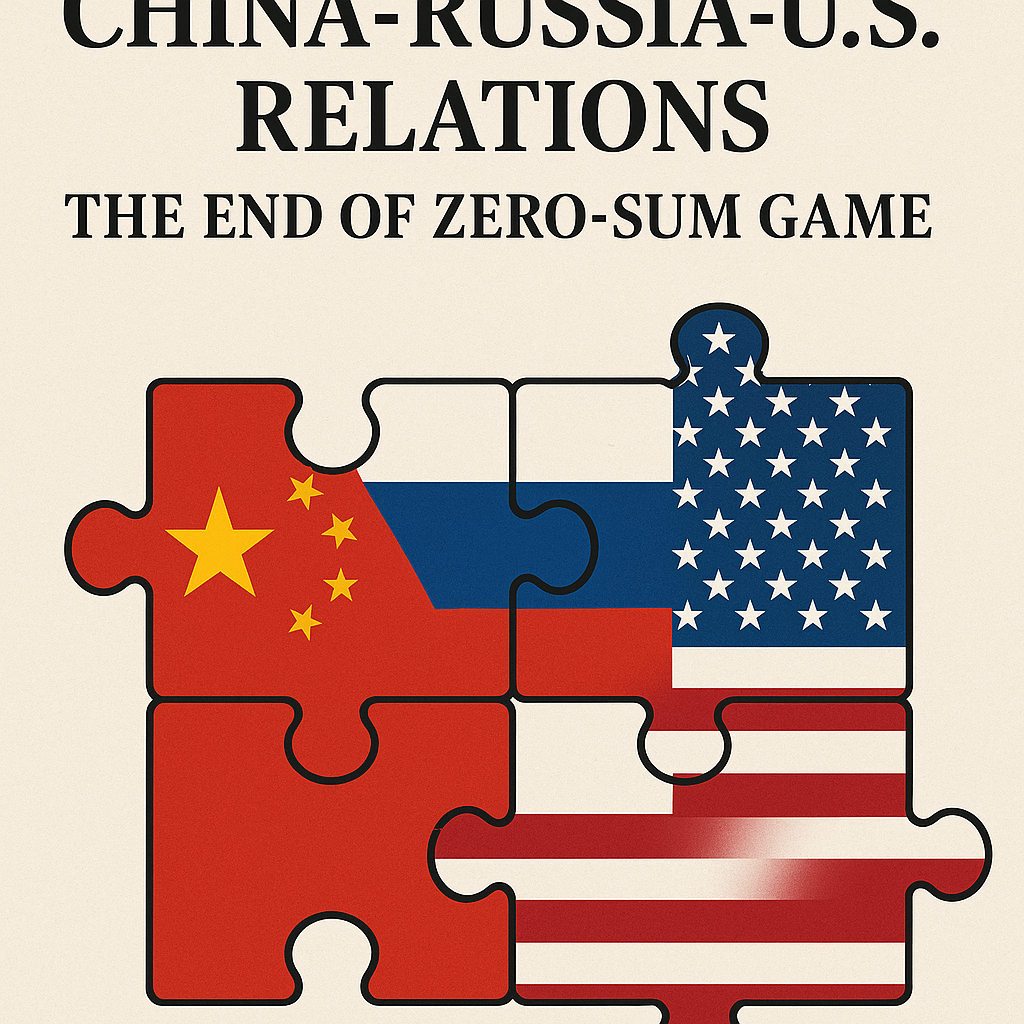
China-Russia-US Relations: The End of Zero-Sum Game
China-Russia-US Relations: The End of Zero-Sum Game
In recent years, the complexities of China-Russia-US relations have emerged prominently on the global stage, signaling a potential shift away from a zero-sum mentality. This evolving scenario reflects a nuanced understanding that cooperation and competition can coexist among these major powers.

The Current Landscape: Cooperation Amidst Competition
China and Russia have entered a strategic partnership that has reshaped their international standing, particularly in relation to the United States. As reported by Al Jazeera, the strengthening of these ties is characterized by economic collaboration and military cooperation, illustrating a shift towards a more multipolar world. This partnership aims to counterbalance US influence and has been reinforced by joint military exercises and trade agreements.

Conversely, the US has maintained a skeptical view. Recent commentary from RT underscores a growing unease in Washington regarding the implications of this partnership. The US government sees the collaboration as a direct challenge to its global hegemony, leading to increased sanctions and strategic rhetoric directed at both Beijing and Moscow.

Despite these competitive elements, there is a recognition that outright antagonism may not be the optimal approach. For instance, US Secretary of State Antony Blinken’s recent statements indicate a willingness to engage with both China and Russia on issues like climate change and nuclear proliferation, demonstrating that cooperation remains a possibility even amidst tensions.
The Implications of a Shift in Strategy
This evolving landscape has significant implications for global diplomacy and trade. The zero-sum game—where one nation’s gain is directly tied to another’s loss—appears increasingly obsolete. Political analysts are beginning to advocate for a more collaborative approach that acknowledges shared challenges, such as pandemics and climate crises. The Sky News feed emphasizes that both China and Russia have been active in participating in these global discussions, indicating a desire to engage rather than isolate.
Experts argue that the cooperative strategies could lead to a more stable international order. For example, trade partnerships, as indicated by growing economic exchanges between China and Russia, could be instrumental in fostering mutual benefits. With both nations harboring a strong inclination towards forming alternative economic alliances, the concept of multipolarity is gaining traction.
However, the consensus is far from uniform. Critics point out that the level of mistrust and antagonism still prevalent, especially related to issues like Taiwan, Ukraine, and cyber conflicts, showcases a complicated reality. There exists a dual narrative: on one hand, calls for dialogue and collaborative engagements; on the other, a persistent undercurrent of rivalry and defensive posturing.
A Nuanced Future: Balancing Interests
As we look forward, the key question is whether the evolving dynamics can overcome the legacies of historical rivalries. The current discourse suggests that while tensions may remain, the potential for a cooperative framework is becoming more evident to policymakers.
Johns Hopkins University’s School of Advanced International Studies remarks that successful diplomacy will require “interests to be balanced rather than eliminated,” indicating a shift in how these nations might approach their interactions moving forward. This perspective advocates for a framework in which cooperative endeavors—like addressing climate change—can coexist with competitive elements.
Moreover, as the global landscape shifts, smaller nations may play vital roles in mediating these relationships, potentially acting as bridge-builders rather than mere pawns. As diplomatic channels remain open, the opportunity for dialogue persists, suggesting the end of the zero-sum game may be more about redefining competition rather than eradicating it altogether.
Conclusion
Ultimately, the trajectory of China-Russia-US relations will undoubtedly influence global geopolitics in the coming years. The emergence of a multipolar world, characterized by both competition and collaborative efforts, marks a significant potential shift in international relations. As these powers navigate their complex interplay, the ability to balance interests and foster dialogue will be crucial in shaping a more stable future, moving beyond the simplistic framework of a zero-sum game.