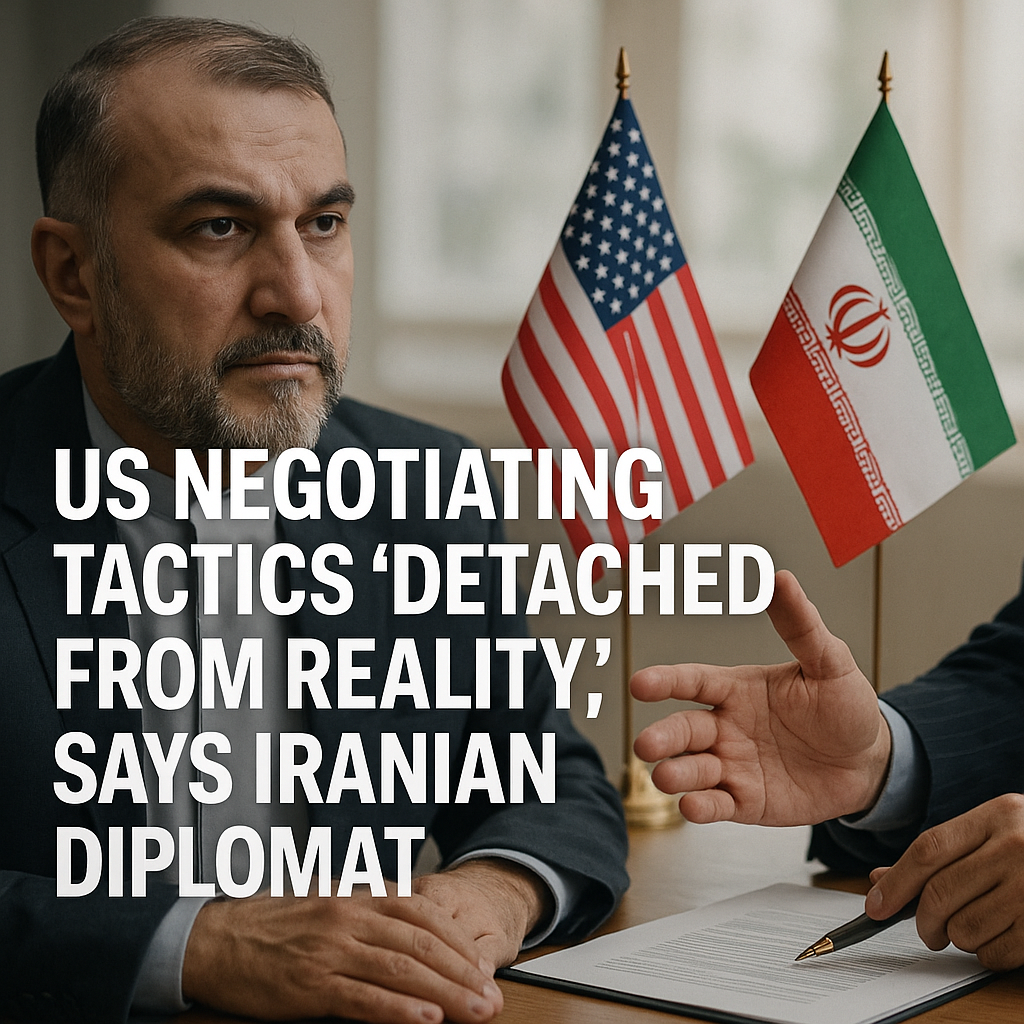
US Negotiating Tactics ‘Detached from Reality’, Says Iranian Diplomat
US Negotiating Tactics ‘Detached from Reality’, Says Iranian Diplomat
The ongoing negotiations between the United States and Iran have encountered significant challenges, with Iranian officials critiquing American negotiating strategies as “detached from reality.” This perspective highlights the complexities of diplomatic dialogue in a historically fraught relationship, shedding light on the diverging views of both nations.

Diverging Perspectives on Negotiation Strategies
In recent statements, Iranian diplomat Ali Bagheri Kani expressed that the U.S. approach in talks over Iran’s nuclear program lacks a grounded understanding of the geopolitical realities at stake. His claim suggests that American tactics may overlook the nuanced power dynamics and historical context that influence Iran’s stance. He asserts, “The U.S. is negotiating from a position of weakness but remains notably adamant in its expectations,” indicating a belief that the U.S. is not fully aware of its limitations in these discussions.

Contrarily, U.S. officials maintain that their negotiation framework is essential for ensuring compliance with any future agreements. They argue that a firm stance is necessary to push back against Iran’s alleged non-compliance with previous nuclear commitments. The complexities become apparent as each side clings to its narrative, leading to misunderstandings and heightened tensions.

Historical Context of U.S.-Iran Relations
To fully grasp the current diplomatic impasse, it is crucial to consider the long history between the two countries. The 2015 Joint Comprehensive Plan of Action (JCPOA) was a collaborative effort to curb Iran’s nuclear capabilities, which the U.S. exited in 2018, reinstating a series of economic sanctions. This decoupling has since complicated discussions, as Iran has expanded its nuclear program and resisted U.S. demands while calling for an easing of sanctions.
This backdrop frames the current negotiations where both sides seem entrenched in their positions. Bagheri Kani emphasizes that effective negotiation requires a mutual understanding of objectives and realities—a sentiment echoed by several analysts who caution against unrealistic expectations. While some experts argue that the U.S. should adopt a more flexible stance, others contend that maintaining stringent conditions is crucial for ensuring regional stability.
Impediments to Progress: Realities on the Ground
The differences in perception regarding the efficacy and rationale behind negotiation tactics could be rooted deeply in domestic politics on both sides. In the U.S., the Biden administration faces pressure from legislators who are skeptical of Iran’s reliability, while within Iran, hardliners are cautious about perceived concessions that could weaken the Islamic Republic’s position domestically.
Bagheri’s remarks highlight a significant aspect of negotiation: the need for a foundation of trust and reliable communication. Speculation about U.S. confidence and intent raises doubts and fosters an environment of distrust, where each side may misinterpret the other’s signals. Such an atmosphere not only hampers ongoing talks but also exacerbates the risk of miscalculation, which could lead to greater regional instability.
Exploring Future Pathways
Despite these challenges, some commentators advocate for a renewed commitment to dialogue. They point to the potential for constructive engagement, arguing that both nations have much to gain from a pragmatic approach that prioritizes diplomacy over antagonism. An intermediate strategy could involve incremental agreements that allow both sides to regain confidence without requiring immediate, full compliance.
In sum, the perspective that U.S. negotiating tactics are “detached from reality” is reflective of a broader tension in international relations. These discussions illuminate the intricate interplay of historical grievances, current political pressures, and the overarching need for a nuanced approach that recognizes the complexities inherent in the U.S.-Iran dynamic. Only through sustained dialogue and a willingness to understand each other’s positions can these longstanding issues begin to find resolution.
As negotiations continue, the path forward remains uncertain. Without acknowledging the realities on both sides, there is a risk that the discussions may falter, leaving unresolved tensions that could reverberate across the region and beyond. The hope rests in a collaborative effort to bridge gaps and foster understanding—an essential step towards a more peaceful coexistence.