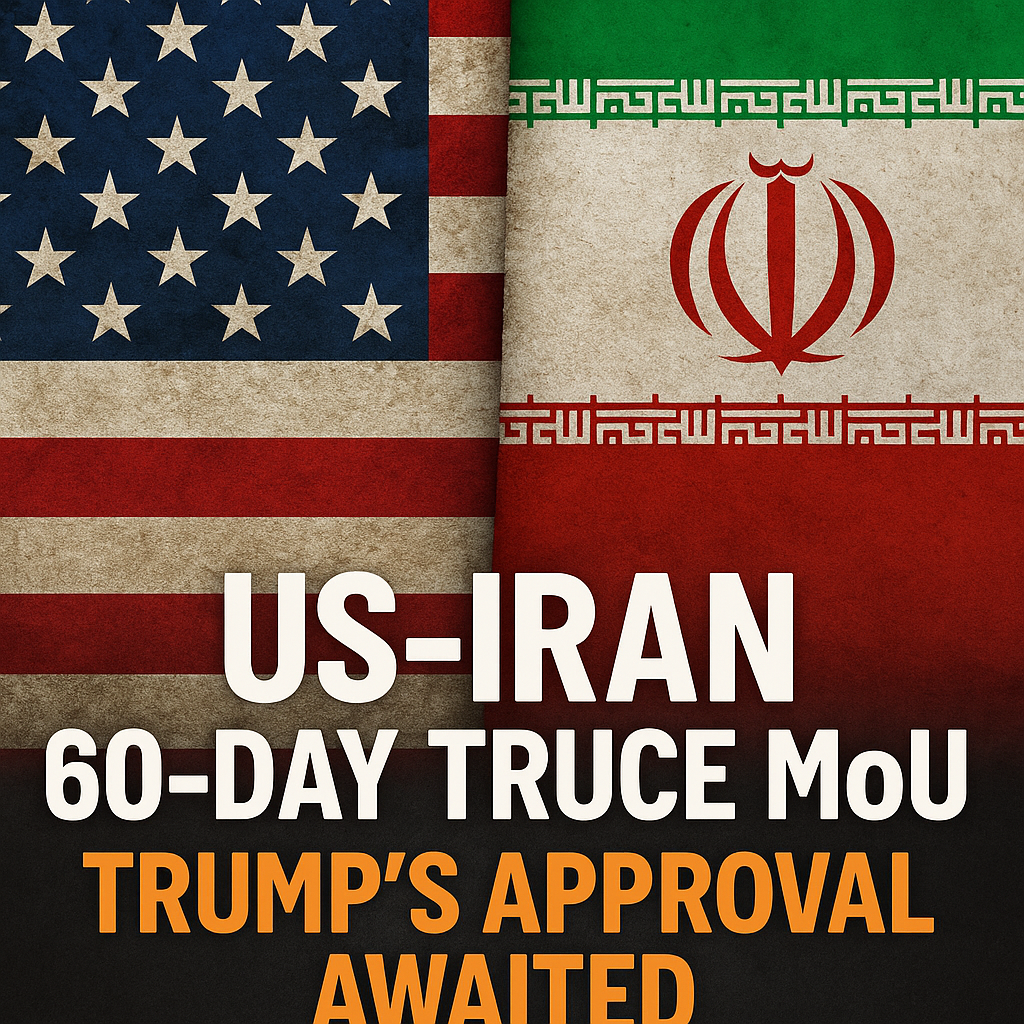
US-Iran 60-Day Truce MoU: Trump’s Approval Awaited
US-Iran 60-Day Truce MoU: Trump’s Approval Awaited
The recent memorandum of understanding (MoU) between the US and Iran signaling a 60-day truce holds significant geopolitical implications that require careful analysis. This agreement marks a pivotal step in the complex relationship between the two nations, with numerous factors at play that could either facilitate its success or jeopardize it altogether.

The Context of the Truce
The ongoing tensions between the US and Iran have profoundly impacted regional stability and international relations. Following years of sanctions and military posturing, the MoU appears as a potential thaw in what many perceive as a protracted standoff. According to reports from Al Jazeera, the agreement aims to halt hostilities for a period of 60 days, during which both countries would engage in negotiations to address broader security concerns.

On the other hand, the perspective from RT emphasizes skepticism regarding the sincerity of either party’s commitment. Critics argue that such truces have historically been fragile, often undermined by internal politics or unforeseen escalation. The mere fact that Trump’s approval is sought raises questions about the continuity of US foreign policy, particularly given previous instances where similar agreements either fell apart or were disregarded.

The Stakes Ahead
##### Domestic Politics and Its Influence
As Trump awaits to lend his approval, the internal political dynamics in the US play a crucial role. Supporters of Trump’s administration have voiced concerns that any perceived concession to Iran could be detrimental, especially ahead of upcoming elections. Citing a strong stance against Iran as a cornerstone of his foreign policy, many Republicans argue that any sign of weakness could embolden Iranian aggression.
Conversely, proponents of the MoU, including various Democrats, highlight the necessity of dialogue as a means to enhance national and regional security. They argue that a successful truce could serve as a foundation for more comprehensive agreements addressing nuclear proliferation, terrorism, and human rights abuses.
This division in domestic support complicates the decision-making process. As reported by Sky News, the handling of such agreements is often fraught with political risk, and the upcoming months may reveal how this tension manifests in both public opinion and legislative actions.
##### International Reaction
Globally, reactions to the truce have been mixed. Allies in Europe, who have long supported diplomatic engagement with Iran, view the MoU as a positive step toward reducing tensions. However, regional powers like Saudi Arabia and Israel remain poised with caution, viewing any potential rapprochement between the US and Iran as a direct threat to their interests in the Middle East.
Reports suggest that these nations are closely monitoring the developments and may respond with their own strategic adjustments, possibly undermining the truce’s objectives. Discontent from these key players could complicate the implementation of the agreement, pitting the US in a delicate balancing act of diplomacy and defense.
Toward a Resilient Framework
The potential 60-day truce between the US and Iran, pending Trump’s approval, signifies a moment of opportunity and risk. While both parties stand to gain from a cessation of hostilities, the historical context of such agreements suggests that success is far from guaranteed.
Building a resilient framework is essential not just for the short-term goals of peace but for the longevity of a constructive relationship. The nuanced understanding of both domestic and international pressures will play a vital role in determining the future of this truce. Failure to consider these factors could lead to a deterioration of the fragile peace, heightening the urgency for robust and thoughtful diplomacy going forward.
In these uncertain times, the focus now shifts to whether or not this agreement can overcome political obstacles and skepticism, igniting a substantive dialogue that could pave the way for a lasting peace and stability in the region.