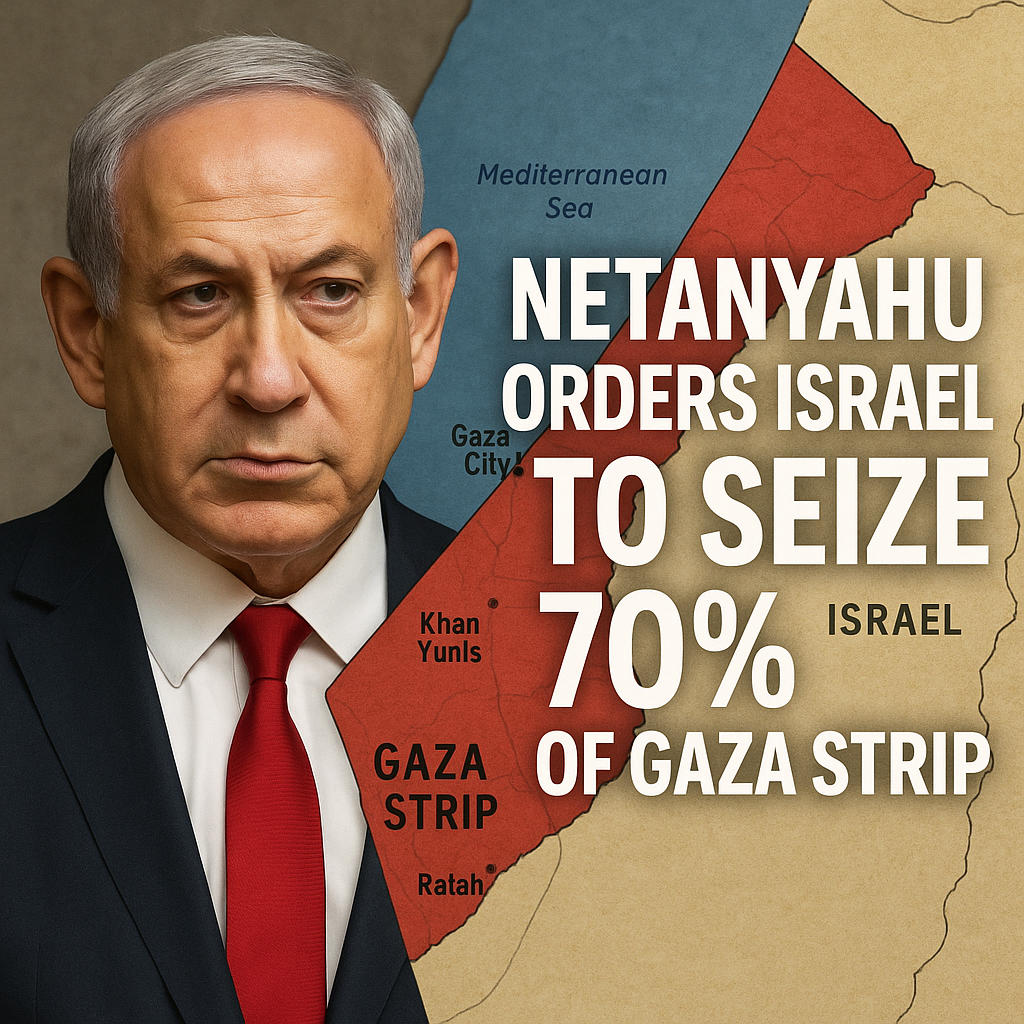
Netanyahu Orders Israel to Seize 70% of Gaza Strip
Background of the Situation
In a surprising and controversial move, Israeli Prime Minister Benjamin Netanyahu has ordered the Israeli military to take control of 70% of the Gaza Strip. This directive has generated significant attention and discord among various international and local stakeholders. The decision not only escalates ongoing tensions but also raises critical questions about the future of peace efforts in the region.

The directive comes amidst long-standing hostilities between Israel and Palestinian groups, particularly Hamas, which governs the Gaza Strip. The Israeli government has justified this seizure as a necessary measure for national security, citing ongoing rocket attacks and threats against its citizens. However, a wide range of reactions have emerged, highlighting the complexity of the situation.

Diverging Perspectives on Israel’s Move
Security Justification
Supporters of Netanyahu’s decision argue that the military control of significant parts of Gaza is essential for ensuring Israeli security. According to statements from military officials, the increase in rocket fire from the territory necessitates immediate and decisive action. Proponents believe that controlling a larger area will allow Israel to more effectively monitor potential threats and neutralize risks to its citizens.

This sentiment is echoed by various analysts who highlight the historical context of repeated conflicts and failures in peace negotiations. For many in Israel, the move is seen as a pragmatic solution to a pressing security concern in an environment fraught with unpredictability.
Humanitarian Concerns
Conversely, critics of the order warn that such drastic measures could exacerbate the already dire humanitarian situation in Gaza. Organizations like Human Rights Watch and various United Nations agencies have consistently voiced concern over Israel’s military operations in densely populated areas, arguing that they disproportionately affect civilians.
The potential seizure of Gaza could lead to a humanitarian crisis, further displacing populations already suffering from insufficient resources and infrastructure damage. Activists and international observers fear that this move may violate international law and deepen the cycle of violence, making future peace efforts even more challenging.
The Broader Implications
International Reactions
The international community’s response to Israel’s latest move has been varied, reflecting the deep divides in the geopolitical landscape. Some countries, particularly allies of Israel, have expressed support for the security measures taken by the Israeli government. They argue that Israel has the right to defend itself against threats from militant groups.
Conversely, many countries and international organizations have condemned the action, calling for immediate de-escalation and negotiations. The United Nations has urged all parties to consider the humanitarian impact of military actions and prioritize peaceful resolutions.
Future Peace Prospects
The unilateral decision to seize a substantial portion of Gaza poses significant challenges for future peace initiatives. Previous attempts at negotiations have often faltered on issues such as borders, resources, and the status of Palestinian refugees. The recent escalation may render the already fragile dialogue even more tenuous.
Moreover, with regional dynamics constantly shifting, the prospect for a two-state solution becomes increasingly complicated. Many Palestinians view the seizure as a blatant appropriation of their land, which could reinforce extremist sentiments and weaken moderate voices advocating for coexistence.
Conclusion
Netanyahu’s order to seize 70% of the Gaza Strip encapsulates the ongoing complexities of the Israeli-Palestinian conflict. While framed by proponents as a necessary security measure, the reaction to this directive reveals profound divides between differing perspectives on security and humanitarian considerations.
As the situation unfolds, the implications for both local civilians and international diplomacy remain uncertain. One thing is clear: as tensions continue to rise, the challenge of achieving lasting peace in the region grows ever more daunting.