
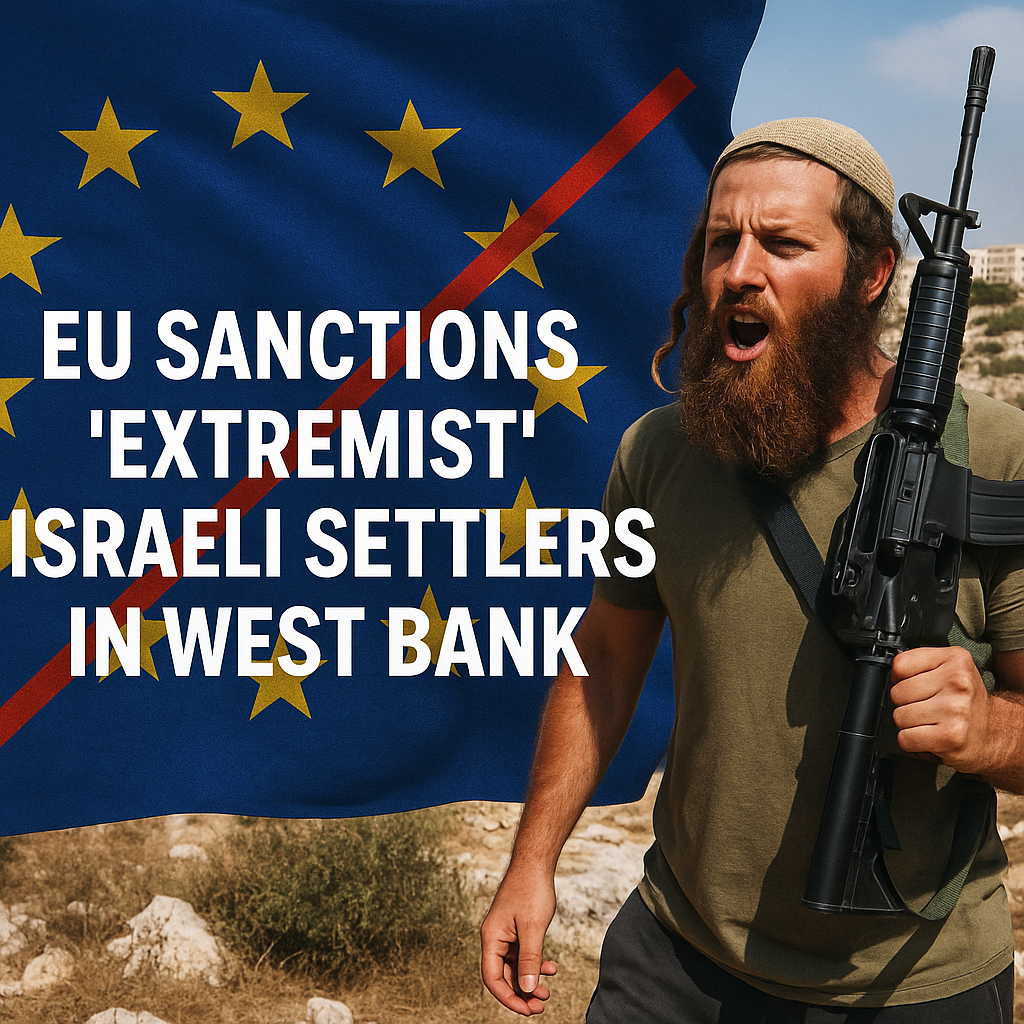
EU Sanctions ‘Extremist’ Israeli Settlers in West Bank
EU Sanctions ‘Extremist’ Israeli Settlers in West Bank
In a significant geopolitical development, the European Union (EU) has imposed sanctions on what it deems “extremist” Israeli settlers in the occupied West Bank. This move has sparked a robust debate about its implications for the Israeli-Palestinian conflict, the future of settlement policies, and the EU’s role in Middle Eastern diplomacy.

Background: The Root of Tensions
The Israeli settlement enterprise in the West Bank has been a long-standing point of contention between Israelis and Palestinians, as well as a focal issue for international observers. Since the 1967 Six-Day War, Israel has expanded its settlements, which many countries, including members of the EU, consider illegal under international law. According to Al Jazeera, the recent sanctions target several individuals and organizations involved in the facilitation of violent actions against Palestinians, focusing on extremist elements that exacerbate tensions in the region.

Critics of the EU’s decision view it as a necessary measure to uphold international norms regarding human rights and the rule of law. They argue that these sanctions might pressure the Israeli government to reconsider its settlements policy and foster a climate for renewed dialogue. Yet, there’s also a significant apprehension that such actions could further entrench the divide, potentially provoking retaliatory measures from Israeli hardliners.

Diverse Perspectives on the Sanctions
While the EU’s sanctions have been welcomed by some human rights organizations, other commentators are skeptical about their efficacy and potential consequences. RT News highlights concerns that the sanctions might have little tangible impact on the ground, as extremist settlers have historically operated with impunity. Furthermore, they argue that these sanctions could strain EU-Israel relations, which have been intricate and multifaceted, involving trade agreements and political collaboration.
On the other hand, proponents of the sanctions argue that they represent a moral stance against oppression. As stated in numerous reports by Sky News, the EU aims to hold accountable those who contribute to violations of international law and exacerbate violence. Such measures are seen as necessary tools in promoting a long-term resolution to the conflict.
A balancing act exists between condemning violence and advocating for continued peace negotiations. The EU’s decision may embolden calls for a more significant international effort to address the occupation while alienating those with a more pro-Israel stance.
The Road Ahead: What Do Sanctions Mean for Peace?
The efficacy of sanctions rests on the broader context of the Israeli-Palestinian conflict. Some argue that sanctions can incentivize Israel to abandon expansionist policies, while others caution that they may harden positions on both sides. Current Palestinian leaders have welcomed the EU’s actions as a step toward accountability for settlers’ violent actions, though skepticism about their ability to yield significant change remains.
The complexities of enforcing sanctions—particularly in a region with deeply rooted historical grievances—make it difficult to predict any immediate outcomes. For instance, analysts suggest that without a concerted diplomatic effort alongside these sanctions, the EU’s actions could simply reinforce existing power dynamics, negating the potential for meaningful dialogue. Various parties emphasize that sanctions alone cannot substitute for the peace process; rather, they should be part of a comprehensive strategy aimed at building trust and addressing underlying grievances.
Conclusion: A Step in a Complicated Landscape
The EU’s sanctions against extremist Israeli settlers in the West Bank mark a notable step in its foreign policy, representing a commitment to uphold human rights. However, the landscape of the Israeli-Palestinian conflict is complicated and fraught with historical resentment and political tension. Dialogue and diplomacy remain crucial for any real advancement toward peace.
While the sanctions may embody the EU’s moral position against violence and settlements, their effectiveness will largely depend on the reactions from both Israeli settlers and the Palestinian authorities. Long-lasting peace will require not just punitive measures, but also an inclusive approach that paves the way for honest discussions between all stakeholders involved in this protracted conflict.















