
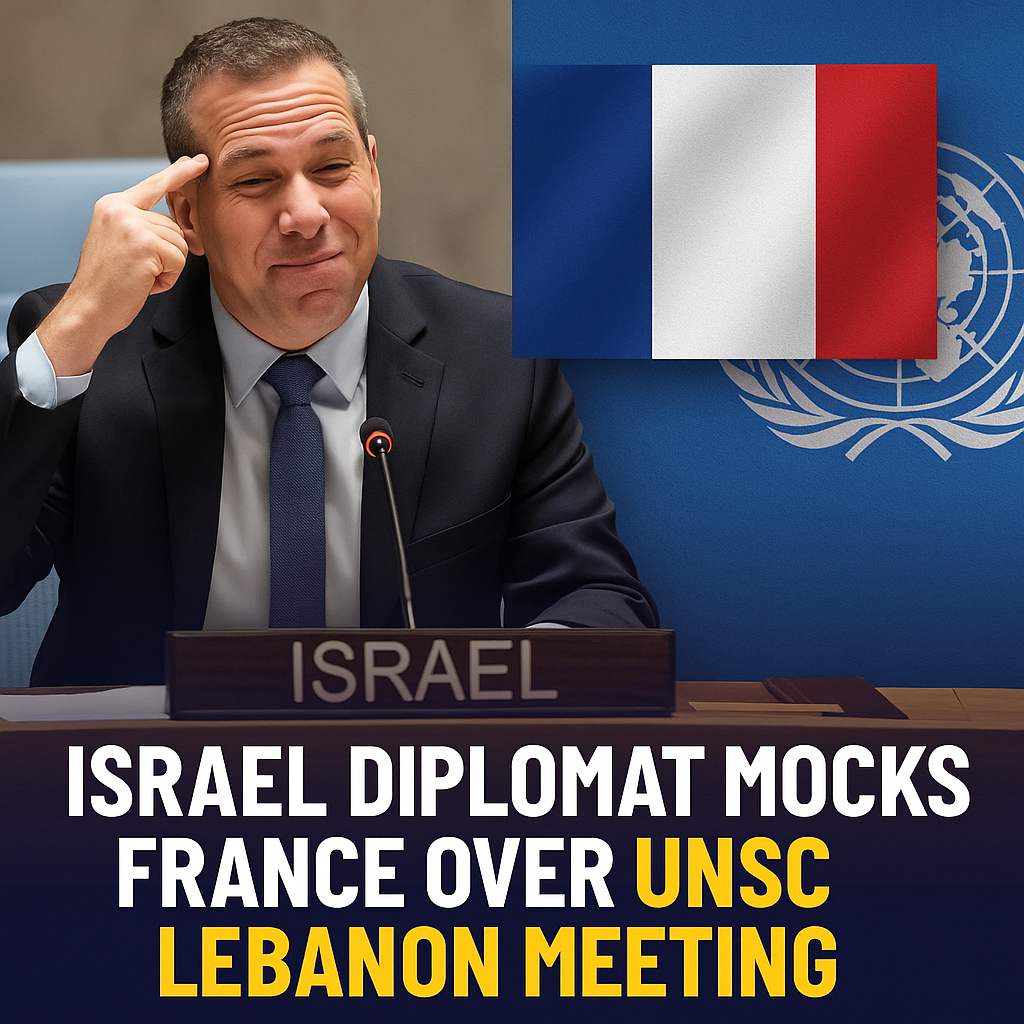
Israel Diplomat Mocks France Over UNSC Lebanon Meeting
Israel Diplomat Mocks France Over UNSC Lebanon Meeting
In a recent development, an Israeli diplomat’s controversial remarks regarding France’s role in the United Nations Security Council (UNSC) have sparked a renewed debate about international diplomacy and the complexities of Middle Eastern politics. This incident emphasizes the intricate relationships among nations and the expectations they hold of one another in sensitive situations.

Diplomatic Friction: A Snapshot of the Incident
The uproar began when Israeli Ambassador to the United Nations, Gilad Erdan, made pointed comments mocking France during a UNSC meeting centered on Lebanon. He remarked that France’s approach to the ongoing crisis in Lebanon was lacking and expressed disbelief that France seemed to overlook the challenges posed by Hezbollah. His remarks not only drew the ire of French diplomats but also highlighted the friction between Israel and European nations concerning policies in the Middle East.

France has long positioned itself as a mediator in Lebanese politics, advocating for sovereignty and stability in the region. However, Erdan’s comments suggest a growing impatience with what some Israeli officials perceive as France’s naïve or ineffective approach to both Lebanon and Hezbollah, a group considered a terrorist organization by Israel and several Western countries. This tension points to the broader complexities in how various countries engage with Middle Eastern conflicts, each driven by distinct national interests and historical contexts.

Divergent Perspectives on the Issue
From one vantage point, Israeli criticism of France underscores a legitimate frustration with European countries’ reluctance to adopt a firmer stance against Hezbollah. Many Israeli officials argue that Europe’s approach is often influenced by a desire for diplomacy over direct confrontation, which they believe allows groups like Hezbollah to gain strength and influence in Lebanon. The Israeli government contends that a more robust, uncompromising stance is required to ensure the security of its borders.
Conversely, French diplomats defend their position, arguing that engagement, rather than mockery, is essential for fostering long-term stability in Lebanon. They emphasize the need for dialogue with all parties involved, including those deemed problematic, as a way to promote a peaceful resolution to conflict. France’s historical ties with Lebanon further complicate their stance, as Paris seeks to balance its diplomatic relationships while addressing humanitarian concerns in the region.
The Broader Context: Impact on International Relations
The remarks made by the Israeli ambassador may seem isolated, but they reflect a more extensive pattern in international relations regarding the Middle East. Countries often find themselves at odds, navigating an intricate web of alliances, historical grievances, and ideological divides. The criticism of France not only raises questions about bilateral relations between Israel and France but also illustrates a growing dissonance within the UNSC and its effectiveness in handling issues pertaining to Lebanon.
Amidst this conflict, it is crucial to acknowledge the humanitarian crises affecting the Lebanese population. Economic instability, political paralysis, and the lingering effects of the 2020 Beirut explosion have left the country in dire straits, compelling nations like France to advocate for political solutions that address grassroots needs. As they strive to mediate between conflicting interests, the mockery directed towards France may undermine efforts for diplomatic engagement at a time when it is most needed.
Conclusion: Seeking a Path Forward
As the reactions to the Israeli diplomat’s comments continue to unfold, it becomes evident that the interplay between mockery and diplomacy could have lasting implications. While it’s easy to dismiss Erdan’s remarks as merely theatrical, they echo a deeper rift in how nations engage with crises in the Middle East. The situation begs the question: Can mockery foster better understanding, or does it contribute to an escalating cycle of tension?
Moving forward, it will be essential for nations involved to weigh the merits of their diplomatic strategies, fostering dialogue rather than derision. The challenges in Lebanon are symptomatic of broader regional issues, and as long as countries persist in casting aspersions on each other’s approaches, the potential for constructive engagement diminishes. Hence, an atmosphere of cooperation rather than critique may offer the best hope for achieving stability in the region.















