
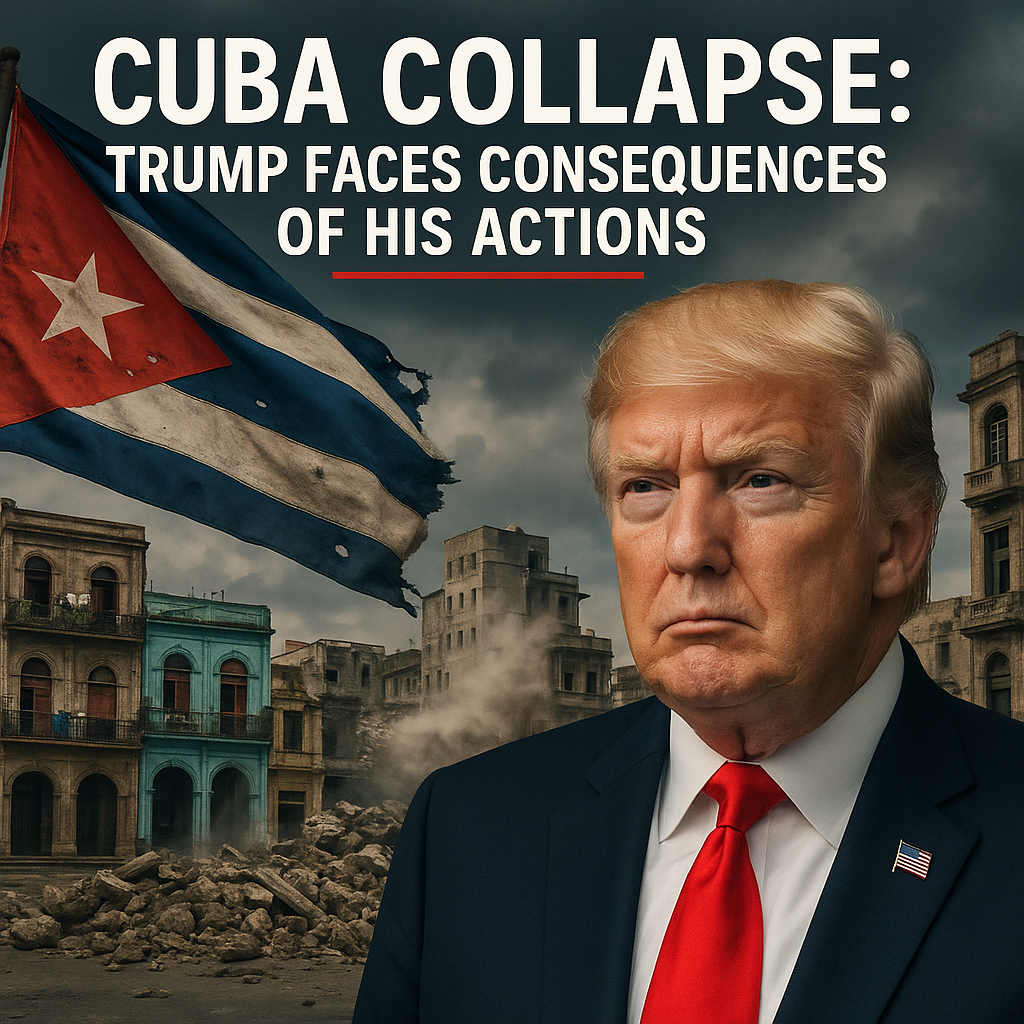
Cuba Collapse: Trump Faces Consequences of His Actions
The Consequences of U.S. Actions on Cuba
The potential collapse of the Cuban regime is a looming concern that is set against a backdrop of complex U.S. foreign policy, particularly decisions made during Donald Trump’s presidency. The ramifications of these actions could present significant challenges for the U.S., both diplomatically and socially, as instability in Cuba affects regional dynamics and the lives of Cuban nationals.

Understanding the Impact of U.S. Policy on Cuba
The U.S. policy towards Cuba has oscillated dramatically over the past few decades, marked notably by the thawing relations during Barack Obama’s presidency and the subsequent tightening under Donald Trump. Trump’s administration reinstated many of the sanctions that were relaxed, which has had dire consequences for the Cuban economy, already fragile from decades of embargo and internal mismanagement.

Reports indicate that the current state of the Cuban economy has been severely impacted, leading to shortages of essential goods and exacerbations of poverty. In a piece for Sky News, expert opinions highlight that if the Cuban government were to collapse, the U.S. would face a tidal wave of migrants seeking asylum, as well as the need for immediate humanitarian aid, which could ignite domestic and international pressures.

Highlighting Divergent Views
While some analysts argue that Trump’s tougher stance was necessary to hold the Cuban regime accountable for human rights abuses and to support dissent within the country, others caution that it may have inadvertently contributed to the economic decline that could lead to disaster. For instance, the Al-Jazeera report notes that the hardships on the Cuban people do not simply stem from their government’s actions; they are also a direct result of longstanding U.S. policies aimed at regime change, which have often backfired, leading to greater instability.
The Humanitarian Perspective
The potential fallout from a Cuban collapse could initiate a humanitarian crisis unlike any seen in North America in recent years. The U.S. may find itself not only wrestling with political ramifications but also facing ethical and moral dilemmas regarding the influx of refugees. Humanitarian organizations have voiced concerns that the current conditions in Cuba, exacerbated by sanctions, could push many desperate citizens to seek safety elsewhere.
As such, humanitarian considerations are crucial in discussing the consequences of U.S. actions. The political crackdowns in Cuba, compounded by an economy on the brink, have left many in desperate situations, and their rights and dignity must be considered in any future policy discussion. Both RT and Al-Jazeera cover this aspect, illuminating the pressing need for the U.S. to re-evaluate its stance towards Cuba in light of human rights.
The Coming Migration Crisis
Should conditions worsen, predictions suggest that the U.S. might see a mass migration wave from Cuba, similar to the Mariel boatlift of the 1980s. Estimates vary, but the social implications—ranging from increased border security concerns to the potential for waves of Cuban asylum seekers—will create intricate challenges for U.S. immigration systems. The influx of refugees could strain local resources and provoke significant political debate within the U.S., leading to potential partisan divides on how to deal with the issue.
The question remains whether the U.S. will simply adhere to its historical patterns of intervention or if it will adopt a more compassionate approach that recognizes and addresses the root causes of migration, rather than merely treating its symptoms.
A Call for Diplomatic Reassessment
As the geopolitical landscape shifts, the U.S. must grapple with the consequences of its historical actions on Cuba. The divided opinion on Trump’s policies indicates a need for a more nuanced diplomatic strategy. Many analysts urge a return to engagement rather than isolation, arguing that the U.S. could play a pivotal role in promoting stability in the region through dialogue rather than sanctions. Diplomatic engagement not only holds the potential to improve conditions for Cubans but could also foster a new order in U.S.-Cuba relations.
In conclusion, the prospect of a Cuban collapse is not merely an isolated issue but one intricately tied to U.S. foreign policy decisions. Understanding the broader implications of these choices is essential for shaping future engagement strategies. As the political dynamics continue to evolve, the U.S. must remain vigilant, addressing both the immediate challenges and the long-term repercussions of its policies towards Cuba. A balanced approach that prioritizes humanitarian concerns alongside diplomatic interests could be vital for both nations as they navigate this precarious moment.















