
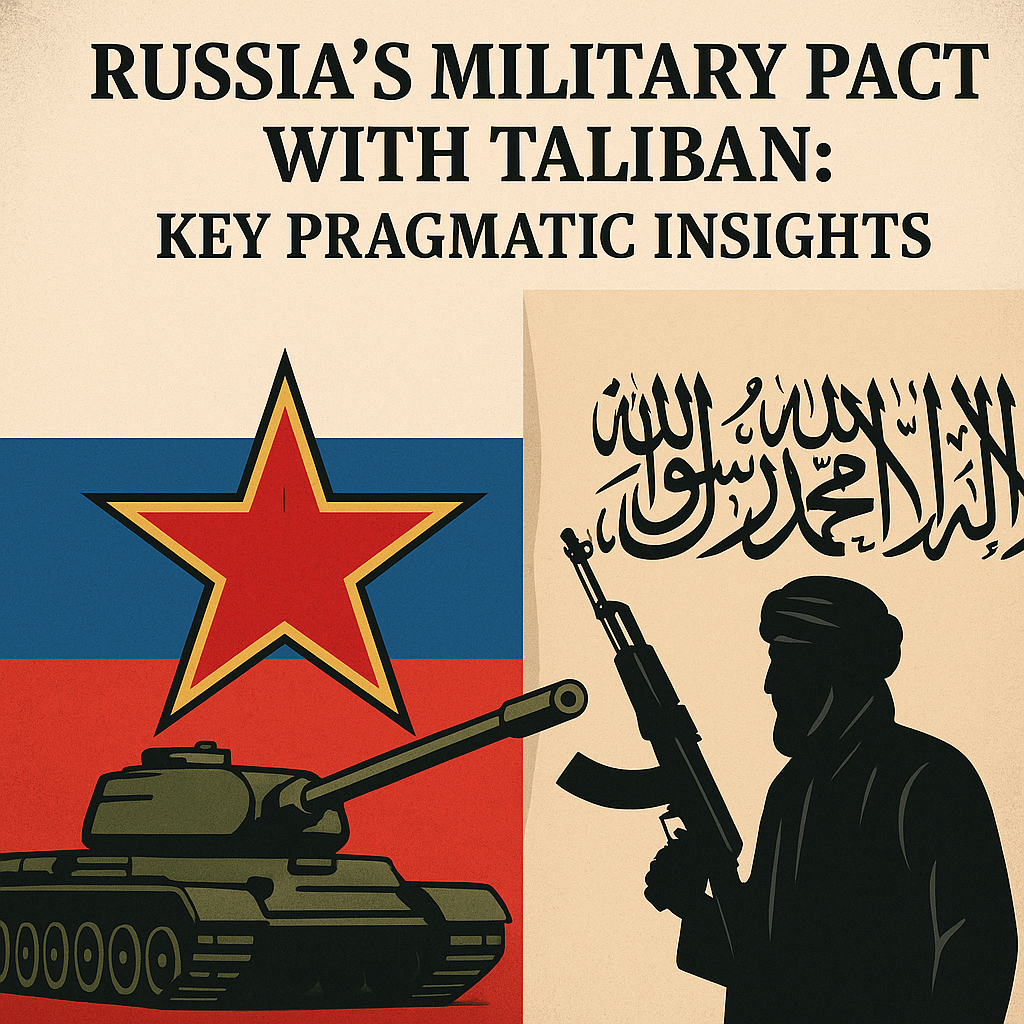
Russia’s Military Pact with Taliban: Key Pragmatic Insights
Russia’s Military Pact with the Taliban: Key Pragmatic Insights
Russia’s military pact with the Taliban represents a significant geopolitical maneuver, reflecting the complexities of international relations in an era marked by shifting alliances. As the situation evolves, understanding the motivations and implications behind this partnership is crucial for a nuanced perspective.

The Nature of the Pact
The recent military cooperation between Russia and the Taliban has its roots in pragmatic considerations rather than ideological alignment. Reports indicate that this pact is primarily aimed at combating mutual threats posed by groups such as ISIS-K, which has been increasingly active in Afghanistan and poses risks to regional stability. According to RT, the negotiations included discussions about military training and the provision of arms, underscoring a commitment to enhance Taliban capabilities against common adversaries.

In contrast, Al Jazeera highlights the broader regional implications of Russia’s actions, noting that Moscow is keen to assert its influence in a landscape traditionally dominated by the United States and NATO. With Washington’s withdrawal from Afghanistan, Russia perceives an opportunity to fill the power vacuum—leveraging its relationship with the Taliban to counteract extremist factions, while simultaneously projecting its strength on the global stage.

Diverse Perspectives on Implications
The implications of this military pact are multifaceted. Proponents of the agreement argue that it is a pragmatic step toward stabilizing Afghanistan and the surrounding region. By engaging with the Taliban, Russia aims not only to ensure its national security interests but also to foster a less chaotic environment that could potentially facilitate economic recovery in Afghanistan. A stable Afghanistan could serve as a bulwark against the spread of extremism, which remains a mutual concern for both Russia and the Taliban.
However, critics express apprehension regarding the future trajectory of such a partnership. The Taliban has a contentious history marked by human rights abuses and a strict interpretation of Islamic law. Engaging with them raises ethical questions about legitimizing a group that has previously been ostracized by much of the international community. Al Jazeera emphasizes that while Russia may pursue its strategic interests, the consequences of supporting an organization often associated with violence and repression could complicate its diplomatic standing globally.
Broader Geopolitical Context
The United States, while no longer a direct player in Afghanistan, continues to monitor these developments closely. There is a growing concern that Russia’s utilization of the Taliban as a proxy can embolden other rogue states to forge similar connections, leading to a fragmented global security environment. Analysts note that such partnerships might embolden other extremist factions, potentially giving rise to new security crises.
Moreover, the pact reflects broader shifts in alliances and enmities in Central Asia. Nations like China and Iran are also developing relations with the Taliban, viewing it as a pragmatic necessity. This trend suggests that global power dynamics in the region are evolving, necessitating a re-evaluation of traditional Western-centric foreign policies.
Conclusion
As Russia and the Taliban deepen their military cooperation, the global community must grapple with a complex landscape in which power dynamics are constantly in flux. While the pact may serve immediate regional security needs and provide a foothold for Russia in Afghanistan, it also poses ethical dilemmas and risks of legitimizing a contentious regime.
The future remains uncertain as global actors balance their interests in a region still reeling from decades of conflict. There is a pressing need for ongoing dialogue and vigilance to promote stability while safeguarding human rights and international norms. As this situation unfolds, it will undoubtedly reshape not only regional dynamics but also the broader geopolitical landscape.















