
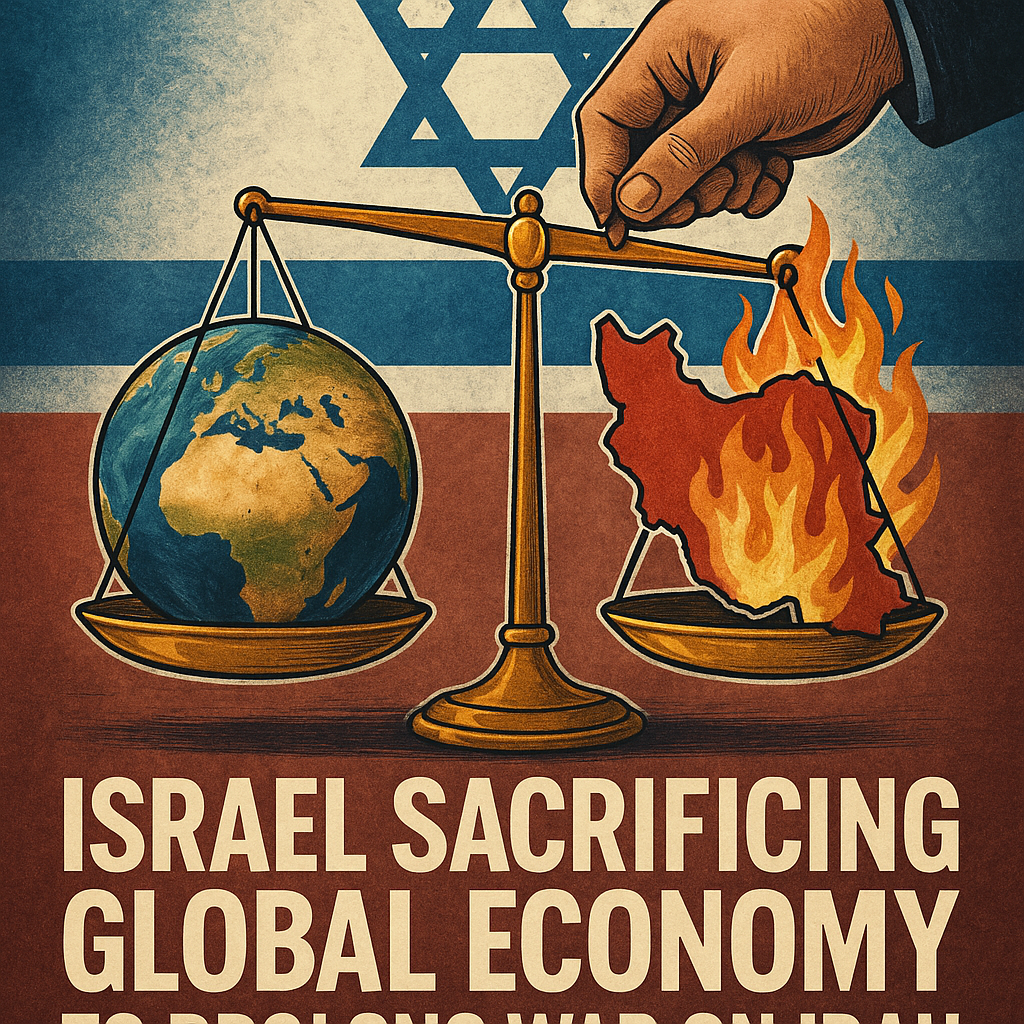
Israel Sacrificing Global Economy to Prolong War on Iran
Israel’s Gamble: Weighing Global Economic Costs Against the Conflict with Iran
Israel’s approach to the ongoing tensions with Iran raises crucial questions about the broader implications for the global economy. By prioritizing military objectives and security measures, there are claims that Israel is sacrificing potential economic stability—not just within its borders, but across an interconnected world. A closer examination of both the current geopolitical landscape and the possible economic repercussions reveals a complex issue with varying opinions.

Military Priorities Versus Economic Considerations
From certain perspectives, Israel’s commitment to a robust military strategy against Iran is non-negotiable. This viewpoint is particularly highlighted in reports from various sources, which emphasize that Israel sees a persistent threat from Iranian nuclear ambitions and its influence over proxy groups throughout the region. According to a recent article from RT, Israel’s government has expressed that engaging in diplomatic peace talks could undermine its security objectives, leading to actions that might provoke broader hostilities.

Conversely, analysts from Al Jazeera stress that this military-first approach could backfire economically. For instance, concerns are mounting that prolonged conflicts can deter foreign investment—the lifeblood of any economy—by creating an atmosphere of instability. Economies are inherently linked, and the eagerness to maintain military dominance might hinder economic growth and partnership opportunities, especially with nations otherwise willing to engage in trade.

The Global Economic Landscape
Israel’s ongoing military maneuvers come amid a fragile global economic climate affected by various crises, from the pandemic recovery to the war in Ukraine. Reports indicate that international markets can react sharply to geopolitical tensions; investor confidence tends to wane in tumultuous times, leading to stock market volatility and reduced global trade flow. A study published in economic journals highlighted how military escalations, such as airstrikes or troop mobilizations, often result in immediate spikes in oil prices, which not only affect regional economies but have cascading effects worldwide.
Critics point out that by prioritizing conflicts, Israel might inadvertently contribute to a destabilized global economy. The ripple effect is significant; increased oil prices can lead to inflation in consumer goods, affecting purchasing power and economic health in countries far from the conflict zone. Furthermore, sources from Sky News outline how these economic ripples can lead to social unrest in regions already struggling to manage inflation, creating a vicious cycle of instability.
Balancing Security and Global Economic Health
The crux of the matter is whether Israel can effectively balance its need for heightened security with the economic realities of an interconnected world. The Israeli government’s stance suggests that without confronting Iran’s threats head-on, the long-term security of its own nation, and indeed the safety of its allies, may be compromised. This viewpoint underscores the belief that deterrence is key to stability.
On the other hand, an alternative perspective views this commitment to military action as shortsighted. By failing to prioritize economic collaborations and diplomatic engagement, the potential for achieving long-term peace with Iran—and stability for Israel as well—may remain elusive. As stated in various reports, including those from RT, negotiations are often sidelined under the strain of military goals, reinforcing a cycle of violence that can become self-perpetuating and ultimately damaging.
Conclusion: Navigating a Complex Future
In navigating the philosophical juxtaposition of military versus economic priorities, Israel must grapple with the tangible consequences of its actions on a global scale. As the country faces rising tensions with Iran, its decisions could either steer it towards a more secure future or jeopardize economic stability everywhere. While the military focus may seem justifiable from a national security standpoint, the interconnectedness of the modern world demands serious consideration of economic repercussions that can arise from prolonged conflict.
As this situation continues to evolve, observers and decision-makers alike will need to weigh the urgent call for enhanced security measures against the looming threat of economic backlash, reflecting the challenging balance that must be maintained in a volatile geopolitical landscape. The stakes are high, and the outcomes—both economically and politically—will undoubtedly shape the future of the region and beyond.















