
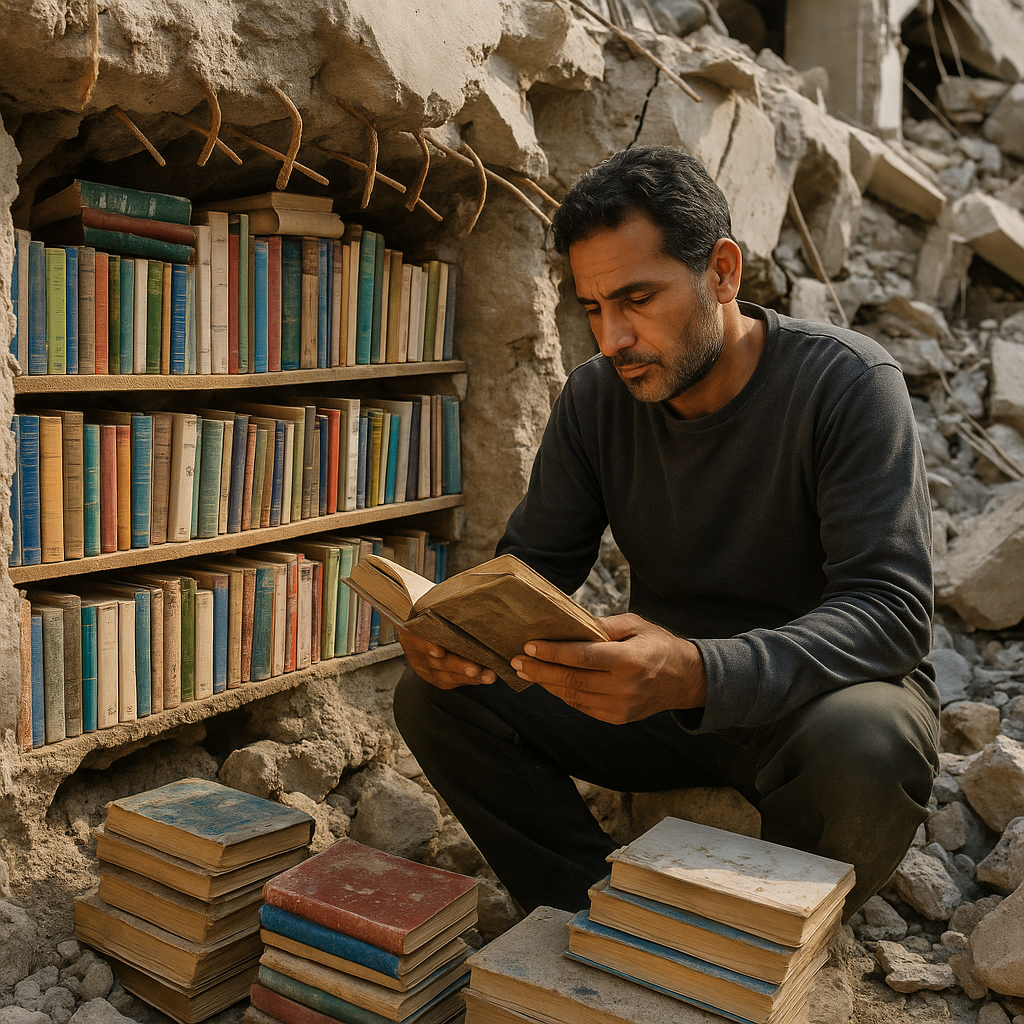
Gaza Man Creates Library from Buried Books in Rubble
A Beacon of Hope in Gaza: Transforming Rubble into a Library
In a remarkable display of resilience, a man in Gaza has created a library from books unearthed from the rubble of conflict-riddled streets. Amidst the devastation, this project not only preserves knowledge but also fosters a sense of community in a region long-stricken by violence and instability.

The Library Amidst the Ruins
The initiative, led by Muhammad Al-Hadad, is emblematic of the human spirit’s ability to adapt and find solace in even the direst circumstances. Al-Hadad scavenged through the remains of bombed-out buildings to gather books that had survived the destruction. Once the books were salvaged, he constructed a makeshift library along the roadside, inviting anyone in the community to come and read.

This creative repurposing of debris serves more than just a functional purpose. It stands as a powerful symbol of hope in a landscape often dominated by despair. According to Al-Hadad, the library aims to provide a refuge where families, especially children, can escape the harsh realities of their daily lives. “Books are a way to open new worlds, to dream, to learn,” he remarked in an interview. “This library is here so we can all share that dream.”

Diverse Perspectives on the Project
While Al-Hadad’s endeavor has been met with overwhelming support from the local community, opinions vary on the broader implications of such projects in a war-torn region. Some critics argue that while community-driven initiatives are vital, they may distract from the pressing need for systematic change and political solutions in Gaza. The ongoing Israeli-Palestinian conflict continues to significantly impact daily life, with ongoing military operations limiting the chances for lasting resolutions.
According to articles on various platforms, including Al Jazeera and Sky News, the struggle is not merely operational; it extends to the psychological ramifications of continuous conflict. Experts point out that initiatives like Al-Hadad’s library could contribute positively to mental health by offering spaces for reflection and creativity amidst chaos. However, some critics contend that relying on such grassroots efforts may inadvertently perpetuate a status quo that overlooks the necessity for larger socio-political reform.
Building Community and Resilience
The act of creating this library transcends mere book collection. It has evolved into a community hub, encouraging communal gatherings and educational activities. Children are reportedly drawn to the space, sparking interest in reading and learning that many believe is crucial for the future generation in Gaza. Local teachers have also engaged with the initiative, orchestrating storytelling sessions and discussions to empower youth through education.
Moreover, the project has garnered attention from activists and diaspora communities, who see it as a tangible illustration of resilience. Al-Hadad’s library is not just about physical books; it represents the power of knowledge to uplift spirits and provide comfort. “In books, we find not just stories, but our history, dreams, and aspirations,” he says. This sentiment resonates deeply within a community that often finds itself on the margins.
The Challenges Ahead
Despite the uplifting narrative surrounding this library, challenges remain. Many families in Gaza continue to struggle with daily shortages of necessities, including food and medical supplies. In some ways, the library symbolizes an oasis, yet it is imperative to recognize its boundaries within a broader context of humanitarian needs. As international attention often shifts, grassroots projects like Al-Hadad’s can serve as critical lifelines but may also highlight the negligence of systemic support.
Additionally, the logistics of maintaining a physical library amidst beauty and destruction present their own set of challenges. Frequent electricity outages and the lack of consistent infrastructure complicate efforts to sustain such initiatives. Nonetheless, Al-Hadad remains undeterred. Each book added to the library, he insists, brings with it a flicker of hope for a brighter tomorrow.
Conclusion
The story of Muhammad Al-Hadad and his library forged from the rubble of Gaza embodies a resilient spirit that persists even in adversity. While the broader political conflicts loom large, this initiative serves as a poignant reminder of the importance of community-led efforts in cultivating hope. Ultimately, the library not only represents the salvaged remnants of physical books; it encapsulates the enduring quest for knowledge, unity, and a shared future amidst the ongoing turmoil.















