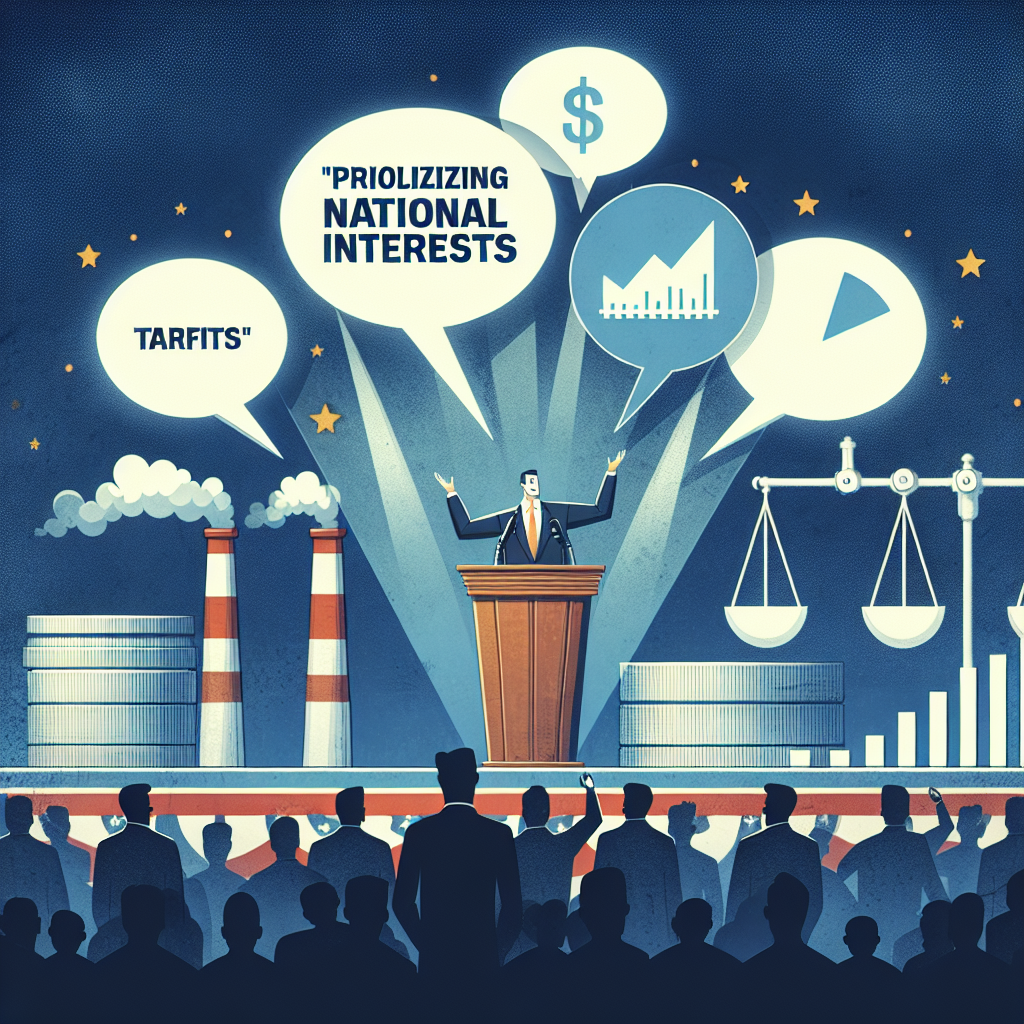
“Trump Pledges Tariffs to Prioritize America’s Interests”
Trump Pledges Tariffs to Prioritize America’s Interests
Introduction
In a recent announcement, former President Donald Trump has proposed a new economic strategy centered around the implementation of tariffs. This move is aimed at prioritizing American interests and boosting the domestic economy. The proposal has sparked discussions on its potential impact on international trade and the U.S. economy.

Key Proposals
- Tariff Implementation: Trump plans to introduce tariffs on foreign goods to protect American industries and jobs.
- Focus on Domestic Production: The strategy emphasizes increasing domestic manufacturing and reducing reliance on imports.
- Economic Nationalism: The proposal is part of a broader agenda to prioritize American economic interests over global trade agreements.
Potential Impacts
The proposed tariffs could have significant implications for both the U.S. and global economies. Key potential impacts include:

- Boost to Local Industries: Tariffs may encourage growth in American manufacturing sectors by making foreign goods more expensive.
- Trade Tensions: The move could lead to increased tensions with trading partners and potential retaliatory measures.
- Consumer Prices: Higher tariffs might result in increased prices for consumers on imported goods.
Reactions and Criticisms
The proposal has elicited mixed reactions from various stakeholders:

- Support from Nationalists: Economic nationalists and some industry leaders have praised the focus on American interests.
- Concerns from Economists: Critics argue that tariffs could disrupt global supply chains and harm international relations.
- Political Implications: The proposal is seen as a strategic move to rally support among Trump’s base ahead of potential future political endeavors.
Conclusion
Trump’s pledge to implement tariffs as a means to prioritize America’s interests underscores a shift towards economic nationalism. While the strategy aims to bolster domestic industries, it also raises concerns about potential trade conflicts and increased consumer costs. As discussions continue, the proposal’s long-term effects on the U.S. economy and international trade relations remain to be seen.