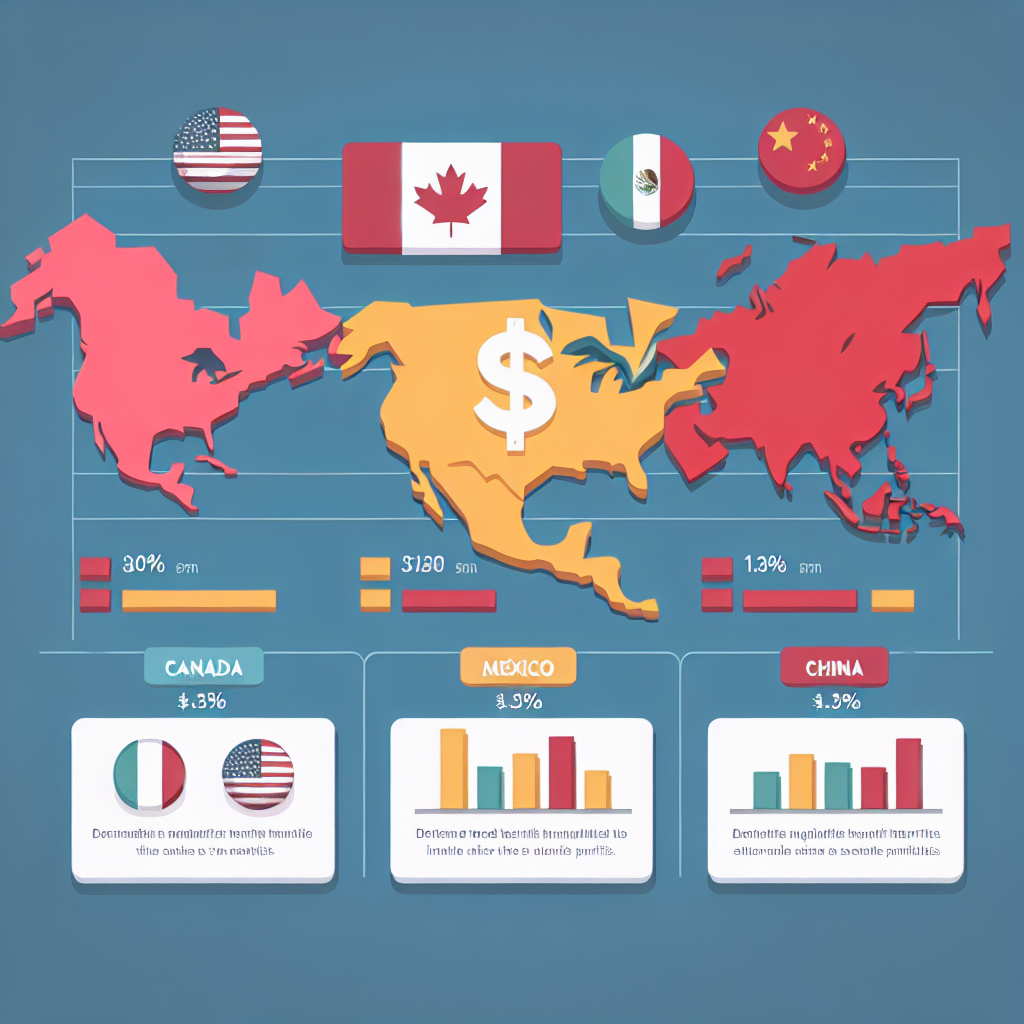
Visual Breakdown of Donald Trump’s Trade Tariffs on Canada, Mexico, and China
Visual Breakdown of Donald Trump’s Trade Tariffs on Canada, Mexico, and China
Introduction to Trade Tariffs
During Donald Trump’s presidency, trade tariffs became a central tool in his administration’s economic strategy. These tariffs were primarily aimed at renegotiating trade deals and addressing trade imbalances with key partners, including Canada, Mexico, and China.

Tariffs on Canada
Trump’s tariffs on Canada focused on specific industries, leading to significant economic discussions and negotiations between the two countries.

- Steel and aluminum tariffs were imposed, citing national security concerns.
- Retaliatory tariffs from Canada affected U.S. exports, including agricultural products.
- Negotiations led to the United States-Mexico-Canada Agreement (USMCA), replacing NAFTA.
Tariffs on Mexico
Mexico, as a key trading partner, was also subject to tariffs, which were used as leverage in broader policy discussions.

- Tariffs were threatened to address immigration issues, linking trade policy with border security.
- The USMCA also played a role in redefining trade terms with Mexico.
- Economic impacts were felt in the automotive and agricultural sectors.
Tariffs on China
China was a primary target of Trump’s trade tariffs, aimed at addressing trade deficits and intellectual property concerns.
- Tariffs were imposed on a wide range of goods, from electronics to textiles.
- The trade war led to retaliatory tariffs from China, affecting U.S. farmers and manufacturers.
- Negotiations resulted in a “Phase One” trade deal, though many tariffs remained in place.
Conclusion
Donald Trump’s trade tariffs on Canada, Mexico, and China were pivotal in reshaping U.S. trade policy. While they aimed to protect domestic industries and address trade imbalances, they also led to significant economic and diplomatic challenges. The long-term effects of these tariffs continue to influence global trade dynamics.