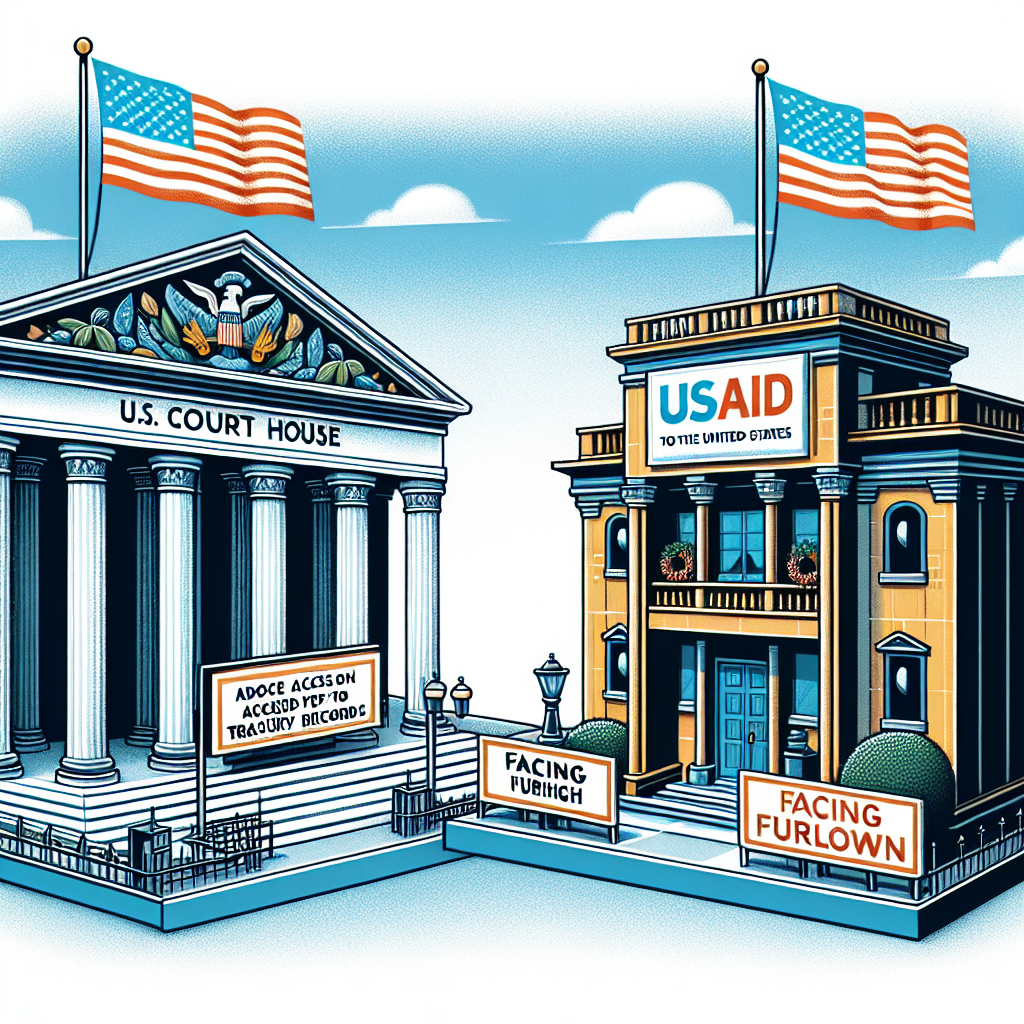
US Courts Block DOGE Access to Treasury Records, USAID Faces Furlough
US Courts Block DOGE Access to Treasury Records, USAID Faces Furlough
Overview
In a significant legal development, US courts have denied access to Treasury records related to the cryptocurrency Dogecoin (DOGE). Concurrently, the United States Agency for International Development (USAID) is grappling with potential furloughs, raising concerns about its operational capacity.

Key Developments
US Courts Deny DOGE Access
- Legal Ruling: The courts have ruled against granting access to Treasury records concerning DOGE transactions, citing confidentiality and security concerns.
- Implications for Transparency: This decision has sparked debates over transparency in cryptocurrency transactions and government oversight.
- Stakeholder Reactions: The ruling has drawn mixed reactions from stakeholders, with some advocating for greater transparency and others supporting the court’s decision to protect sensitive information.
USAID Faces Operational Challenges
- Potential Furloughs: USAID is facing the possibility of furloughing employees due to budgetary constraints, which could impact its global aid initiatives.
- Impact on Programs: The furloughs may lead to delays or reductions in aid programs, affecting vulnerable populations worldwide.
- Government Response: Discussions are underway to address the budget shortfall and mitigate the impact on USAID’s operations.
Conclusion
The recent court ruling blocking access to DOGE-related Treasury records underscores ongoing tensions between transparency and security in the cryptocurrency sector. Meanwhile, USAID’s potential furloughs highlight the challenges faced by government agencies in maintaining operational effectiveness amid financial constraints. These developments call for a balanced approach to ensure both transparency and the continued delivery of essential services.
Ads

Ads

Ads

Ads

Ads

Ads

Ads

Ads

Ads

Ads

Ads

Ads