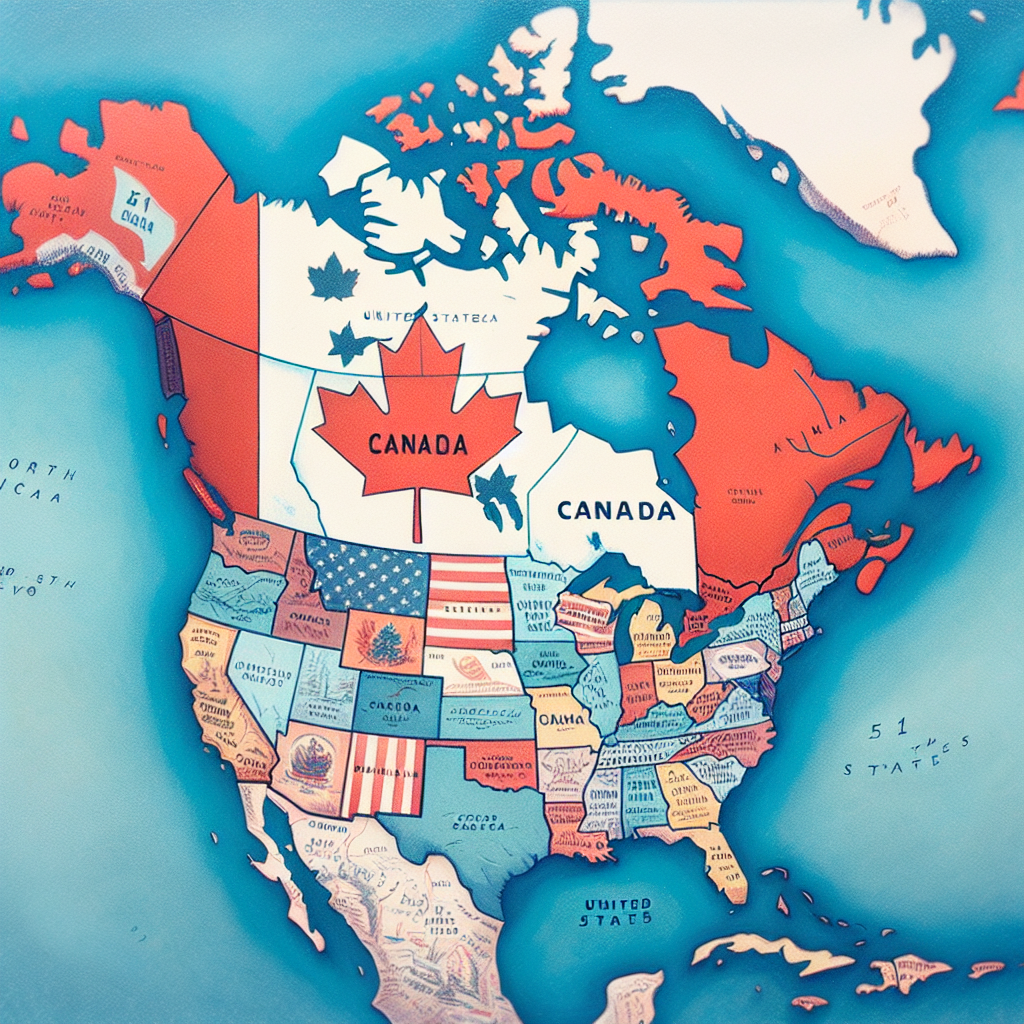
Canada: America’s Unofficial 51st State
Canada: America’s Unofficial 51st State
Introduction
The concept of Canada as America’s “unofficial 51st state” is a provocative notion that explores the deep and multifaceted relationship between the two neighboring countries. This idea delves into the economic, cultural, and political ties that bind Canada and the United States, highlighting both the benefits and challenges of such a close association.

Economic Interdependence
Canada and the United States share one of the world’s largest trading partnerships, characterized by:

- Extensive cross-border trade, with billions of dollars exchanged daily.
- Integrated supply chains, particularly in the automotive and energy sectors.
- Mutual reliance on each other’s markets for goods and services.
Cultural Connections
The cultural ties between Canada and the U.S. are evident in various aspects of daily life:

- Shared media consumption, with Canadian audiences frequently tuning into American television and films.
- Similarities in lifestyle and consumer preferences.
- Cross-border influence in music, sports, and entertainment.
Political and Social Dynamics
While Canada maintains its sovereignty, the political and social dynamics with the U.S. are significant:
- Collaborative efforts on international issues such as climate change and security.
- Shared values in democracy and human rights, though with distinct national policies.
- Occasional tensions over trade agreements and border policies.
Conclusion
The notion of Canada as America’s “unofficial 51st state” underscores the profound interconnection between the two nations. While they remain distinct entities, their economic, cultural, and political ties create a unique relationship that is both cooperative and complex. This dynamic partnership continues to evolve, reflecting the changing landscapes of both countries.