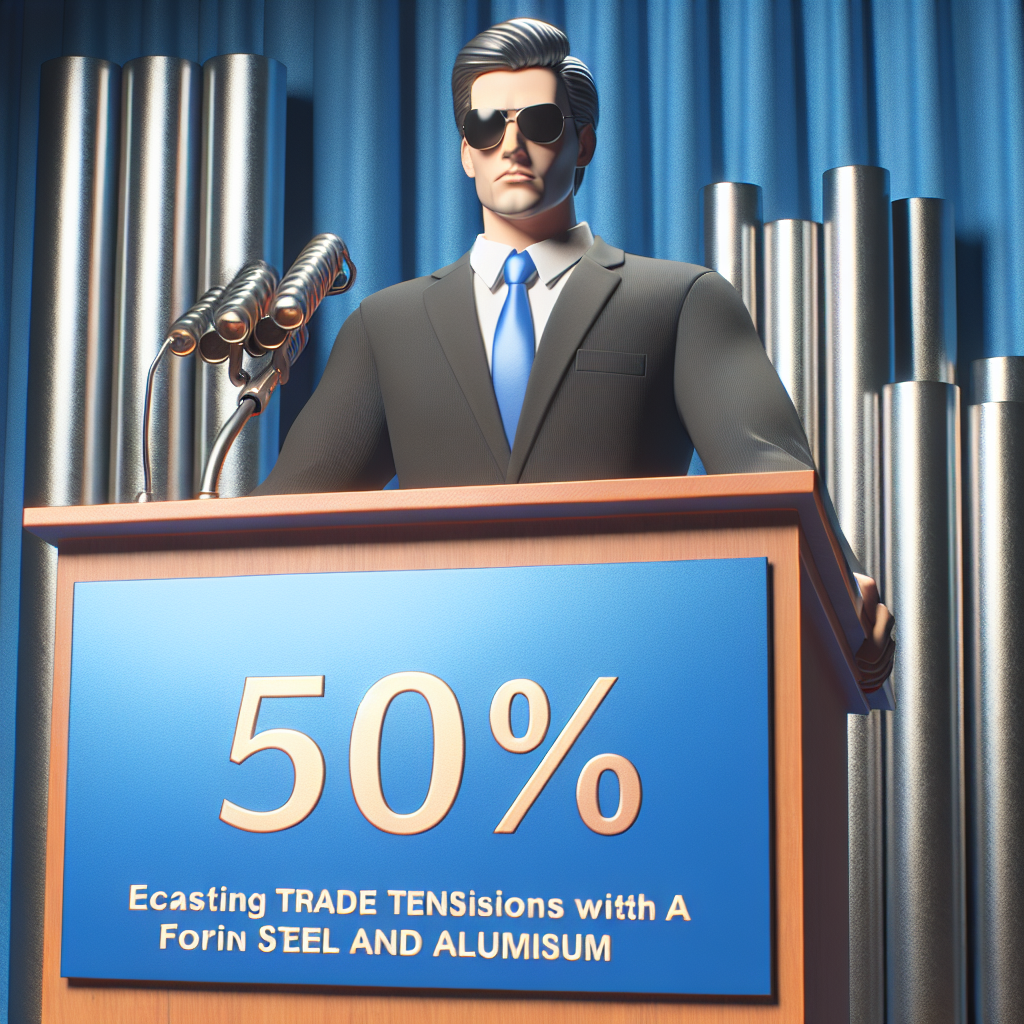
Trump Escalates Trade Tensions with 50% Tariff on Canadian Steel and Aluminum
Trump Escalates Trade Tensions with 50% Tariff on Canadian Steel and Aluminum
Introduction
In a bold move that has intensified trade tensions between the United States and Canada, former President Donald Trump announced a significant increase in tariffs on Canadian steel and aluminum. This decision has sparked widespread concern among industry leaders and policymakers on both sides of the border.

Key Details of the Tariff Increase
- Tariff Rate: The tariffs on Canadian steel and aluminum have been raised to 50%.
- Targeted Products: The tariffs specifically target steel and aluminum imports from Canada.
- Implementation Date: The new tariff rates are set to take effect immediately.
Implications for US-Canada Relations
The decision to impose such high tariffs is expected to have several implications for the relationship between the two neighboring countries:

- Economic Impact: The tariffs could lead to increased costs for American manufacturers relying on Canadian materials, potentially affecting prices for consumers.
- Diplomatic Strain: The move may strain diplomatic relations, as Canada is a key ally and trading partner of the United States.
- Retaliatory Measures: Canada may consider retaliatory tariffs or other measures in response to the increased tariffs.
Industry Reactions
Reactions from industry leaders and trade experts have been mixed, with some expressing concern over the potential negative impacts on the economy:

- Manufacturers: Many American manufacturers have voiced concerns about rising production costs and supply chain disruptions.
- Trade Experts: Experts warn that the tariffs could lead to a trade war, affecting global markets and economic stability.
- Canadian Officials: Canadian officials have expressed disappointment and are exploring options to address the situation.
Conclusion
The decision to impose a 50% tariff on Canadian steel and aluminum marks a significant escalation in trade tensions between the United States and Canada. While intended to protect domestic industries, the move could have far-reaching consequences, including increased costs for American businesses, strained diplomatic relations, and potential retaliatory actions from Canada. As the situation unfolds, stakeholders on both sides of the border will be closely monitoring developments and assessing the broader impact on the global trade landscape.