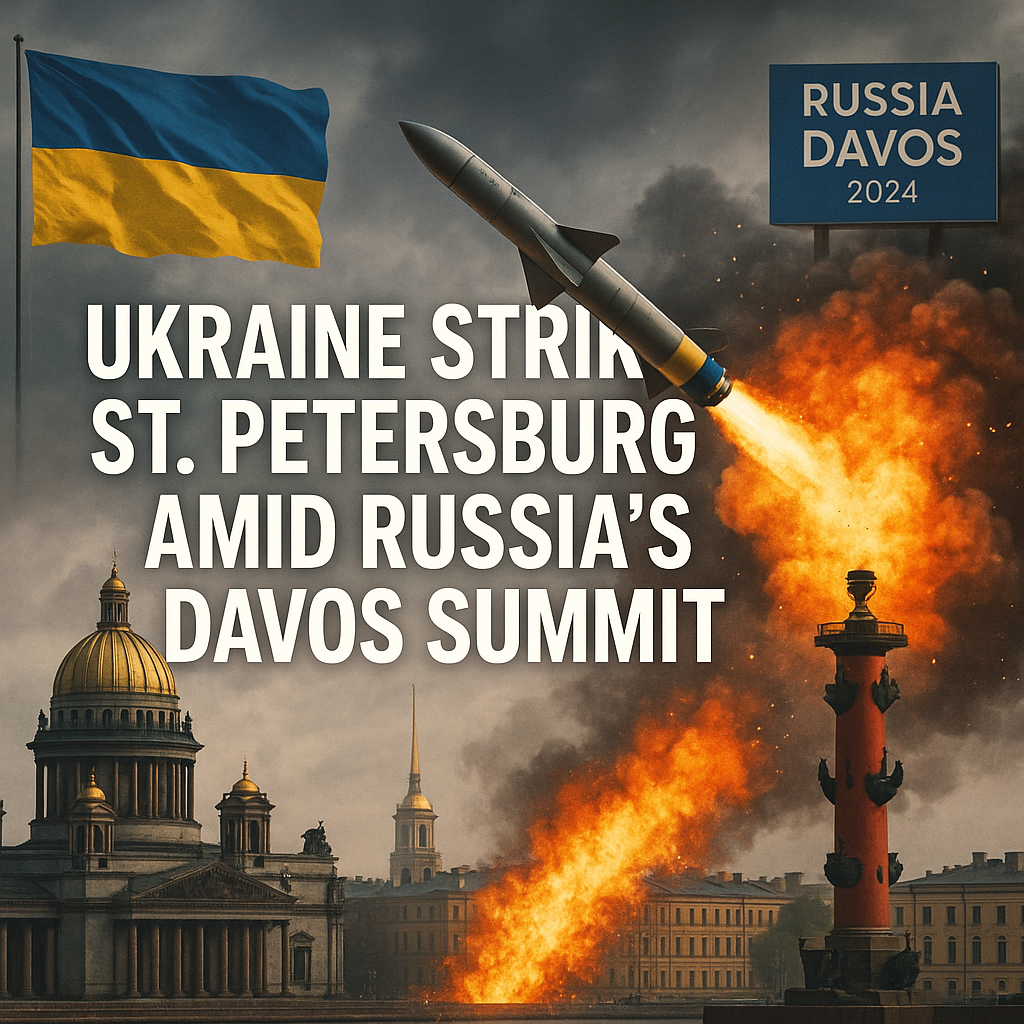
Ukraine Strikes St. Petersburg Amid Russia’s Davos Summit

Ukraine Strikes St. Petersburg Amid Russia’s Davos Summit: A Complex Landscape
In a dramatic escalation of tensions, Ukraine has orchestrated a strike on St. Petersburg, underscoring the intricate dynamics of the conflict as Russia hosts its own version of the Davos Summit, aimed at showcasing its economic landscape and international partnerships. This multifaceted situation offers a glimpse into the ongoing geopolitical chess game between the two nations, marked by stark strategic implications and differing narratives.

The Context of the Attack
The strike on St. Petersburg represents a significant tactical maneuver for Ukraine, especially considering the city’s status as a key cultural and economic hub. As Russia showcased its resilience and the depth of its global partnerships at the summit, the Ukrainian offensive can be seen as a bold assertion of defiance and a statement to international observers about the ongoing war’s repercussions.


From the Ukrainian perspective, this attack signals an intent not only to disrupt Russian operations but also to demonstrate capability at a critical moment. Reports indicate that the strike targeted military installations and logistics hubs, aiming to hamper Russia’s military capabilities while it projects strength on the global stage. Al Jazeera reported that officials in Kyiv view this as an essential strategy to shift the momentum of the war and reinvigorate support from its allies.


Conversely, Russian state media such as RT frames this incident in a different light, emphasizing national resilience and the narrative of external threats facing Russia. The attack has been characterized as terrorism, aimed at undermining Russia’s stability during a pivotal diplomatic event. This rhetoric reinforces a framing strategy that positions Russian leadership in a defensive posture, fostering domestic unity against perceived aggressions.
Diverging Narratives and Implications
The stark contrast in narratives around the attack highlights the complexities of international perceptions and the role of media in shaping public opinion. On one hand, Ukrainian sources emphasize the need for a robust response to assert sovereignty and rights, while Russian outlets portray the events as a manifestation of extremist aggression from Ukraine, seeking to destabilize the region.
This juxtaposition extends beyond mere media representation to vital on-the-ground realities. As Ukraine continues to conduct strategic strikes in various regions, analysts predict possible shifts in both military tactics and international alliances. Experts suggest that Moscow’s efforts to garner economic partnerships showcased at the Davos-style summit may increasingly be challenged by the realities of ongoing conflict.
Moreover, some analysts caution that such retaliatory strikes could risk escalating tensions further. If Ukraine’s strategy continues to include high-profile attacks on Russian cities, it could provoke a harsher military response from Moscow, potentially deepening the conflict. The balance of escalation versus restraint remains a significant consideration for both nations, with diplomatic channels increasingly strained.
The Global Perspective
In light of these developments, the international community finds itself at a crossroads. Western allies, while supportive of Ukraine’s right to defend itself, must grapple with the implications of a further escalation in hostilities. Previous statements from leaders in NATO and the EU reflect a nuanced stance—acknowledging Ukraine’s sovereign rights while urging caution to avoid regional destabilization.
Public sentiment across Europe appears largely sympathetic to Ukraine; however, there are growing concerns regarding the long-term consequences of continued military conflict. Economic ramifications, particularly in energy markets and food security, resonate deeply within European nations dependent on stable relations with Russia. The intricacy of these dynamics serves as a reminder that the Ukraine conflict is not solely a local issue but rather a critical point of concern for international stability.
As the geopolitical climate shifts, observations from this latest incident suggest that both Ukraine and Russia are recalibrating their approaches. The response from Kyiv indicates a commitment to maintaining pressure on Russian military assets, while Moscow’s portrayal of the attack underscores its reliance on nationalistic narratives to consolidate internal support.
Conclusion
The strike on St. Petersburg amid Russia’s planned summit signifies not just a tactical maneuver but a broader narrative in an ongoing conflict characterized by multifaceted challenges. As both nations navigate this complex landscape, the consequences of their actions will reverberate beyond their borders, impacting international relations and regional stability for the foreseeable future. Balancing assertiveness with strategic restraint will be crucial, not only for Ukraine’s military effectiveness but for the fragile peace and stability of Europe at large.