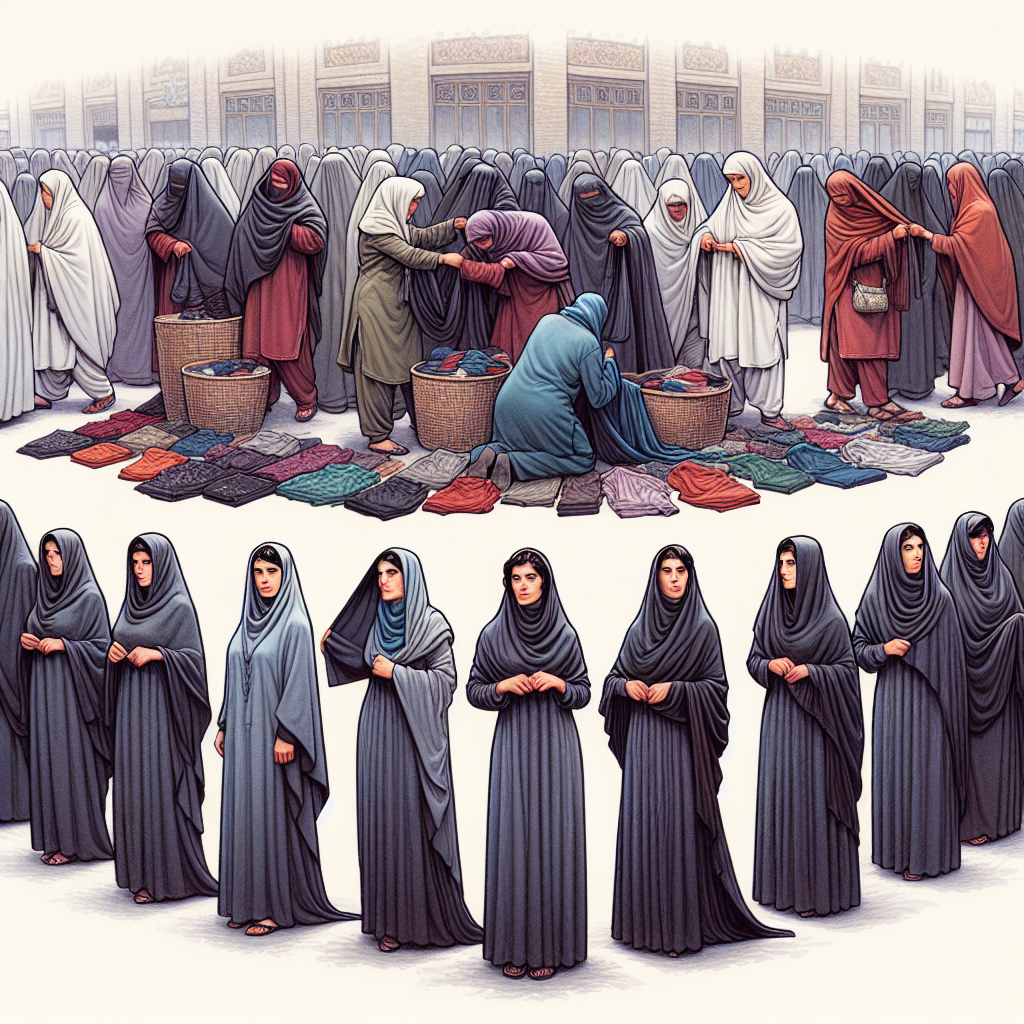
Afghan Women Transition to Abayas in Response to Taliban Restrictions
Afghan Women Transition to Abayas in Response to Taliban Restrictions
Background
Since the Taliban’s return to power in Afghanistan, the regime has imposed stringent dress codes on women, significantly impacting their daily lives and freedoms. The enforcement of these restrictions has led to a notable shift in women’s attire across the country.

Adoption of Abayas
In response to the Taliban’s mandates, many Afghan women have started wearing abayas, a traditional loose-fitting garment that covers the body from head to toe. This transition is both a cultural adaptation and a means of compliance with the new regulations.

Reasons for the Shift
- Compliance with Regulations: The abaya meets the Taliban’s requirements for modesty, allowing women to navigate public spaces with reduced risk of confrontation.
- Cultural Adaptation: While not traditionally Afghan, the abaya is seen as a practical solution that aligns with Islamic dress codes.
- Symbol of Resistance: For some women, adopting the abaya is a subtle form of resistance, allowing them to maintain a semblance of personal agency within the confines of imposed restrictions.
Impact on Afghan Society
The shift to wearing abayas has broader implications for Afghan society, affecting social dynamics and gender roles.

Social Implications
- Visibility of Women: The abaya, while conforming to Taliban rules, also allows women to remain visible in public life, albeit under constrained conditions.
- Economic Impact: The demand for abayas has influenced local markets, with increased production and sales of the garment.
- Gender Dynamics: The enforced dress code underscores the ongoing struggle for women’s rights and autonomy in Afghanistan.
Conclusion
The transition to wearing abayas by Afghan women is a multifaceted response to the Taliban’s restrictive dress codes. It highlights the resilience and adaptability of Afghan women as they navigate a challenging socio-political landscape. While the abaya serves as a tool for compliance, it also represents a nuanced form of resistance and a means to maintain a presence in public life.