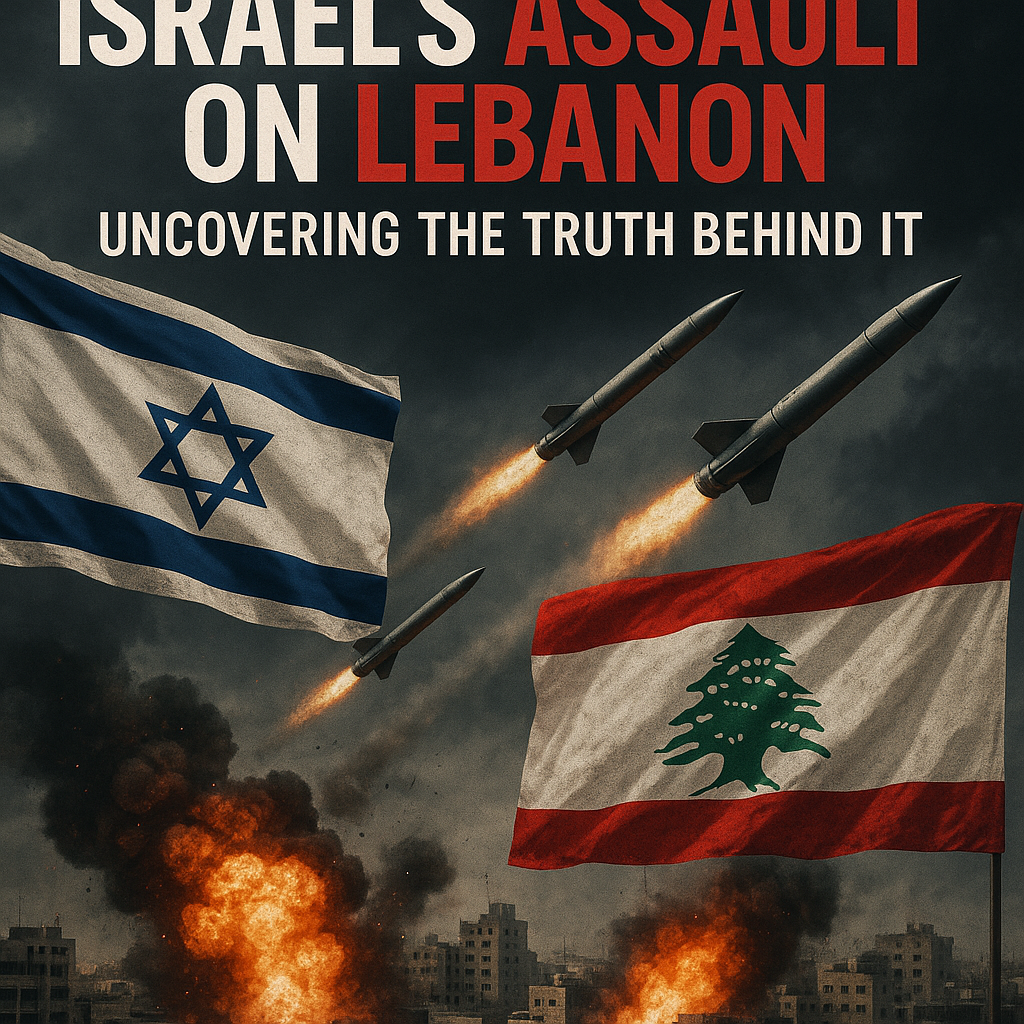
Israel’s Assault on Lebanon: Uncovering the Truth Behind It

Israel’s Assault on Lebanon: Uncovering the Truth Behind It
The recent escalation of violence in the region has reignited discussions surrounding Israel’s military actions in Lebanon. As tensions rise and reports emerge, understanding the complexities of this conflict requires a balanced examination of diverse perspectives.

Historical Context of the Conflict
The roots of the Israel-Lebanon conflict trace back decades, influenced by territorial disputes, political ideologies, and historical grievances. Israel’s military presence and actions in Lebanon have oscillated between direct intervention and ongoing tensions with various groups, particularly Hezbollah. Founded in the early 1980s, Hezbollah has positioned itself as a key player in both Lebanese and regional politics, often stating its opposition to Israeli policies as a primary motivation for its military stance.


In the latest wave of conflict, Israel has conducted airstrikes targeting what it claims are Hezbollah positions and military infrastructure. These actions have elicited dual responses: on one hand, Israeli officials assert that such measures are necessary for national security; on the other, critics argue these attacks exacerbate an already volatile situation and have severe humanitarian implications.


The Humanitarian Impact of Military Actions
Various reports highlight that the consequences of Israeli military operations extend beyond immediate security concerns. Recent airstrikes have resulted in civilian casualties and significant infrastructural damage to Lebanese towns. According to Al Jazeera, local hospitals are inundated with casualties as airstrikes continue, sparking international condemnation and calls for military restraint.
Supporters of Israel argue that military actions are targeted and necessary to neutralize threats posed by Hezbollah’s missile capabilities. They assert that Hezbollah utilizes civilian areas for military purposes, complicating the operational environment for the Israeli Defense Forces (IDF). These arguments are frequently countered by humanitarian organizations and several world leaders who highlight that such military operations lead to widespread suffering among civilians, making it critical to distinguish between combatants and non-combatants.
Furthermore, reports from RT note that the actions taken by Israel could destabilize not just Lebanon, but also the broader region, potentially reigniting sectarian tensions and igniting further conflicts. Understanding this layered situation requires sifting through various narratives and recognizing the human cost of military engagements.
Voices of Dissent and Support
The global response to Israel’s military actions reflects a spectrum of opinions. While some nations express unequivocal support for Israel’s right to defend itself against perceived threats, others have voiced strong critiques, urging for a reevaluation of military strategies given their humanitarian consequences. For instance, the UN recently called for immediate ceasefire negotiations to limit civilian casualties and promote dialogue, a sentiment echoed by numerous humanitarian organizations.
Conversely, many in Israel believe their ongoing military efforts are justified as a deterrent against further aggression from groups like Hezbollah. They claim that without such actions, the security of Israeli citizens could be compromised, leading to more significant escalation in the future.
However, a clear consensus on the effectiveness and morality of Israel’s tactics in Lebanon remains elusive. Some analysts posit that while immediate military intervention may provide temporary relief from threats, it may also sow the seeds for future conflicts, as local populations may perceive these actions as oppressive or unjust.
Seeking a Path Forward
As discussions about Israel’s actions continue, it becomes increasingly clear that any pathway towards lasting peace in the region must address both security concerns and humanitarian needs. Engagements could benefit from dialogues that include various stakeholders—from international powers to local communities—aimed at rebuilding trust and fostering a mutual understanding.
Many believe that a political solution, rather than purely military actions, is fundamental for achieving stability. This involves addressing root causes such as economic inequality, political disillusionment, and societal divisions within Lebanon, as well as broader geopolitical dynamics at play.
The situation remains precarious and fluid, and vigilance is needed to monitor the developments as they unfold. The complexities of Israel’s assault on Lebanon, interwoven with historical grievances, security dilemmas, and humanitarian crises, underline the necessity for thoughtful discourse aimed at finding sustainable resolutions. Dialogue over force may ultimately pave the way for lasting peace in a region burdened by the weight of its history.