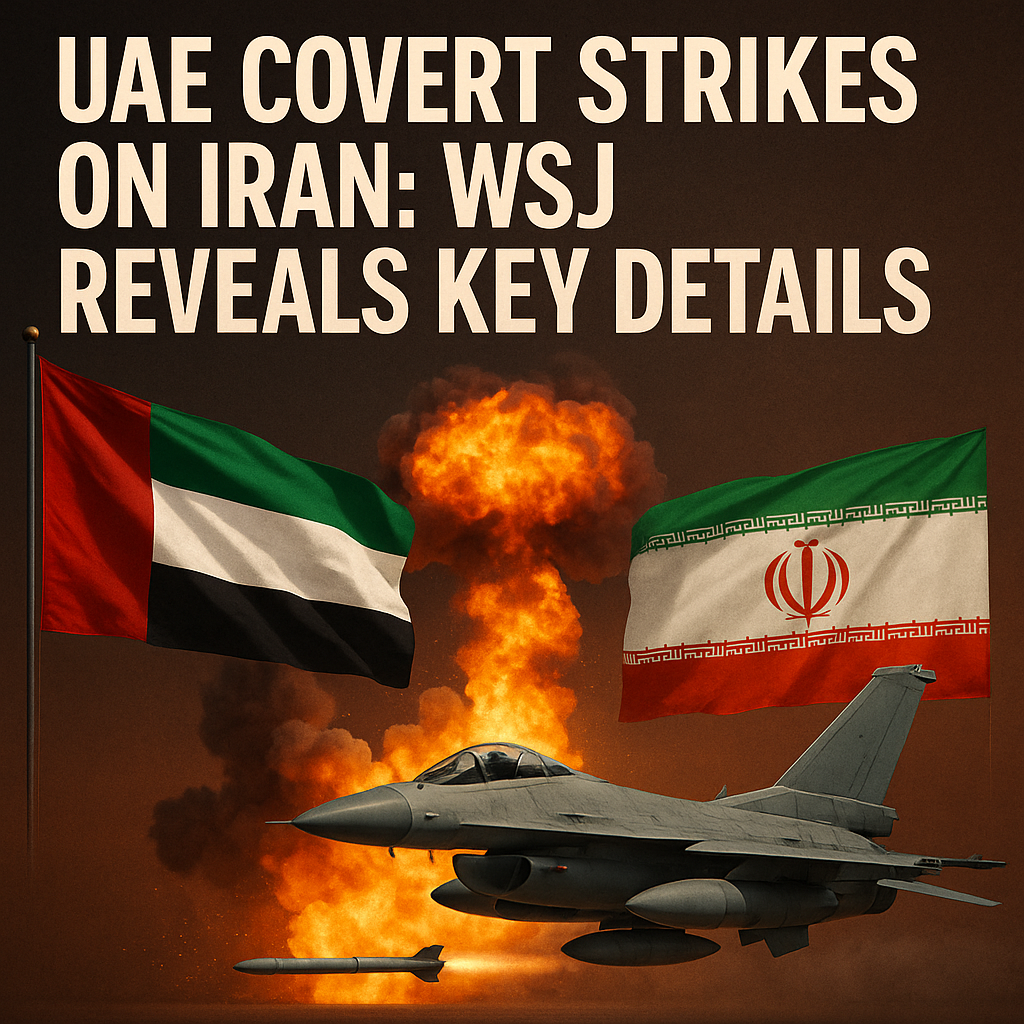
UAE Covert Strikes on Iran: WSJ Reveals Key Details

UAE Covert Strikes on Iran: Unpacking the Regional Tensions

The recent revelations regarding UAE covert strikes on Iran mark a significant escalation in the already tense dynamics of Middle Eastern geopolitics. These operations, as reported by multiple sources including the Wall Street Journal, paint a complex picture of the UAE’s strategic motivations amidst an ever-evolving regional landscape.


Historical Context and Motivations


The UAE’s actions can be traced back to its longstanding concerns regarding Iran’s influence across the region. Following the Arab Spring and subsequent Iranian interventions in places like Syria and Yemen, Gulf states, particularly the UAE, have grown increasingly apprehensive about Iran’s ambitions. The UAE, alongside Saudi Arabia, views Iran as a significant threat not only to its territorial integrity but also to its strategic interests.
According to Al Jazeera, these covert strikes reportedly aim at disrupting Iranian military capabilities, particularly those perceived to be linked to proxy groups terrorizing Gulf states. This presents a multifaceted rationale for the UAE’s approach: a desire to maintain national security while simultaneously sending a message of deterrence to Tehran. However, the nature of these strikes raises critical questions about legality and ethical considerations surrounding the principles of state sovereignty.
Diverging Perspectives on the Implications
While some analysts argue that UAE’s covert strikes exhibit a prudent approach to national defense, others caution against the potential repercussions that could arise. RT News emphasizes that such unilateral strikes could exacerbate tensions in an already volatile region, jeopardizing diplomatic relations not only with Iran but with other regional players as well.
The Wall Street Journal notes that Israel has been a close ally of the UAE in this endeavor, suggesting a burgeoning defense partnership among Gulf states against common adversaries. However, aligning with Israel—given its contentious history with Iran—adds another layer of complexity to the UAE’s strategic calculations. The UAE’s conduct may lead to a perception of increased belligerence in the region, which could provoke a stronger Iranian response, both overtly and through its networks in the region.
Potential Consequences and Future Outlook
The fallout from UAE’s covert operations is still unfolding, with several possibilities on the horizon. Increased military engagement by Iran is one likely scenario, as the nation has indicated its readiness to retaliate against perceived aggressions. Additionally, these actions could ignite a wider regional conflict, drawing in global powers with vested interests in maintaining stability.
Conversely, there exists the potential for diplomatic discussions to emerge from this turmoil. Analysts suggest that channels for dialogue could be crucial in de-escalating tensions. If both the UAE and Iran can approach these challenges with a willingness toward negotiation rather than confrontation, a fragile peace may be attainable.
Conclusion
The UAE’s covert strikes on Iran illustrate a critical inflection point not only for Emirati foreign policy but also for the security dynamics of the entire Middle East. The duality of seeking defense while risking escalation reflects the precarious nature of geopolitical maneuvering in the region. As these developments continue to unfold, the world watches closely, aware of the urgent need for constructive engagement and diplomacy to navigate this complex landscape.