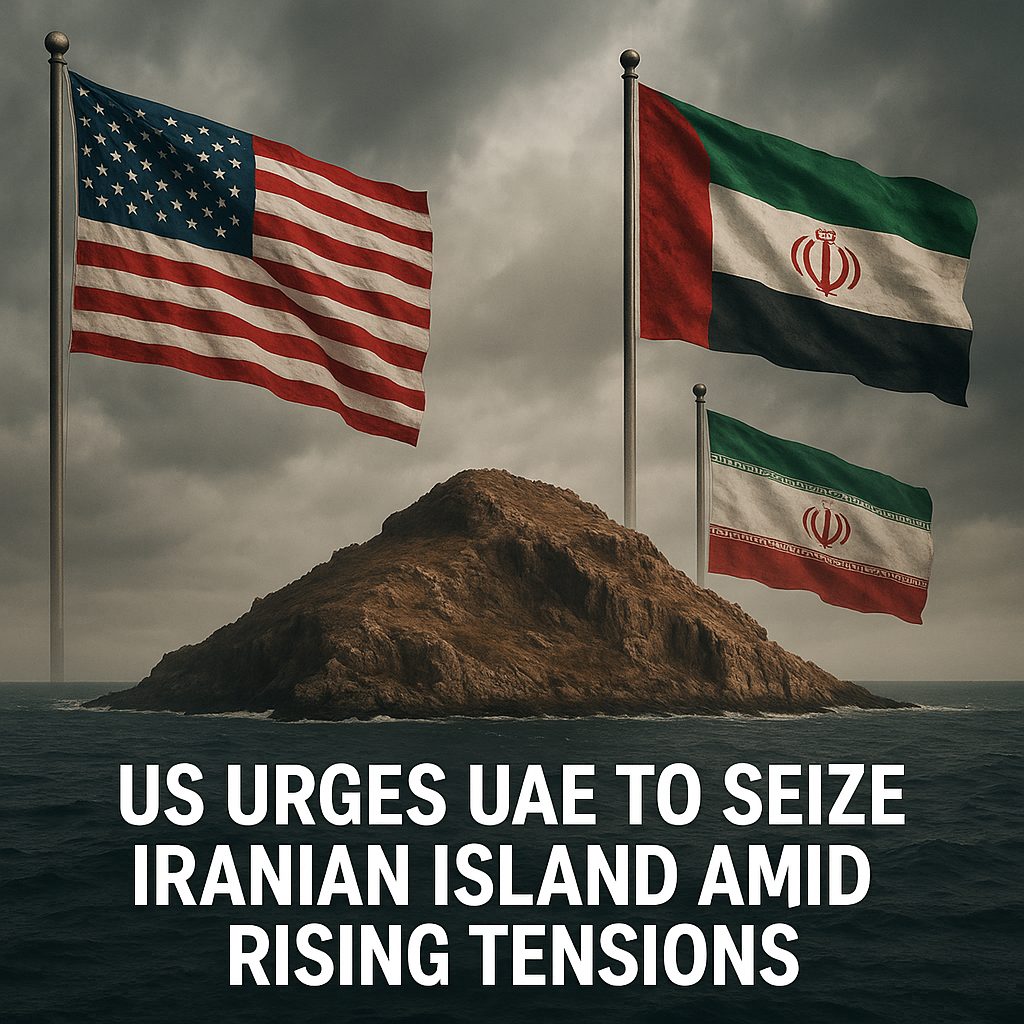
US Urges UAE to Seize Iranian Island Amid Rising Tensions

Rising Tensions: The U.S. Urges UAE to Assert Control Over Iranian-Claimed Island
As regional tensions escalate, the U.S. has urged the United Arab Emirates (UAE) to exert sovereignty over an Iranian-claimed island, Lavan Island. This strategic location in the Persian Gulf has become a focal point in the broader geopolitical landscape influenced by ongoing U.S.-Iran relations.

The Context of U.S.-UAE Relations
Historically, the U.S. and the UAE have maintained a strong alliance, particularly in the realm of security cooperation amid mutual fears regarding Iran’s military ambitions. The recent encouragement from the U.S. government for the UAE to take a definitive stance on Lavan Island surfaces amidst an atmosphere rife with distrust and military posturing.


Iran has displayed increasing assertiveness in the region, conducting military drills and demonstrating its naval capabilities. These actions have heightened apprehensions not just for the UAE, but for many nations that rely on the stability of maritime routes in the Gulf. The island, located near key shipping lanes, holds significant strategic value, thus explaining the U.S. interest in the situation.


Diverging Perspectives on Sovereignty
Supporters of U.S. intervention may argue that the displacement of Iranian claims over Lavan Island could contribute to stabilizing maritime security and deterring Iran’s regional maneuvers. A public statement by a U.S. official emphasized that “ensuring freedom of navigation and maintaining regional security” are essential components of U.S. foreign policy. This perspective aligns with the historical framework in which the U.S. has intervened in the Middle East, often justifying actions as necessary for promoting democracy and regional stability.
Conversely, critics of this stance raise concerns about the implications of heightened U.S. involvement in the Gulf. Accusations of exacerbating regional tensions resonate across various international forums. Iran has accused the U.S. of exacerbating instability, arguing that such calls for UAE intervention may lead to military confrontations. Iranian officials have stated that the island is part of their territorial integrity and any foreign influence in the matter is unwelcome.
Regional analysts note that the situation is further complicated by the internal dynamics within the UAE and its relationship with Iran. Some UAE officials may be wary of taking a confrontational stance, understanding that a reckless assertion of control could provoke retaliatory measures from Iran. These complexities suggest a need for a nuanced approach rather than open confrontation.
The Role of Multilateral Diplomacy
In light of these contrasting viewpoints, the primary pathway to peace may lie in concerted multilateral diplomacy. With a cadre of nations having vested interests in the stability of the Gulf, a united approach towards engaging Iran could yield more favorable outcomes than unilateral U.S. pressure on its allies.
Efforts from platforms like the Gulf Cooperation Council (GCC) could foster dialogue between Iran and its neighbors. Such efforts can promote an environment where issues like the sovereignty of islands and security of sea lanes can be discussed peacefully, diminishing fears of all-out conflict in the region.
However, given the current climate—marked by retaliatory actions and aggressive posturing—achieving this is a complex undertaking. Analysts suggest that while the U.S. has a critical role, its strategies must incorporate diplomatic channels rather than solely emphasize military alliances.
Conclusion
The situation surrounding Lavan Island encapsulates the intricate web of U.S.-Iran relations and the ongoing competition for influence in the Gulf. As the U.S. presses the UAE to take a stand, it is imperative to consider the potential ramifications on regional stability. Diplomacy, bolstered by a commitment to multilateral engagement, may hold the key to navigating the rising tensions, paving the way for a collaborative future that respects the sovereignty of all regional players involved. The stakes are high; forging a cautious yet constructive path forward is essential to prevent the exacerbation of what could rapidly spiral into a larger crisis.