
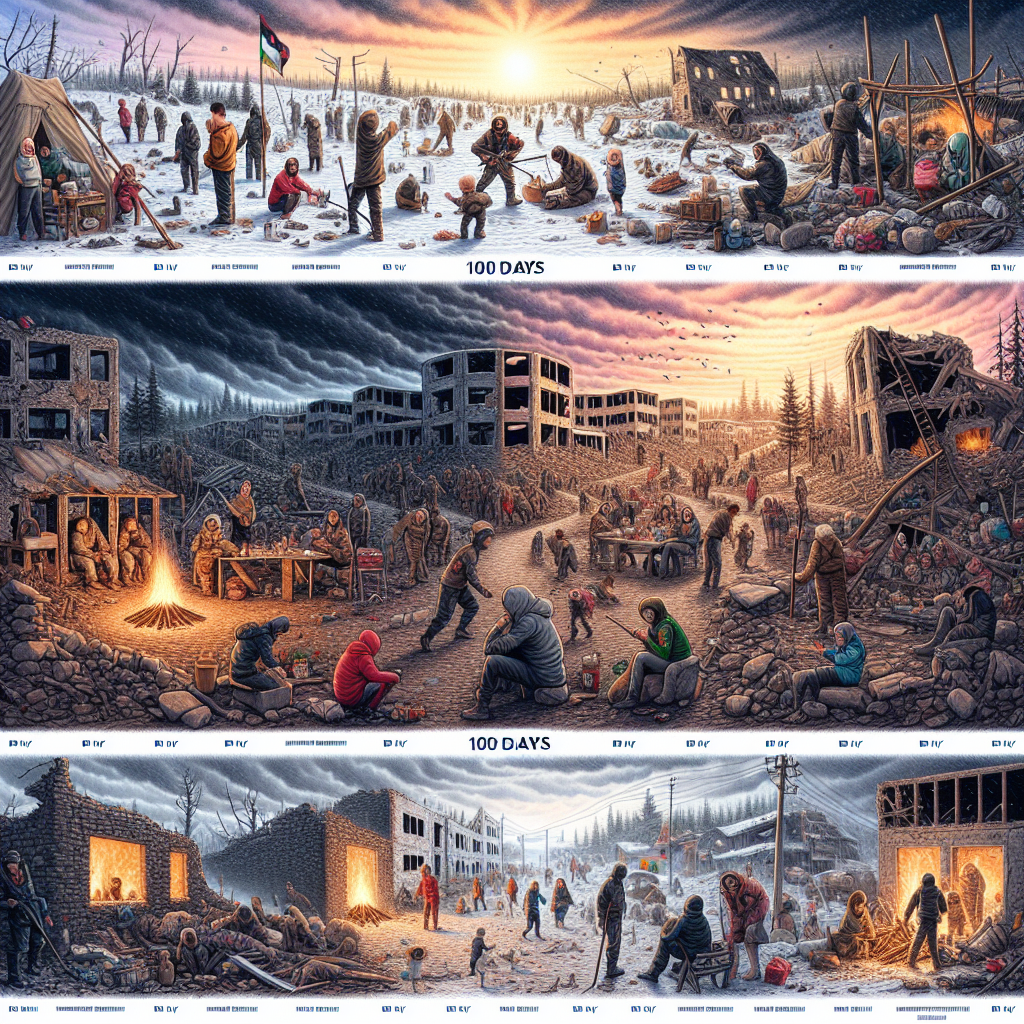
100 Days Under Siege in Northern Gaza

100 Days Under Siege in Northern Gaza
Overview of the Crisis
For over three months, Northern Gaza has been embroiled in a severe humanitarian crisis, marked by relentless conflict and a crippling blockade. The region has faced unprecedented challenges, affecting every aspect of daily life for its residents.

Humanitarian Impact
The siege has led to dire conditions, with significant impacts on the civilian population:


- Food and Water Scarcity: Access to basic necessities has been severely restricted, leading to widespread hunger and dehydration.
- Healthcare Collapse: Medical facilities are overwhelmed, with shortages of essential supplies and personnel.
- Displacement: Thousands of families have been forced to flee their homes, seeking refuge in overcrowded shelters.
International Response
The global community has reacted with a mix of condemnation and calls for action:


- Diplomatic Efforts: Various international bodies have urged for ceasefire negotiations and humanitarian aid corridors.
- Aid Initiatives: Several NGOs and countries have pledged support, though access remains a significant hurdle.
Local Resilience and Adaptation
Despite the harsh conditions, the people of Northern Gaza have shown remarkable resilience:
- Community Support: Local networks have mobilized to share resources and provide mutual aid.
- Innovative Solutions: Residents have developed creative ways to cope with shortages, such as makeshift water filtration systems.
Conclusion
The situation in Northern Gaza remains critical, with the siege entering its 100th day. The humanitarian crisis continues to escalate, demanding urgent international attention and intervention. The resilience of the local population is commendable, but sustainable solutions are essential to alleviate their suffering and restore normalcy.















