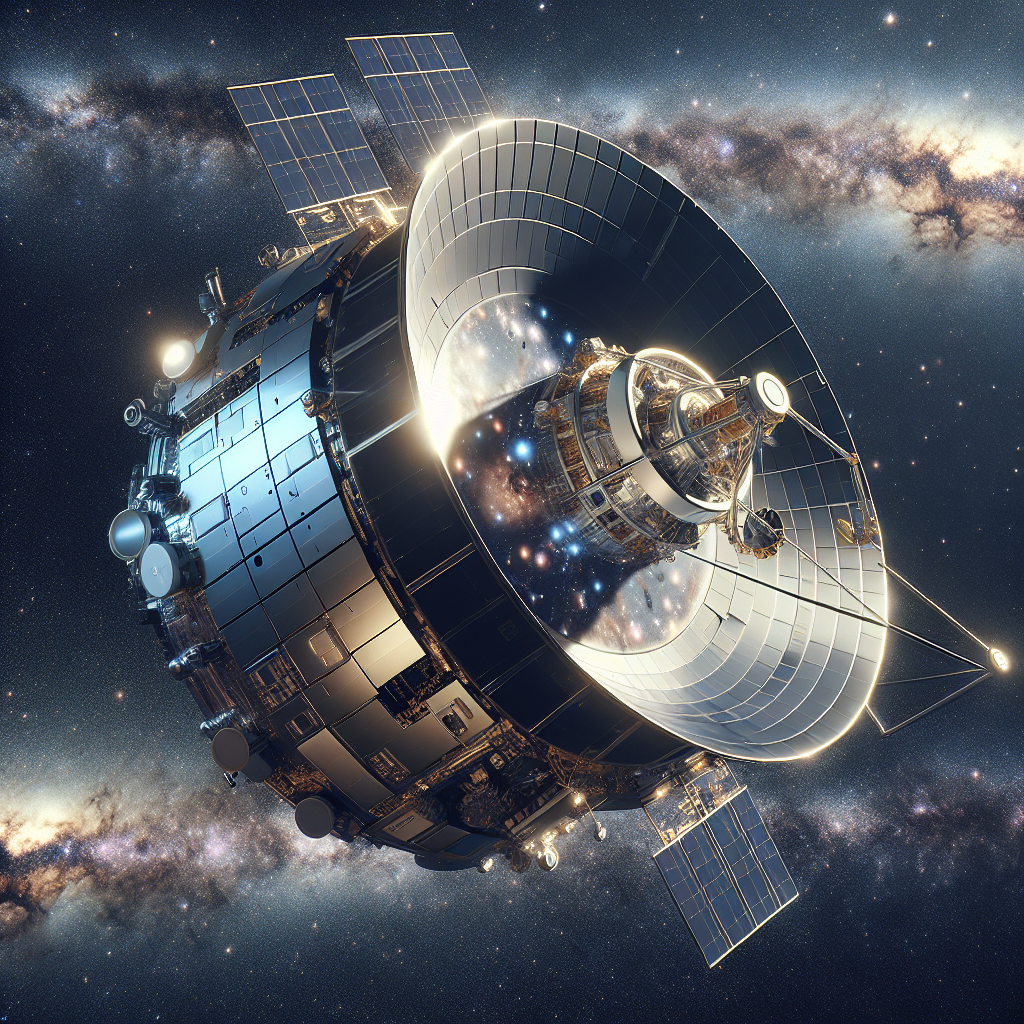
Gaia Space Telescope Retires, Leaving a Lasting Legacy
Gaia Space Telescope Retires, Leaving a Lasting Legacy
Introduction to Gaia’s Mission
The European Space Agency’s Gaia Space Telescope, launched in 2013, has officially retired after a decade of groundbreaking astronomical observations. Designed to map the Milky Way with unprecedented precision, Gaia has significantly advanced our understanding of the galaxy and beyond.

Key Achievements of Gaia
- Comprehensive Star Catalog: Gaia has mapped over 1.7 billion stars, providing detailed information on their positions, distances, and motions.
- Revolutionizing Astrophysics: The data collected has led to numerous discoveries, including insights into the galaxy’s structure, star formation, and the distribution of dark matter.
- Exoplanet Discoveries: Gaia’s precise measurements have contributed to the identification of new exoplanets, enhancing our understanding of planetary systems.
Impact on Future Research
Gaia’s legacy will continue to influence astronomical research for years to come. The vast dataset it has provided will be a cornerstone for future studies, enabling scientists to refine models of the galaxy and explore new frontiers in space exploration.

Challenges and Overcoming Them
Despite facing technical challenges, such as dealing with micrometeoroid impacts and maintaining precise measurements over long periods, Gaia’s mission was a resounding success. The team behind Gaia employed innovative solutions to ensure the telescope’s continued operation and data accuracy.

Conclusion
The retirement of the Gaia Space Telescope marks the end of a remarkable chapter in space exploration. Its contributions have reshaped our understanding of the cosmos, providing a foundation for future discoveries. As the astronomical community continues to analyze Gaia’s data, its legacy will undoubtedly inspire new generations of scientists and astronomers.