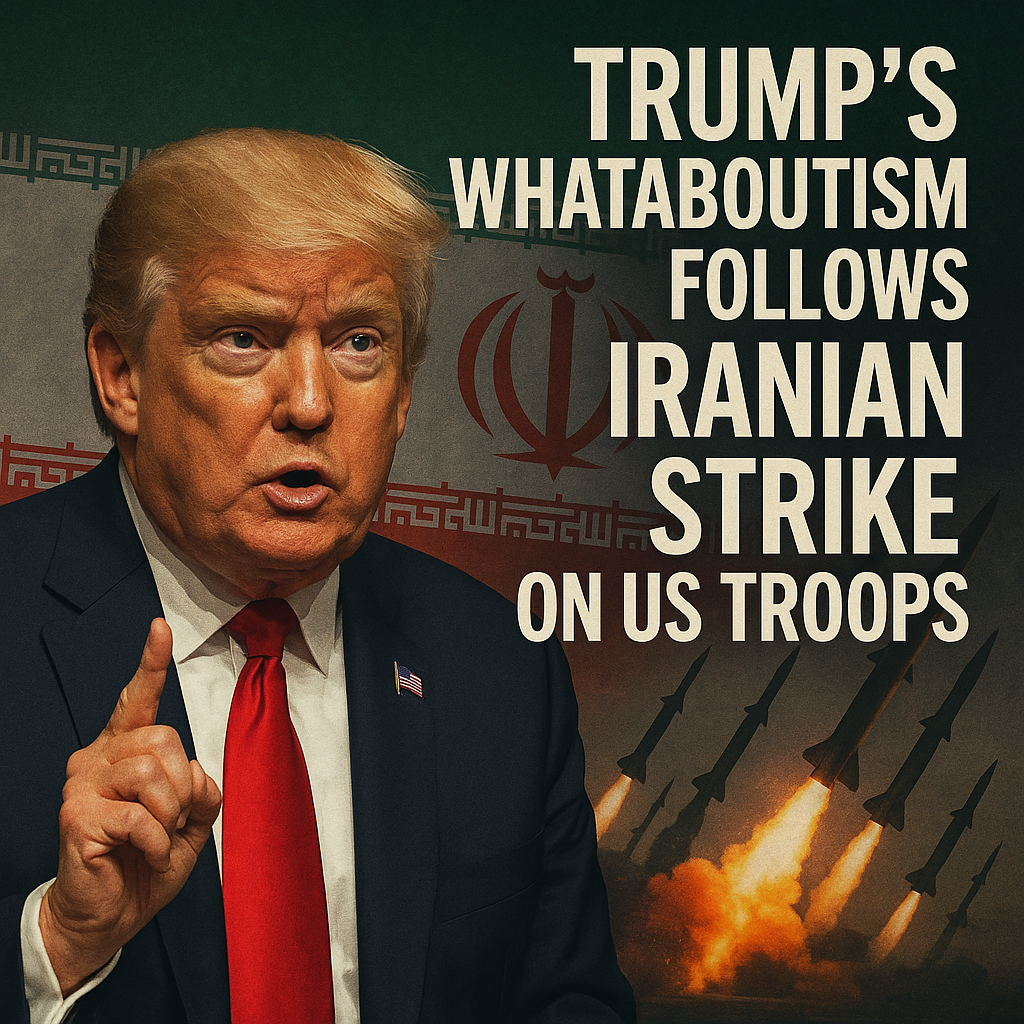
Trump’s Whataboutism Follows Iranian Strike on US Troops
Trump’s Whataboutism Follows Iranian Strike on US Troops
In the wake of an Iranian missile strike that targeted U.S. troops stationed in Iraq, former President Donald Trump’s response serves as a striking illustration of his characteristic rhetorical approach: whataboutism. This method, which deflects criticism by referencing actions or accusations against opponents, shapes the discourse around complex international incidents like this one.

The Incident: Iranian Aggression and Its Implications
On [date], an Iranian missile strike resulted in injuries to several American service members in the region, escalating tensions between the U.S. and Iran. Various sources highlight the geopolitical consequences of such actions, noting that this incident reignites fears of broader conflict in the Middle East. Experts warn that Iranian aggression could provoke a military response from the U.S., leading to an unpredictable cycle of escalation.

Following the incident, Trump issued a statement that questioned the current administration’s handling of foreign relations. He pointed to past military engagements and asserted that the Democrats’ policies have weakened America’s global standing. The former president’s remarks echoed sentiments found in [source], where he criticized President Biden for what he deemed indecisiveness and lack of strength in diplomatic interactions.

Whataboutism in Political Discourse
Trump’s whataboutism can be understood as a tactic to shift focus from present issues to the perceived failures of previous administrations, particularly Democrats. The criticism became particularly pointed as Trump drew parallels to the Vietnam War and the U.S. withdrawal from Afghanistan, stating that such historical events illustrate a pattern of Democratic-led military failures.
This strategy has garnered mixed responses from political analysts. Some argue that it reflects a legitimate dissatisfaction with current foreign policy, while others claim it undermines vital discussions about new military challenges facing the U.S. Analysts from [source] highlight that while it is important to assess past actions, focusing too much on historical failures risks neglecting current complexities. They emphasize the necessity of tailored responses that address the evolving geopolitical landscape, rather than relying on historical grievances.
The Broader Context: Analyzing Responses
The reactions to Trump’s whataboutism reveal a broader division in how political figures interpret military engagements and foreign policy. While some conservatives support Trump’s critiques as a clarion call for strength, many Democrats and moderate analysts caution against using historical context as a shield for inaction.
Polls show a significant portion of the American public remains split on foreign military engagements. Many citizens express fatigue about long-term military involvement abroad, particularly after the costly ventures in Iraq and Afghanistan. This sentiment is echoed by news outlets like [source], emphasizing that public opinion is increasingly wary of continued American military involvement without clear objectives.
In stark contrast, some military analysts suggest that President Biden’s approach, which involves part diplomacy and part strategic military readiness, may offer a balanced pathway. They argue that while Trump’s remarks may resonate emotionally with certain voter bases, they often oversimplify the realities on the ground, potentially leading to disastrous decision-making.
Conclusion: Navigating a Complex Landscape
As the U.S. continues to grapple with the consequences of Iranian aggression and the broader implications for its military presence in the Middle East, Trump’s brand of whataboutism illustrates a larger challenge in political discourse. While it is essential to reflect on past mistakes, creating informed and constructive strategies for the present is vital. Engaging in nuanced debates rather than oversimplified comparisons may yield more effective policy responses.
In conclusion, the Iranian strike on U.S. troops is not just a trigger for discussions about military policy; it also serves as a reminder of the complexities involved in international relations. As the dialogue progresses, the challenge lies in balancing historical lessons with a forward-looking perspective capable of addressing contemporary challenges.