
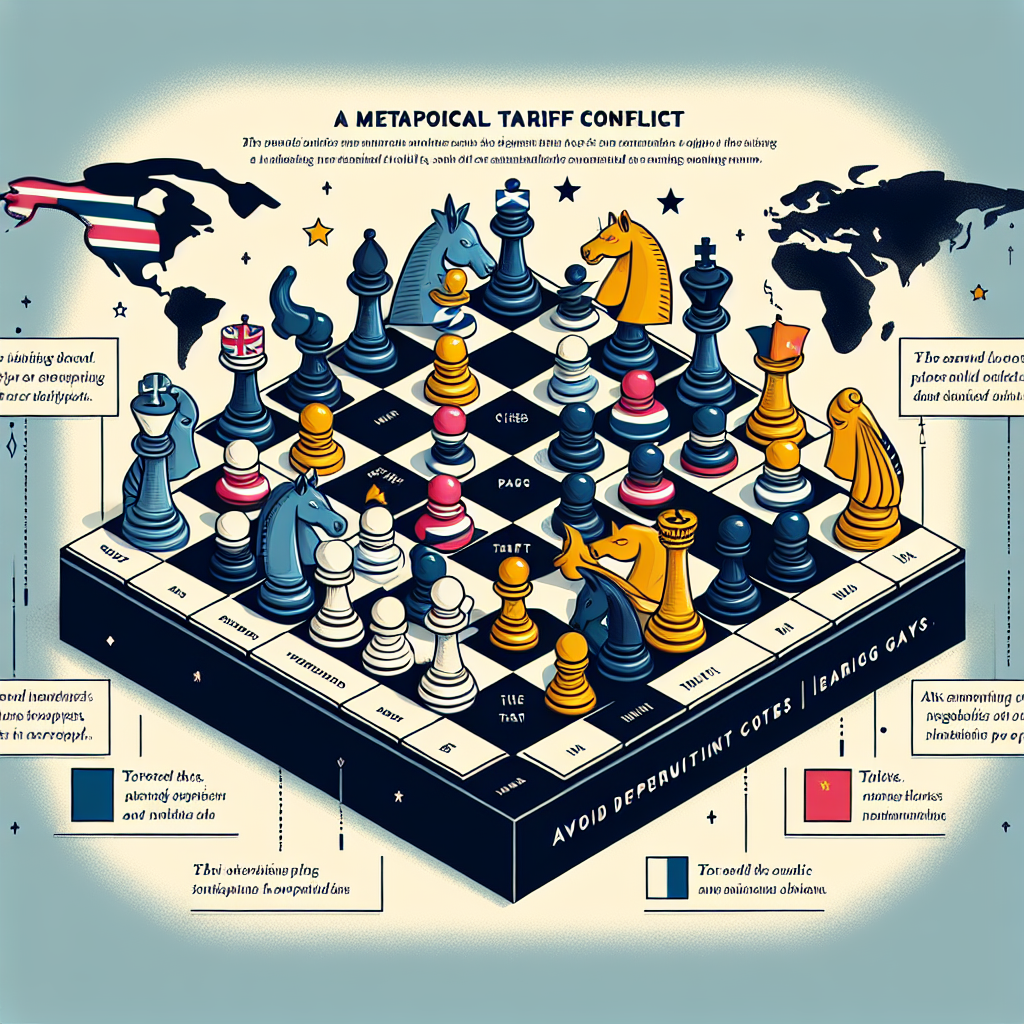
Key Developments in the Global Tariff Conflict
Key Developments in the Global Tariff Conflict
Introduction
The global tariff conflict has seen significant developments recently, impacting international trade dynamics and economic relations. This summary provides an overview of the latest changes, key players involved, and potential implications for the global economy.

Recent Changes in Tariff Policies
Several countries have adjusted their tariff policies, leading to shifts in trade patterns and economic strategies. Key changes include:

- United States: The U.S. has revised tariffs on certain imports, aiming to protect domestic industries while negotiating trade agreements.
- European Union: The EU has responded with its own set of tariffs, targeting specific U.S. goods in a bid to balance trade relations.
- China: China has implemented new tariffs on agricultural products, affecting global supply chains and prompting negotiations.
Impact on Global Trade
The ongoing tariff conflict has led to several consequences for global trade, including:

- Supply Chain Disruptions: Increased tariffs have caused delays and increased costs in global supply chains.
- Market Volatility: Financial markets have experienced fluctuations as investors react to changing trade policies.
- Economic Uncertainty: Businesses face challenges in planning and investment due to unpredictable tariff changes.
Key Players and Their Strategies
Major global economies are employing various strategies to navigate the tariff conflict:
- United States: Focused on renegotiating trade deals to favor domestic production and reduce trade deficits.
- China: Seeking to diversify trade partnerships and reduce dependency on U.S. markets.
- European Union: Aiming to strengthen internal markets and explore new trade agreements with other regions.
Potential Resolutions and Future Outlook
Efforts are underway to resolve the tariff conflict through diplomatic channels and trade negotiations. Potential resolutions include:
- Trade Agreements: Bilateral and multilateral agreements could ease tensions and establish fair trade practices.
- Policy Reforms: Countries may reform trade policies to align with global economic standards and reduce conflicts.
- International Cooperation: Increased collaboration among international organizations could facilitate conflict resolution.
Conclusion
The global tariff conflict remains a complex issue with far-reaching implications for international trade and economic stability. While recent developments highlight ongoing challenges, they also present opportunities for negotiation and cooperation. As countries continue to adapt their strategies, the future of global trade will depend on effective diplomacy and policy innovation.












